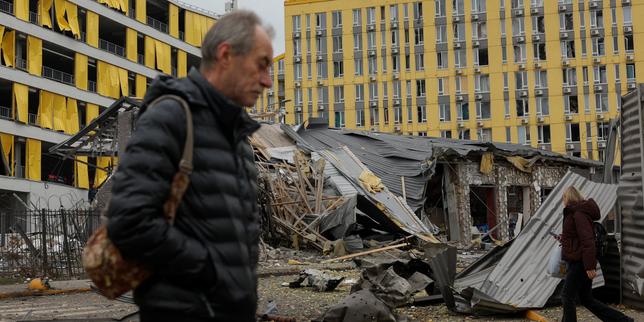
Hundreds of thousands of households across the Kyiv and Dnipropetrovsk regions are once again plunged into darkness following a coordinated wave of Russian missile and drone strikes. This is not merely collateral damage from an ongoing border conflict; it is a systematic, calculated strategy to weaponize winter and fracture the civilian will by dismantling Ukraine’s high-voltage transmission architecture. While frontline movements grab daily headlines, the true war of attrition is being fought at electrical substations, transformer yards, and thermal power plants.
Breaking the power grid requires far less ammunition than conquering fortified cities. Yet the humanitarian and economic fallout is immediate. When high-voltage autotransformers fail in Dnipropetrovsk—the industrial heartland of eastern Ukraine—steel mills stall, water treatment plants lose pressure, and municipal heating networks begin to cool. In Kyiv, a dense metropolis reliant on centralized district heating, an extended blackout threatens the basic habitability of high-rise apartment blocks as temperatures drop.
The Anatomy of Infrastructure Warfare
To understand why these strikes cause such widespread blackouts, one has to look at the Soviet-era engineering that still underpins much of Ukraine’s energy sector. The grid was built for massive, centralized generation. Huge thermal and nuclear power plants push electricity across long distances through a network of 750-kilovolt and 330-kilovolt transmission lines.
That centralization is a gift to military planners in Moscow. You do not need to destroy a nuclear reactor to take its power offline; doing so would trigger an international radiological crisis. Instead, Russian forces target the open-air switchyards and substations that step down ultra-high-voltage electricity so it can enter regional distribution networks.
These facilities are massive, stationary, and virtually impossible to hide. They are packed with mineral-oil-filled transformers that burn violently when punctured by shrapnel or hit by the warhead of a Shahed-type loitering munition. Once a primary 750-kV autotransformer is destroyed, the grid loses its ability to route power from intact generation facilities in western Ukraine to consumption hubs in the center and east. The electricity exists, but the highways required to move it are blown out.
Why Replacements Cannot Simply Be Bought Off the Shelf
A common misconception among outside observers is that Western financial aid can quickly buy new grid components. Money cannot bend the laws of heavy manufacturing. Extra-high-voltage autotransformers are bespoke industrial behemoths, often weighing upwards of 200 to 300 tons. They are not mass-produced and stored in warehouses waiting for an emergency.
Each unit is custom-engineered to match the exact electrical frequency, voltage tolerances, and physical footprint of the specific substation it serves. Under normal peacetime conditions, ordering, manufacturing, and shipping a single 750-kV transformer takes anywhere from 12 to 24 months. Global supply chains are already strained by green energy transitions in North America and Europe, meaning European manufacturers are operating at capacity.
Ukraine has scoured the globe for decommissioned Soviet-standard equipment from former Warsaw Pact nations, cannibalizing old thermal plants in Eastern Europe for spare parts. Those stockpiles are largely exhausted. Every direct hit on a major substation in Dnipro or Kyiv now represents an irreplaceable loss of capacity in the short term, forcing grid operators at Ukrenergo to rely on increasingly fragile bypass circuits and rolling emergency shutdowns.
The Saturation Math Exhausting Air Defenses
The strikes on Kyiv and Dnipropetrovsk highlight a brutal evolution in Russian targeting doctrine. Early in the conflict, barrages were sporadic and often predictable in their flight paths. Today, attacks are structured as multi-layered saturation campaigns designed to bankrupt Ukrainian air defense batteries of their interceptors before high-value ballistic missiles arrive.
A typical wave begins hours before dawn with swarms of low-flying, slow-moving attack drones launched from multiple azimuths. These drones force mobile air defense teams to reveal their positions and expend anti-aircraft artillery or short-range surface-to-air missiles. Once radars are locked onto the drone swarms, cruise missiles flying at low altitudes follow terrain contours to evade detection, aiming for the same substation coordinates.
In the final phase, ballistic missiles—such as the Iskander-M or air-launched Kinzhal—descend at hypersonic terminal velocities. Only a handful of Western-supplied systems, notably the Patriot and SAMP/T batteries, possess the kinematic capability to intercept these threats. Kyiv enjoys the densest air defense umbrella in the country, which explains why many incoming projectiles are downed over the capital, though falling debris still wreaks havoc on overhead power lines. Dnipropetrovsk, situated much closer to Russian launch sites and occupied territory, faces a drastically shorter warning window. Defenders there often have mere minutes to react, resulting in a higher rate of direct impacts on critical energy infrastructure.
The Ripple Effect Beyond the Light Switch
When a press release states that hundreds of thousands of homes are without power, it masks the cascading mechanical failures occurring beneath the streets. Modern urban infrastructure is entirely dependent on uninterrupted electrical current.
- Municipal Water and Sewage: Electric pumps maintain the pressure required to push clean water up to the twelfth floor of a Soviet-era panel building and keep sewage moving toward treatment facilities. When power cuts out, water stops flowing within hours. If operators cannot drain pipes before a hard freeze sets in, expanding ice will rupture municipal mains, turning an electrical outage into a multi-month civil engineering disaster.
- Telecommunications Collapse: Cell towers run on backup batteries designed to last four to eight hours. During prolonged blackouts across Kyiv and Dnipro, cellular networks degrade rapidly as batteries drain and millions of residents simultaneously switch from home Wi-Fi to mobile data, crashing local base stations.
- The Heating Paradox: Most urban Ukrainians do not heat their homes with individual electric space heaters. They rely on centralized Combined Heat and Power (CHP) plants that pump hot water through underground insulated pipes. Even when a CHP plant's boilers are fueled by natural gas, the massive circulation pumps require megawatts of electricity to move that water through the city. Knock out the electrical substation feeding the pumping station, and the radiators go cold across entire districts.
The Limits of Decentralization and Grid Hardening
In response to years of relentless bombardment, Ukrainian engineers have raced to fortify surviving infrastructure. Substations are now wrapped in gabion baskets filled with sand, reinforced concrete walls, and steel anti-drone netting designed to detonate loitering munitions meters away from sensitive transformer bushings. These passive defenses work remarkably well against small drones and stray shrapnel. They offer zero protection against a 500-kilogram ballistic warhead plunging vertically from the stratosphere.
To bypass the vulnerability of massive power plants, energy analysts and government officials have pushed for distributed generation. The concept is straightforward: replace a few giant, easily targeted thermal plants with hundreds of small, gas-fired turbine generators and industrial battery storage systems scattered across cities and hidden inside nondescript industrial warehouses.
If a single 1,000-megawatt power station is hit, a whole region goes dark. If one of two hundred 5-megawatt gas turbines is destroyed, the grid barely registers the dip.
Yet transitioning an entire national grid from hyper-centralization to decentralized microgrids in the middle of an active war is a monumental logistical hurdle. Gas turbines require reliable fuel pipelines, complex synchronization software to prevent frequency instability, and immense capital investment. Furthermore, small gas generators produce electricity at a significantly higher cost per megawatt-hour than nuclear or large-scale coal facilities, straining a wartime economy already running on life support. Decentralization is the only viable long-term shield against Russian missile terror, but it will not be built fast enough to spare residents in Kyiv and Dnipro from blackouts this season.
The Psychological Attrition Strategy
Military analysts frequently debate the strategic utility of bombing civilian infrastructure. Historical precedent, from the London Blitz to the air campaigns over Vietnam, consistently shows that bombing cities rarely breaks public morale; more often, it hardens resolve and breeds visceral hatred toward the aggressor.
Moscow’s planners are undoubtedly aware of this history. Their objective is not necessarily to spark an immediate popular uprising in Kyiv forcing capitulation. Instead, the goal is systematic exhaustion and demographic drainage.
By making life in major urban centers cold, dark, and economically unviable, the Kremlin aims to trigger a secondary wave of internal displacement and outward migration toward the European Union. Every million citizens who flee the country represents a reduction in Ukraine’s tax base, its industrial workforce, and its pool of military-age recruits. Simultaneously, forcing Kyiv to spend billions of dollars on emergency grid repairs and diesel fuel imports diverts finite financial resources away from offensive military operations.
Meanwhile, European allies face their own strategic dilemma. Every Patriot interceptor fired to protect a transformer in Dnipropetrovsk is an interceptor depleted from NATO’s own strategic reserves, costing roughly $4 million per shot. Russia is forcing Ukraine and its backers into an asymmetric cost-exchange trap, using relatively cheap drones and stockpiled missiles to inflict billions of dollars in economic paralysis.
The Fragile Balancing Act of Grid Operators
Inside the heavily guarded, undisclosed control rooms of Ukrenergo, engineers are performing a high-wire act every single minute. An electrical grid must maintain a precise frequency of 50 Hertz. If generation drops suddenly because a Russian missile takes a substation offline in Dnipropetrovsk, the frequency plummets. If operators do not immediately shed load—by forcibly cutting power to hundreds of thousands of consumers—the frequency drop will trigger automatic safety relays at undamaged power plants, causing them to trip offline to prevent mechanical self-destruction.
That cascading trip is the ultimate nightmare scenario: a total, nationwide blackout. Recovering from a total grid collapse, known in the industry as a black start, is an agonizingly slow process. Without external power from the grid to run their own internal pumps and fans, large thermal power plants cannot restart. Engineers have to use small hydroelectric dams or massive diesel generators to painstakingly energize isolated islands of the network, balancing supply and demand block by block over days or even weeks.
When authorities in Kyiv or Dnipro announce emergency power cuts, it is rarely because the grid has completely failed. It is a deliberate, surgical amputation performed by grid dispatchers to save the patient from total systemic collapse.
The Unspoken Reality of Repair Crews
Behind every announcement that power has been restored to 200,000 homes lies the quiet, lethal reality faced by repair crews. Utility workers operate under the constant threat of "double-tap" strikes—a tactic where Russian forces launch a second missile at the exact same substation 30 to 60 minutes after the initial impact, specifically timed to kill first responders, firefighters, and high-voltage technicians assessing the damage.
These crews work in freezing mud, often at night, rigging temporary bypass lines using salvaged parts that violate every peacetime safety manual in the book. They splice severed high-voltage cables and bypass destroyed circuit breakers, creating a patchwork grid held together by sheer ingenuity and duct tape. Because these emergency bypasses lack standard protective relays, the grid becomes vastly more fragile with every repair, prone to spontaneous equipment failure even on days when no missiles fly.
The blackouts across Kyiv and Dnipropetrovsk are a stark reminder that modern warfare does not end at the trench line. Until Ukraine acquires either the deep-strike capabilities to neutralize Russian launch platforms before missiles leave the ground, or an impenetrable, multi-tiered air shield covering every major substation, the lights across the country will remain hostage to the next radar warning.