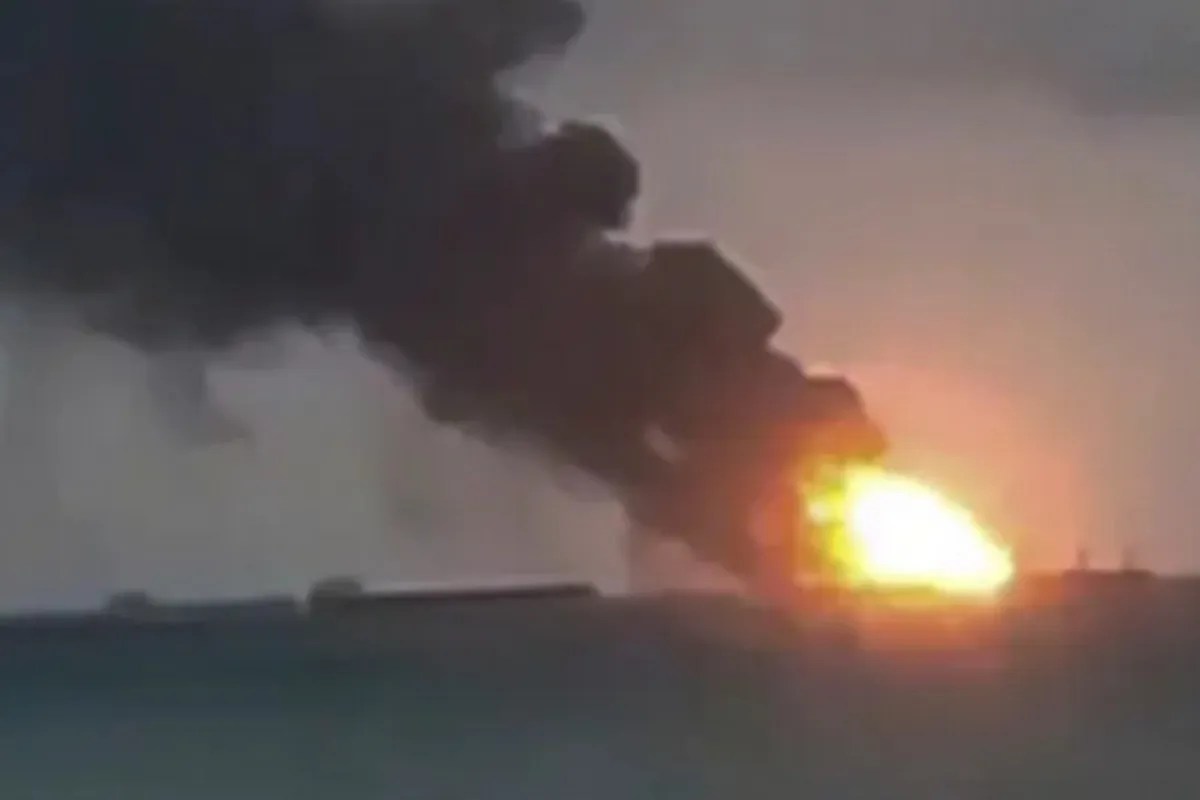
A blast and fire tore through a merchant vessel in the Black Sea off Romania in mid-October 2026, leaving crew members missing and exposing how quickly commercial shipping lanes are turning into an uninsurable gray zone. Standard wire dispatches treat such explosions as isolated maritime accidents. After three decades covering freight markets, war-risk underwriting, and port geopolitics, I see something far more structural: Black Sea shipping is now caught between asymmetric drone warfare, flag-of-convenience opacity, and marine insurance models built for a calmer era.
When the San Marino-flagged chemical tanker Wine Trader suffered a superstructure fire roughly 13 nautical miles southeast of Sulina on October 15, 2026, rescue teams had to battle heavy swells while crew members were initially unaccounted for—with reports varying between seven and eight missing from a 12-person complement and later grim findings when the vessel reached Varna. A day earlier, the Comoros-flagged tanker Yara J had also caught fire off the Romanian coast before its 17-person crew put the flames out on their own. Treating that explosion as a standalone tragedy misses the real story. Commercial ships entering the western Black Sea are operating inside a corridor where aerial and naval drones, contested airspace, and shifting sanctions collide every single week. You might also find this connected coverage interesting: Foiled Attack Headlines Are Comfort Food That Misses the Real Threat.
Why Standard Maritime Reporting Misses the Mechanism
Most quick-hit articles stop at the headline facts: a ship exploded, smoke rose over the water, search helicopters launched, and officials traded blame. That tells you what happened at dawn. It does not explain how a seemingly routine transit near the Danube delta becomes a life-or-death trap.
Modern long-range strike drones and unmanned surface vessels operate cheaply compared with a multi-million-dollar merchant hull or a naval frigate. A single drone hitting a superstructure, fuel line, or cargo tank can spark an onboard fire faster than a small crew can muster firefighting gear, especially in rough seas where external rescue craft struggle to hold station. Even when a vessel carries no cargo at the time of impact—as authorities noted with Wine Trader—residual vapors, accommodation spaces, and engine-room systems still pose severe explosion and smoke hazards. As extensively documented in detailed reports by NBC News, the implications are significant.
Attribution is rarely neat in these waters. Officials and analysts have pointed to suspected drone strikes in the western Black Sea, with Romanian leaders warning about regional destabilization and drone incursions near NATO waters, while Moscow has released strike footage in certain incidents and claimed military cargo links that flag authorities disputed. In maritime intelligence, fog is a tactical weapon. When radar tracks drop low over waves or airspace boundaries blur near territorial limits, blaming one party on the spot often outruns verified forensics.
The Shadow Fleet and Flag Reality Behind the Headlines
Look closely at the flags and registries appearing in Black Sea incident reports. San Marino. Comoros. Somalia. Palau. That lineup is no coincidence.
Shipping has long relied on open registries and flags of convenience to lower costs and move tonnage across global trade routes. Yet in a high-threat zone, thin ownership trails and complex charter chains create real friction. When an explosion hits a ship, insurers, port authorities, and families of missing seafarers need clear answers fast: Who is the beneficial owner? What safety management system governed the vessel? Was the ship legitimately trading grain or chemicals, or was it entangled in sanctions-evasion logistics?
Consider a hypothetical example to see how murky accountability slows response. Suppose a 22-year-old product tanker registered in a distant jurisdiction is chartered on a short-term voyage to load agricultural goods near the Danube. A commercial manager in one country hires a crewing agency in another, while hull and machinery cover is split across syndicates. If a drone strike triggers a fire and leaves seafarers missing, emergency coordination still moves through coastal states like Romania or Bulgaria, yet sorting out salvage authority, cargo liability, and crew repatriation can drag on for weeks.
A merchant ship is not a warship. It has thin steel plates, limited air defense, and civilian crews who signed on to move cargo—not dodge munitions in congested sea lanes.
War Risk Insurance and Grain Supply Pressure
Physical damage to hulls is only half the shockwave. The other half hits freight rates, marine insurance, and food prices.
Underwriters in the London market—including the Joint War Committee—adjust war-risk designations when security along a trade route deteriorates, and surging war-risk premiums can climb sharply as a percentage of vessel value in high-risk zones. When insurance costs jump and shipowners face the prospect of losing a vessel or crew without clear escalation protection, operators demand higher charter rates or refuse voyages altogether.
That financial squeeze feeds straight into commodities. Even when global grain harvests look ample on paper, repeated strikes on vessels moving wheat or corn out of the Black Sea add a tangible security premium to regional exports and Mediterranean or Middle Eastern supply chains. Traders cannot price a cargo solely on weather and yield forecasts when a ship sailing out of a river port or coastal anchorage faces drone risk before clearing open water.
| Risk Factor | How It Affects Black Sea Shipping | What Most Coverage Overlooks |
|---|---|---|
| Drone and Sea-Mine Threats | Sparks fires, damages superstructures, and forces evasive routing or anchorage delays. | Small crews in rough weather face severe rescue delays even near NATO coastlines. |
| War-Risk Underwriting | Pushes voyage premiums higher and raises charter costs for owners. | Coverage terms and exclusions can shift fast as listed areas expand. |
| Flag and Charter Opacity | Complicates post-incident investigations, salvage contracts, and crew claims. | Open-registry vessels often have layered management that slows transparent reporting. |
| Regional Air and Sea Defense | Prompts patrol deployments, interceptions, and proposals for tighter coastal coordination. | Protecting every merchant hull across a busy maritime corridor remains a hard physics problem. |
What Counter-Arguments and Gray Areas Matter Most
A fair analysis cannot paint every Black Sea shipping hazard as a single uniform plot. Two counter-arguments deserve serious weight.
First, not every explosion or fire at sea starts with a drone. Aging hulls, electrical faults, engine-room fires, and improper handling of volatile or chemical cargoes cause real casualties in merchant shipping every year, regardless of geopolitics. Jumping straight to a drone narrative before hull inspection or voyage data is reviewed can distort both public reporting and insurance claims.
Second, NATO littoral states like Romania and Bulgaria face a genuine strategic dilemma. Stepping up air patrols, shooting down intruding drones, or building joint drone-defense commands can improve situational awareness and deter reckless airspace violations. At the same time, direct military entanglement in an active conflict carries escalation risks that coastal governments weigh carefully against the duty to protect territorial waters and commercial corridors.
There is also an uncomfortable industry blind spot regarding seafarer welfare. Crews on commercial vessels are often multinational—drawing seafarers from countries far removed from the Black Sea conflict—yet they bear the immediate physical risk when a ship is hit. Better early-warning alerts and clearer distress protocols help, but no electronic advisory fully replaces keeping civilian ships out of active engagement zones.
Concrete Steps for Operators and Cargo Buyers
Anyone moving goods or capital through the Black Sea needs stricter operational discipline than pre-war templates allowed.
- Verify war-risk endorsements before fixing a charter: Confirm exact geographic boundaries, notification triggers, and crew-safety clauses with underwriters before the vessel commits to a Black Sea leg.
- Audit emergency fire and abandonment readiness: Run drills focused on rapid superstructure fires, smoke containment, and survival-suit readiness in cold or rough sea states.
- Build buffer days into Danube and coastal schedules: Expect weather holds, radar anomalies, and heightened inspection or routing checks rather than pricing tight just-in-time arrivals.
- Diversify sourcing where margins allow: Buyers reliant on single-corridor grain or chemical shipments should map alternative origin ports so a single strike does not stall deliveries.
Until maritime security, transparent ship ownership, and realistic risk pricing catch up to cheap unmanned weapons, every explosion in the Black Sea will be more than a local rescue story. It will be a bill arriving for global trade.