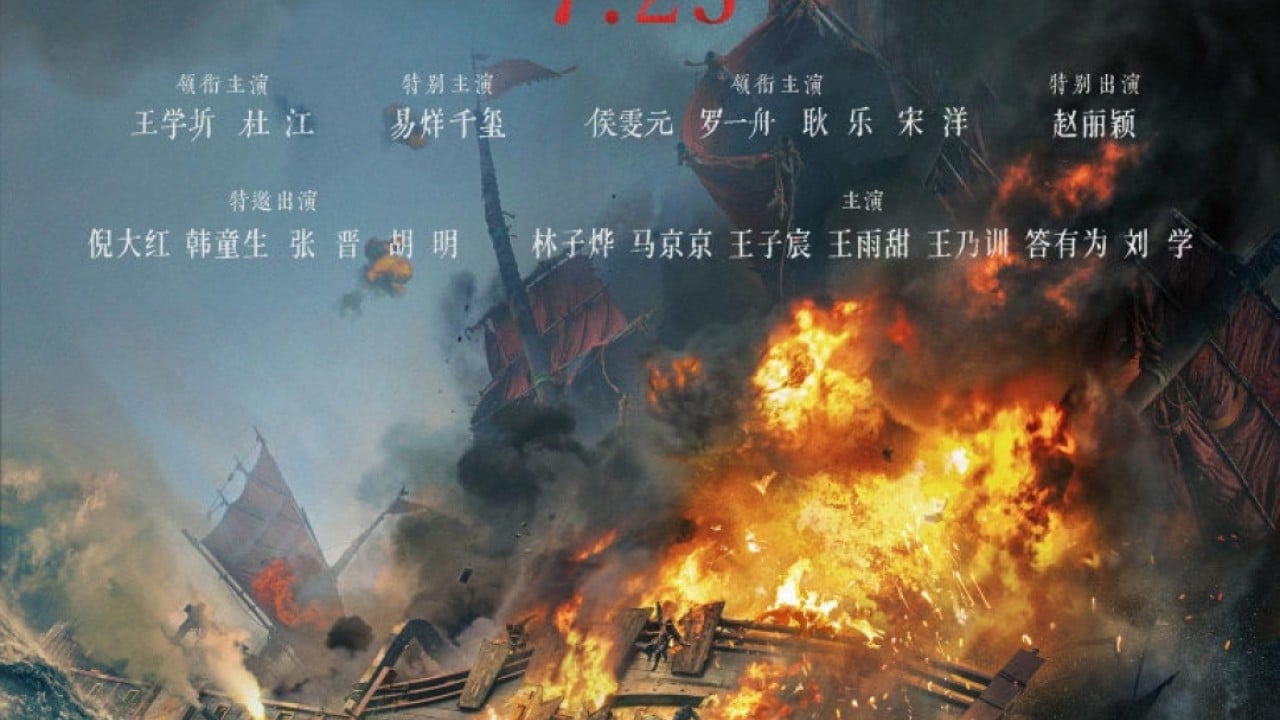
A high-profile state-backed Chinese film titled The Battle of Penghu, designed to project the historical inevitability of Taiwan reunification through a seventeenth-century naval campaign, stalled before reaching cinemas after triggering ferocious internal pushback from nationalist factions. The production, which dramatizes the Qing dynasty's 1683 conquest of Taiwan's Ming-loyalist regime under Admiral Shi Lang, was intended to serve as a cinematic blueprint for current cross-strait policy. Instead, it exposed a raw nerve within domestic political discourse, forcing censors to scramble as Han Chinese nationalists and Ming-dynasty traditionalists fiercely rejected the film's foundational premise.
The Seventeenth-Century Analogy That Misfired
When state media rolled out promotional trailers for the epic, the strategic calculation appeared straightforward. By framing the historical destruction of the Kingdom of Tungning by Qing naval forces as a direct historical precedent for modern territorial integration, the project aimed to normalize the concept of mandatory incorporation.
Yet history is rarely a pliable instrument when handled by millions of citizens online. The core tension arose from a fundamental collision in historical identity. The Qing dynasty was established by the Manchus, an ethnic minority from the northeast, who conquered the native Han Chinese Ming dynasty.
Online factions known colloquially as Han nationalists and Ming traditionalists launched an aggressive counter-narrative. They argued that celebrating the Manchu conquest of a Han regime amounts to glorifying a foreign subjugation of Chinese civilization.
By asking modern viewers to cheer for the defeat of the last major Han regime on Taiwanese soil, the film inadvertently activated a domestic ideological minefield. State censors quickly blocked comment sections, disabled user ratings on major review portals, and restricted promotional updates. A project meant to unify ideological resolve ended up spotlighting deep-seated fractures regarding who speaks for historical legitimacy.
When Propaganda Collides with Popular Memory
For decades, cultural output intended for mainland audiences operated under predictable top-down mechanics. Historical dramas routinely flattened complex dynastic conflicts into neat morality plays that served contemporary geopolitical narratives.
The Battle of Penghu miscalculated because popular digital spaces in China have evolved into fragmented ecosystems. Online communities obsess over dynastic purity, military logistics, and ethnic narratives with granular intensity.
When military academics and prominent commentators began questioning whether Admiral Shi Lang—a defector from the Ming who served the Qing—was an appropriate icon of patriotism, the debate escaped official containment.
[Traditional State Narrative] ──> Modern Integration Blueprint ──> Historical Continuity
[Online Nationalist Reality]  ──> Manchu Conquest of Han Regime ──> Ideological Friction
The friction points reveal structural vulnerabilities in using distant dynastic wars as proxies for contemporary foreign policy. Historical figures like Shi Lang carry heavy baggage. To Beijing, he represents the reunification of divided territories. To online purists, he represents a turncoat who aided a foreign conquest.
The Censor's Dilemma
Regulators now face a complicated paradox. If they shelve the film indefinitely, they risk signaling weakness to domestic critics and acknowledging that public sentiment can veto state-sanctioned art. If they push the film into theaters without heavy edits, they risk igniting further online debates that undermine the very narrative of harmonious national unity they wish to project.
The silence surrounding the release schedule underscores the severity of the miscalculation. While box office analysts expected a tentpole rollout backed by state distribution weight, ticketing windows remained dark, and official social media accounts went dormant.
Art designed to serve as an ideological anchor must resonate without requiring a history lecture to defend its basic premises. When an epic war film spends more time generating domestic controversy over seventeenth-century ethnic politics than rallying support for modern goals, it ceases to function as effective messaging. The production now stands as a clear case study in the limits of historical instrumentalization, proving that even tightly managed media environments cannot entirely control how citizens interpret the past.