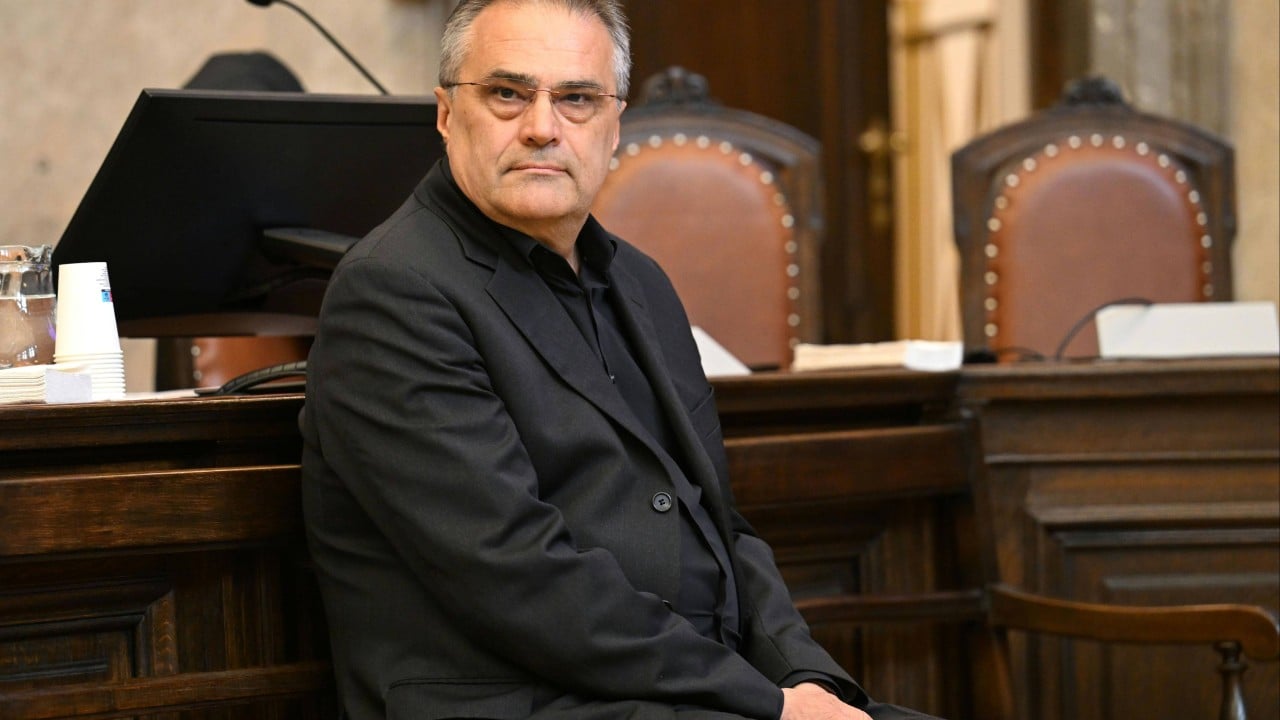
The Vienna Regional Criminal Court delivered a devastating blow to Austria's intelligence infrastructure by sentencing 63-year-old former secret service director Egisto Ott to four years and one month in prison. The verdict marks the explosive culmination of the largest postwar espionage trial in the nation's history.
Ott was found guilty of systematically plundering classified European databases, selling state secrets to Moscow, and operating as a core logistical hub for Jan Marsalek, the fugitive former chief operating officer of the collapsed German fintech giant Wirecard. This case demonstrates that the Wirecard scandal was never just a corporate accounting fraud. It was a massive, state-sponsored intelligence operation that successfully penetrated the heart of a European Union member state's security apparatus.
The Danube Plunge and the SINA Laptop
The mechanics of Ott’s espionage reveal a breathtaking vulnerability within Austria’s domestic intelligence agency, the BVT (now rebranded as the DSN). Rather than employing high-tech cyber warfare, Russian intelligence relied on traditional compromise, bureaucratic complacency, and simple cash transactions.
The most egregious breach involved the physical compromise of high-level government communication. During an official boat trip organized by the Austrian Ministry of the Interior, a canoe capsized, causing the mobile phones of three senior civil servants to fall into the Danube River. The devices were sent to BVT technical experts for data recovery. Instead of securing the compromised hardware, Ott systematically copied the mirrored contents of the smartphones.
Marsalek dispatched two operatives directly to the Vienna apartment of Ott’s daughter. There, Ott handed over a USB drive containing the official data in exchange for €50,000 in cash. The Kremlin instantly gained access to thousands of sensitive contacts, internal ministry deliberations, and operational data that threatened the safety of Chechen and Ukrainian dissidents taking refuge across Western Europe.
Beyond the smartphones, Ott weaponized his access to secure procurement channels. The court found him guilty of embezzling and delivering an encrypted SINA-S laptop to Russian intelligence. This specific hardware is used by European Union governments for highly classified, secure electronic communications. According to the prosecution’s indictment, the laptop was delivered directly to Russia’s Federal Security Service (FSB) before being forwarded to Iran, effectively burning a vital cryptographic tool used by Western allies.
The Wirecard Pipeline
To comprehend how a corporate executive like Jan Marsalek could orchestrate a rogue spy ring inside Vienna, one must trace the institutional decay that allowed Wirecard to flourish. Before its spectacular €1.9 billion insolvency in 2020, Wirecard was hailed as the crown jewel of European technology. That reputation served as a perfect front.
Marsalek, an Austrian citizen currently living in Moscow under the protection of the GRU and a false identity as an Orthodox priest, spent over a decade building an auxiliary intelligence network. He did not just use Ott for database queries. He used him as a tactical adviser.
Ott used official channels to file "requests for assistance" with law enforcement agencies in Italy and the United Kingdom. By framing these inquiries as legitimate Austrian counter-intelligence operations, Ott tricked foreign police forces into tracking individuals of interest to the Kremlin.
The consequences were immediate and dangerous. Ott pulled data on investigative journalist Christo Grozev, whose vital work for Bellingcat unmasked the state-backed assassins behind the poisoning of Alexei Navalny. Ott passed Grozev’s private Vienna residential address to Marsalek's network. The security threat became so severe that Grozev was forced to flee Austria entirely under armed guard.
Furthermore, investigators discovered a deeply disturbing document authored by Ott following the 2019 execution of a Georgian dissident in Berlin's Tiergarten park by a Russian operative. Prosecutors described the text as nothing less than an "instruction manual for future successful assassinations on European Union territory."
The Counter-Intelligence Ruse That Failed
Throughout the twelve-day trial, Ott maintained his complete innocence, projecting the weary confidence of an operative caught in a geopolitical misunderstanding. His defense team, led by attorney Anna Mair, attempted a high-stakes gamble by introducing a letter from Martin Weiss, Ott’s former boss and the former head of Austrian counter-intelligence. Weiss himself is currently a fugitive, suspected of helping Marsalek flee Austria from a small regional airfield in 2020.
The defense argued that Ott’s extensive database searches and data collection were part of an authorized, deeply classified counter-intelligence operation codenamed "Operation Doctor." The alleged goal was to stage a sophisticated double-agent ruse to recruit a high-ranking Russian intelligence officer.
The eight-person jury rejected this narrative entirely. The prosecution countered with a mountain of Western intelligence intercepts, financial records, and British court evidence linking Ott directly to a London-based Marsalek spy cell consisting of Bulgarian nationals. The evidence demonstrated that Ott was not running a ruse. He was running a business, receiving over €80,000 in documented payments for his services between 2015 and 2022.
The Cost of Neutrality
Austria's historical posture of strict geopolitical neutrality has long made Vienna a playground for international espionage. Under Austrian law, spying on the state itself is illegal, but spying on other governments while utilizing Vienna as a base has historically faced minimal legal resistance. This systemic blind spot has severely damaged Austria's credibility among international intelligence alliances like the Five Eyes and the Club de Berne.
The conviction of Egisto Ott is a desperate attempt by the Austrian government to signal to its Western allies that the era of institutional tolerance for Russian infiltration is over. The state has already initiated sweeping legislative overhauls designed to drastically stiffen penalties for foreign espionage.
However, the damage to the European security architecture is already done. The contents of those interior ministry phones remain in Moscow. The SINA cryptographic protocols have been dissected. The verdict in Vienna provides judicial finality for one corrupt officer, but the sprawling network engineered by Jan Marsalek proves that corporate entities can serve as highly effective vectors for state-sponsored treason.