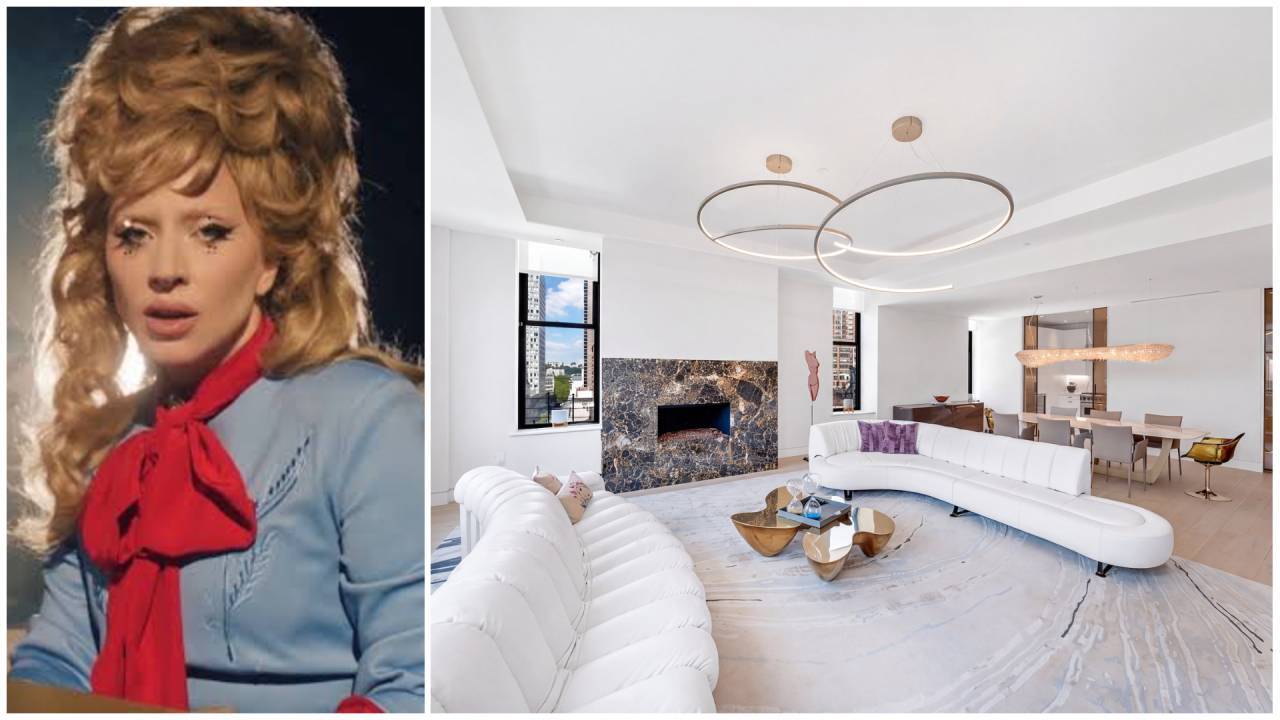
A duplex penthouse at 40 Central Park South in Manhattan, famously rented by Lady Gaga and later occupied by Carmelo Anthony and Tracy Morgan, has hit the sales market for $7 million. Located directly across from the southern border of Central Park, the two-bedroom, two-and-a-half-bathroom residence sits atop a pre-war, white-glove building constructed in 1929. While entertainment outlets treat the listing as a simple parade of A-list trivia, the property’s repeated turnover reveals something far more telling about how ultra-wealthy talent actually uses New York City real estate—and why high-profile buildings quietly rely on celebrity renters to maintain their cultural cachet without sacrificing board exclusivity.
For decades, the standard real estate press release has followed a predictable formula. Attach three boldface names to a floor plan, sprinkle in a few adjectives about Central Park views, and wait for syndication algorithms to do the rest. Yet anyone who has covered Manhattan’s luxury brokerage trenches long enough knows that a $7 million price tag on Central Park South is practically entry-level for the corridor. Just a few blocks east, Billionaires’ Row towers routinely ask ten times that figure for raw, unrenovated space. So why did three of the most recognizable figures in music, professional basketball, and stand-up comedy all land in this specific, relatively modest 2,000-square-foot duplex? And more importantly, why did none of them stay? If you liked this article, you might want to look at: this related article.
The Mechanics of the Celebrity Rental Pipeline
Most readers assume that when a pop icon or an NBA All-Star moves into a landmark Manhattan address, they wire millions to an escrow account and take ownership. The reality is almost always the exact opposite. High-net-worth entertainers operate on project-based timelines, album cycles, and league trade deadlines that make outright ownership in strict Manhattan co-ops and boutique condominiums a logistical nightmare.
When Lady Gaga leased the penthouse at 40 Central Park South during the height of her Born This Way and Artpop eras, she was not looking for a forever home. She needed a secure, discreet base of operations in Midtown with private elevator access, room for vocal warm-ups, and an unobstructed terrace where paparazzi lenses from neighboring buildings could not easily track her movements. For a performer spending 250 days a year on global arena tours, tying up $7 million in illiquid equity—plus monthly carrying costs, transfer taxes, and mansion taxes—makes zero financial sense. Renting at $22,000 to $30,000 a month allows a touring artist to treat a trophy Manhattan apartment as an operational line item rather than a personal liability. For another look on this event, see the recent coverage from BBC.
The exact same calculus applied to Carmelo Anthony and Tracy Morgan, albeit for entirely different professional reasons.
- Transactional Flexibility: During his tenure with the New York Knicks, Anthony required living arrangements that could adapt to family shifts, off-season training schedules, and the ever-present volatility of NBA roster management. A lease eliminates the multi-year exit timeline required to offload a luxury Manhattan unit.
- Privacy Without Ostentation: Unlike modern glass curtain-wall towers on West 57th Street, where every lobby arrival is documented by street photographers waiting outside the porte-cochère, older Central Park South properties offer understated entrances that blend into Midtown foot traffic.
- Turnkey Readiness: Celebrities rarely want to spend eighteen months arguing with the Landmarks Preservation Commission over window replacements or waiting on custom Italian millwork. They pay a premium to walk into a fully finished space with existing provenance.
What $7 Million Actually Buys at 40 Central Park South
Strip away the red-carpet pedigree, and you are looking at a classic, early-twentieth-century Manhattan penthouse that trades sprawling square footage for irreplaceable sightlines and outdoor living space. Built in 1929, the 21-story building sits on one of the most scrutinized stretches of real estate in North America.
The duplex layout divides public entertaining from private quarters, a critical feature for residents who routinely host managers, stylists, or teammates without wanting business bleeding into their bedroom. The lower level centers on a living room anchored by a wood-burning fireplace, herringbone hardwood floors, and oversized windows framing the treetops of Central Park. Directly off the main living area sits a landscaped wrap-around terrace—arguably the single most valuable asset in the entire listing. In Manhattan, private outdoor space facing north over the park commands an exponential price per square foot because zoning laws and existing height restrictions ensure those views cannot be built out.
Upstairs, the primary suite claims its own private terrace, alongside an en-suite bath and dressing area. A second bedroom and a powder room round out the footprint. By modern Hudson Yards or Tribeca standards, where 4,000-square-foot condos are treated as starter homes for hedge fund analysts, 2,000 square feet feels compact. Even the kitchen and baths, while updated, reflect the spatial constraints of a 1929 structural grid rather than the cavernous, open-concept layouts built in the last decade.
The Carrying Cost Reality Check
Prospective buyers dazzled by the $7 million asking price often overlook the quiet bleed of monthly expenses in Midtown luxury buildings. Between common charges, real estate taxes, and building assessments, carrying a $7 million residence on Central Park South easily runs between $6,500 and $9,500 every single month—before factoring in a single dollar of mortgage interest.
If a buyer puts down 30 percent ($2.1 million) and finances the remaining $4.9 million at prevailing jumbo rates, the monthly outflow approaches $38,000 to $42,000. That number explains why previous owners held onto the unit as an income-producing rental asset for over a decade rather than selling into softer luxury markets. When you can lease a property to an A-list tenant for $25,000 to $33,000 a month, the celebrity occupant effectively subsidizes your equity growth while adding marketing lore to the deed.
The Pedigree Illusion in Luxury Real Estate
Brokers love celebrity provenance because it solves their hardest problem: differentiation. In a city with thousands of two-bedroom luxury listings, telling a buyer that Tracy Morgan once watched the sunrise from the terrace or that Lady Gaga wrote melodies in the living room instantly separates the apartment from comparable units three blocks away.
Yet seasoned New York real estate attorneys and appraisers view celebrity history with a healthy dose of skepticism. Provenance does not add a single dollar to an official bank appraisal. Lenders underwrite based on comparable closed sales within a half-mile radius over the previous six months, adjusting for square footage, condition, floor height, and exposure. An appraiser does not care whether a Grammy winner or a retired accountant slept in the primary bedroom.
In fact, celebrity occupancy can occasionally work against a property’s value. High-profile tenants are notorious for hard wear and tear—entourages, late-night gatherings, security personnel, and hasty move-outs when filming schedules change. Furthermore, when a listing relies heavily on its famous former renters in press releases, it often signals that the apartment itself lacks the architectural scale or white-glove amenities needed to command top dollar on its own merits.
Why These Buildings Welcome Famous Renters
Manhattan co-op and condo boards are legendary for rejecting ultra-wealthy applicants, including Madonna, Barbra Streisand, and Calvin Klein, out of fear that paparazzi crowds and late-night entourages will disrupt the quiet enjoyment of longtime residents. So how did three major entertainers cycle through 40 Central Park South?
The answer lies in the legal distinction between buying and subletting, combined with building governance. Condominiums—and more flexible co-ops that permit investor-owners—allow unit owners to lease their apartments with minimal board interference, provided the tenant passes a basic financial and background check. Even stricter boards often soften their stance when a celebrity signs a one- or two-year lease rather than seeking permanent ownership. A temporary tenant has a defined expiration date. If security detail blocks the service elevator or fans linger near the awning, the board knows the issue resolves itself when the lease expires.
Central Park South vs. Billionaires' Row
To understand whether $7 million represents genuine value or an overpriced nostalgia play, you have to look at the immediate neighborhood dynamics. Central Park South functions as the historical dividing line between pre-war elegance and modern vertical excess.
| Metric | 40 Central Park South (Duplex PH) | Typical Billionaires' Row Condo (57th St) | Upper West Side Pre-War Co-op |
|---|---|---|---|
| Asking Price | $7,000,000 | $25,000,000 – $65,000,000+ | $6,500,000 – $12,000,000 |
| Approx. Scale | ~2,000 sq ft + terraces | 4,000 – 8,000+ sq ft | 2,500 – 3,500 sq ft |
| Building Era | 1929 (Pre-War) | 2014 – 2024 (Supertall) | 1910 – 1930 (Pre-War) |
| Outdoor Space | Expansive wrap-around terraces | Rare (mostly interior loggias) | Rare (except select penthouses) |
| Governance | Boutique investor-friendly | Pure condo (LLC friendly) | Strict board approval / low financing |
As the table illustrates, 40 Central Park South occupies a strange middle ground. It lacks the 14-foot ceilings, private lap pools, and resident-only Michelin-starred dining rooms that define the supertalls one block south on 57th Street. At the same time, it offers something none of those glass towers can replicate: genuine, open-air terraces directly overlooking the park at a height where you can actually hear the rustle of trees and the clip-clop of horse-drawn carriages rather than looking down at clouds from 1,100 feet in the air.
For a certain breed of buyer—typically a domestic or international pied-à-terre shopper who wants a lock-and-leave Manhattan trophy without spending $30 million—that tradeoff is compelling. You get the prestige of a Central Park South address, the rarity of a true duplex penthouse, and an instant conversation piece for dinner guests.
The Hidden Friction of Buying a Famous Rental
Anyone seriously considering an offer on this penthouse needs to look past the glossy listing photos and examine three practical realities that rarely make it into entertainment coverage.
First, terrace maintenance and waterproofing on pre-war setbacks are a perpetual financial wildcard. Unlike modern cantilevered balconies engineered with advanced drainage membranes, 1920s setback terraces sit directly over the living spaces of the apartments below. If a terrace membrane fails and water intrudes into the neighbor’s ceiling, the financial liability and construction disruption fall squarely on the penthouse owner. Buyers must demand complete engineering records showing when the terrace pavers and waterproofing were last replaced.
Second, Midtown noise and congestion never truly turn off. Living directly on Central Park South means stepping out your front door into a relentless stream of tour buses, street vendors, pedicabs, and tourist foot traffic. While the 21st-floor elevation dampens street-level honking, it does not eliminate the logistical friction of getting a car to the curb during holiday seasons or UN General Assembly weeks. Residents who crave neighborhood grocery stores, quiet dog walks, and low-key coffee shops usually migrate uptown to the Upper East or Upper West Side within two years.
Third, resale liquidity at the $7 million mark depends heavily on whether the next buyer wants a full-time residence or a weekend crash pad. Two bedrooms, regardless of how glamorous the terraces are, automatically exclude families with children or executives who need separate live-in staff quarters. The buyer pool is narrow by design: single high-earners, empty-nesters, or corporate entities seeking an impressive pied-à-terre.
Why the Timing of This Listing Matters
Putting a celebrity-pedigreed penthouse on the market right now is a calculated bet on Manhattan’s bifurcated luxury recovery. While ultra-prime sales above $20 million have remained resilient due to all-cash buyers insulated from interest rate fluctuations, the $5 million to $10 million bracket has faced stiff price sensitivity. Sellers in this tier can no longer rely on low borrowing costs to bail out ambitious pricing.
By leaning into the Lady Gaga, Carmelo Anthony, and Tracy Morgan connection, the listing team is executing a textbook earned-media strategy. Every lifestyle blog, sports outlet, and real estate vertical that picks up the story provides free global distribution that no paid digital campaign could ever match. In luxury brokerage, eyeballs from millions of casual readers do not directly translate into qualified bids, but they dramatically increase the odds that the one wealthy buyer actually shopping in that price bracket sees the floor plan before their broker even sends it over.
Whether the penthouse fetches its full $7 million ask or trades closer to $6.2 million after quiet negotiations, its real value was never the drywall or the herringbone oak. It is a rare, sun-drenched perch above New York’s most famous backyard that briefly served as a private sanctuary for three icons who needed a place to hide in plain sight—and then moved on the moment their lives demanded a bigger stage.