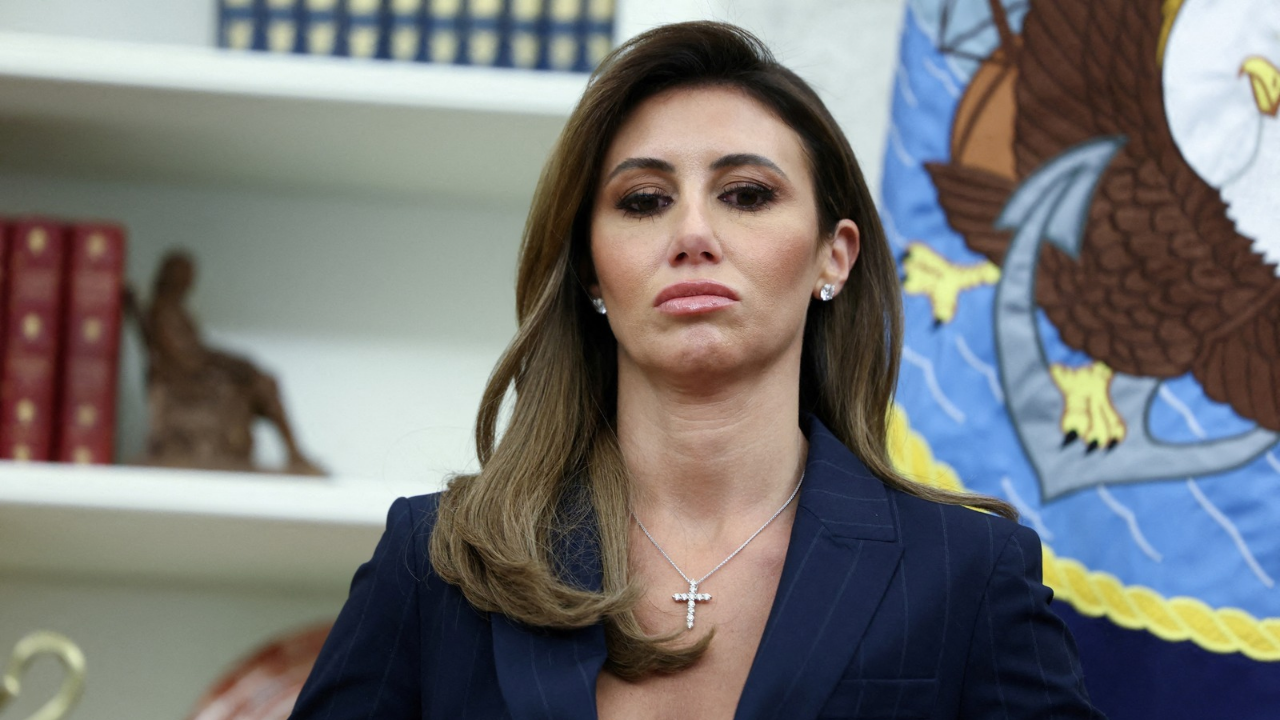
Donald Trump publicly rebuked his former personal attorney and White House counselor Alina Habba, branding her reported $50 million consulting agreement with the family of a pardoned Venezuelan banker "unacceptable." The rare public break exposes the volatile intersection of presidential clemency, private-sector influence peddling, and the fierce loyalty tests that define the second Trump administration.
For years, Alina Habba operated as one of Donald Trump’s fiercest public defenders. She stood beside him in New York courtrooms, sparred with cable news anchors, and parlayed relentless media appearances into a senior advisory role inside the West Wing. That proximity made her immensely valuable to foreign nationals and corporate entities desperate to navigate Washington's power corridors. When news broke that Habba had inked a staggering $50 million arrangement tied to the relatives of a Venezuelan financier who had previously secured executive clemency, the political blowback was immediate. Trump’s sharp condemnation was not merely a routine press statement; it was a calculated effort to insulate his administration from accusations that presidential pardons are effectively up for bid in the private market.
The Anatomy of a $50 Million Windfall
In Washington, eight-figure consulting contracts rarely materialize out of thin air. They are almost always the product of perceived access, regulatory relief, or existential legal jeopardy.
The Venezuelan banking sector has spent the better part of two decades entangled in international sanctions, money laundering probes, and Department of Justice asset forfeiture actions. When a prominent banker from Caracas secures a presidential pardon, the legal relief does not automatically erase the broader financial headaches facing their family. Frozen accounts remain locked at the Treasury Department's Office of Foreign Assets Control (OFAC). Visa restrictions linger. International banking partners still treat the family's capital as radioactive.
Enter the former insider.
To a wealthy family trying to rehabilitate its global financial standing, hiring a lawyer who shares a direct line to the Oval Office looks like the ultimate insurance policy. A $50 million fee—an astronomical sum even by the inflated standards of K Street crisis management—signals that the client is not buying standard legal briefs or routine regulatory filings. They are buying proximity. They are paying for the belief that a single phone call from the right operative can unstick bureaucratic gears that have been jammed for years.
Yet, in the world of high-stakes lobbying and foreign representation, the sheer scale of the price tag becomes its own liability. Standard retainer agreements for complex OFAC delisting campaigns or international asset recovery typically run into the low millions over several years. A $50 million payday screams anomaly. It invites immediate scrutiny from congressional oversight committees, federal ethics watchdogs, and investigative reporters looking for a straight line between a past pardon and a present payout.
Why Trump Pulled the Trigger on a Public Rebuke
Donald Trump is notoriously reluctant to criticize loyalists in public, particularly those who weathered his darkest legal storms between 2021 and 2024. Loyalty, in Trump’s political ecosystem, is the primary currency. People who go to bat for him on television and absorb legal heat on his behalf are usually afforded a wide berth to monetize their proximity once they leave his immediate payroll.
So why did Habba’s deal cross an invisible boundary?
The answer lies in the optics of clemency monetization. Throughout his political career, Trump has faced relentless criticism from Democrats and ethics watchdogs over his use of the pardon power. Critics have long argued that his clemency decisions favor allies, donors, and well-connected supplicants over traditional Justice Department review processes. If a former top lawyer and White House official is seen pocketing $50 million from the family of a pardoned foreign banker, it hands opposition researchers a devastating narrative on a silver platter. It transforms an abstract ethics debate into a concrete, easily digestible headline about cash-for-access.
By calling the arrangement "unacceptable," Trump executed a classic political containment strategy. He severed the connective tissue between his own decision-making and Habba’s private business ventures before the story could metastasize into a full-blown administration scandal.
The message to the rest of his orbit was equally clear. Monetizing your time in Trump World is expected—books, speaking tours, media contracts, and traditional lobbying roles are all part of the game. Taking an eight-figure check tied to a sensitive foreign pardon, however, creates an unacceptable political liability for the principal. When the heat rises, the principal will protect himself first.
The Regulatory Minefield of Foreign Representation
Beyond the immediate political fallout, a financial arrangement of this magnitude triggers a labyrinth of federal compliance hurdles. Washington’s legal framework is specifically designed to scrutinize large sums of money flowing from foreign nationals to former government officials.
- The Foreign Agents Registration Act (FARA): Under FARA, any American citizen or entity acting as an agent of a foreign principal in a political or quasi-political capacity must disclose their relationship, activities, and financial compensation to the Department of Justice. Failing to register—or attempting to shield the work under the guise of "legal representation" or "general business consulting"—has become one of the DOJ's favorite prosecution tools over the last decade.
- Post-Employment Cooling-Off Periods: Federal ethics laws, bolstered by executive branch pledges, impose strict bans on former senior officials lobbying their old agencies or the White House for set periods after leaving office. Even if a former official claims they are merely offering "strategic advice" behind the scenes without making direct contact with government personnel, prosecutors frequently test the boundaries of what constitutes prohibited shadow lobbying.
- Anti-Money Laundering (AML) and Bank Secrecy Scrutiny: Moving $50 million linked to a Venezuelan financial figure sets off automated alarms across the global banking system. American financial institutions are legally obligated to file Suspicious Activity Reports (SARs) on massive, unusual transfers originating from high-risk jurisdictions, regardless of whether the recipient holds a law license.
When a lawyer steps out of the government orbit and immediately signs a massive contract with a foreign-linked client, they are effectively volunteering for a forensic audit by federal regulators. Even if every dollar is accounted for and every disclosure form is filed on time, the reputational cost of navigating that scrutiny is immense.
The K Street Shadow Economy
Habba’s predicament highlights a much broader, systemic reality in modern Washington. Over the past fifteen years, the traditional boundaries between legal practice, public relations, and lobbying have largely dissolved.
A new breed of political operative has emerged—figures whose primary qualification is not deep subject-matter expertise in tax code or administrative law, but rather personal intimacy with the president. Their business model relies on strategic ambiguity. To the public and the Department of Justice, they present themselves as private attorneys providing confidential legal counsel, which conveniently shields their communications and client lists behind attorney-client privilege. To wealthy prospective clients in Dubai, Caracas, Riyadh, or London, they subtly project the image of an all-access pass to the West Wing.
This shadow economy thrives because enforcement is chronically inconsistent. The Justice Department’s FARA unit is historically understaffed, and proving that a former official crossed the line from "legal advice" into "unregistered lobbying" requires clearing high evidentiary bars. Consequently, the fees have skyrocketed. Foreign oligarchs and embattled executives are willing to pay exorbitant premiums to bypass traditional diplomatic channels, betting that a well-connected insider can solve problems that career bureaucrats will not touch.
The fatal flaw in this model is that it depends entirely on the continued goodwill of the person at the top. The moment the president publicly disavows the operative, the illusion of access evaporates overnight. A consultant who has been publicly rebuked by the Commander-in-Chief is no longer an asset to a foreign family; they become a liability.
Historical Precedents of the Inner-Circle Blowup
Washington history is littered with the careers of fiercely loyal aides and attorneys who flew too close to the sun when cashing in on their proximity to power.
During the first Trump administration, Michael Cohen’s creation of Essential Consultants LLC—through which he collected millions of dollars from corporations like AT&T and Novartis, as well as a firm linked to a Russian oligarch, in exchange for insights into the new administration—became a textbook case of how private monetization schemes blow back on the White House. When those payments became public, the administration quickly distanced itself, and the corporate clients scrambled to apologize for what they termed a "big mistake."
Earlier administrations faced similar embarrassments. During the Carter years, Billy Carter’s acceptance of over $200,000 in loans from the Libyan government sparked a Senate investigation that dogged his brother’s presidency. In the Clinton era, late-term pardons—most notably that of fugitive financier Marc Rich—triggered years of congressional inquiries into how personal relationships, campaign donations, and legal fees intersected with executive clemency.
In every single instance, the underlying dynamic remains identical. Proximity to the presidency creates an intoxicating gravitational pull for wealthy outsiders. Those inside the orbit begin to believe their personal brand is strong enough to command massive fees without consequence. Inevitably, the sheer size of the transaction attracts sunlight, and sunlight is fatal to influence-peddling arrangements.
The High Cost of Burning Political Capital
For Alina Habba, the fallout from the $50 million Venezuelan deal represents a dramatic reversal of fortune. Having spent years building a reputation as an unflinching warrior for Trump, she now finds herself on the receiving end of his public disapproval—a position that rarely ends well in Republican politics.
Whether the $50 million contract survives the political firestorm remains an open question. High-net-worth international clients pay for quiet, seamless execution. They do not pay eight figures to have their family’s name splashed across the front pages of American newspapers alongside presidential condemnations. If the deal unravels, or if federal regulators decide to examine the mechanics of how the arrangement was structured, the financial windfall could quickly turn into a ruinous legal defense bill.
More broadly, the episode serves as a stark warning to the current roster of administration insiders eyeing lucrative exits into the private sector. In Washington, you can sell your expertise, you can sell your time, and you can quietly sell your network. The moment your price tag forces the president to publicly disown you, the market for your influence closes for good.