When state-licensed cannabis testing facilities spent nearly half a million dollars on a single piece of analytical hardware, they expected bulletproof regulatory compliance. Instead, laboratory directors across legal markets report that these $470,000 mass spectrometry systems routinely miss banned chemical residues, generate false positives, and buckle under the sticky biological reality of cured cannabis flower. The core failure is not just faulty engineering; it is a collision between off-the-shelf environmental testing technology, complex plant chemistry, and fragmented state regulations that force laboratories to prioritize speed over analytical accuracy.
The Chemistry Problem Nobody Budgeted For
Standard analytical instruments are built for clean matrices. Water, blood plasma, and agricultural produce like lettuce or apples present predictable chemical backgrounds. Cannabis does not.
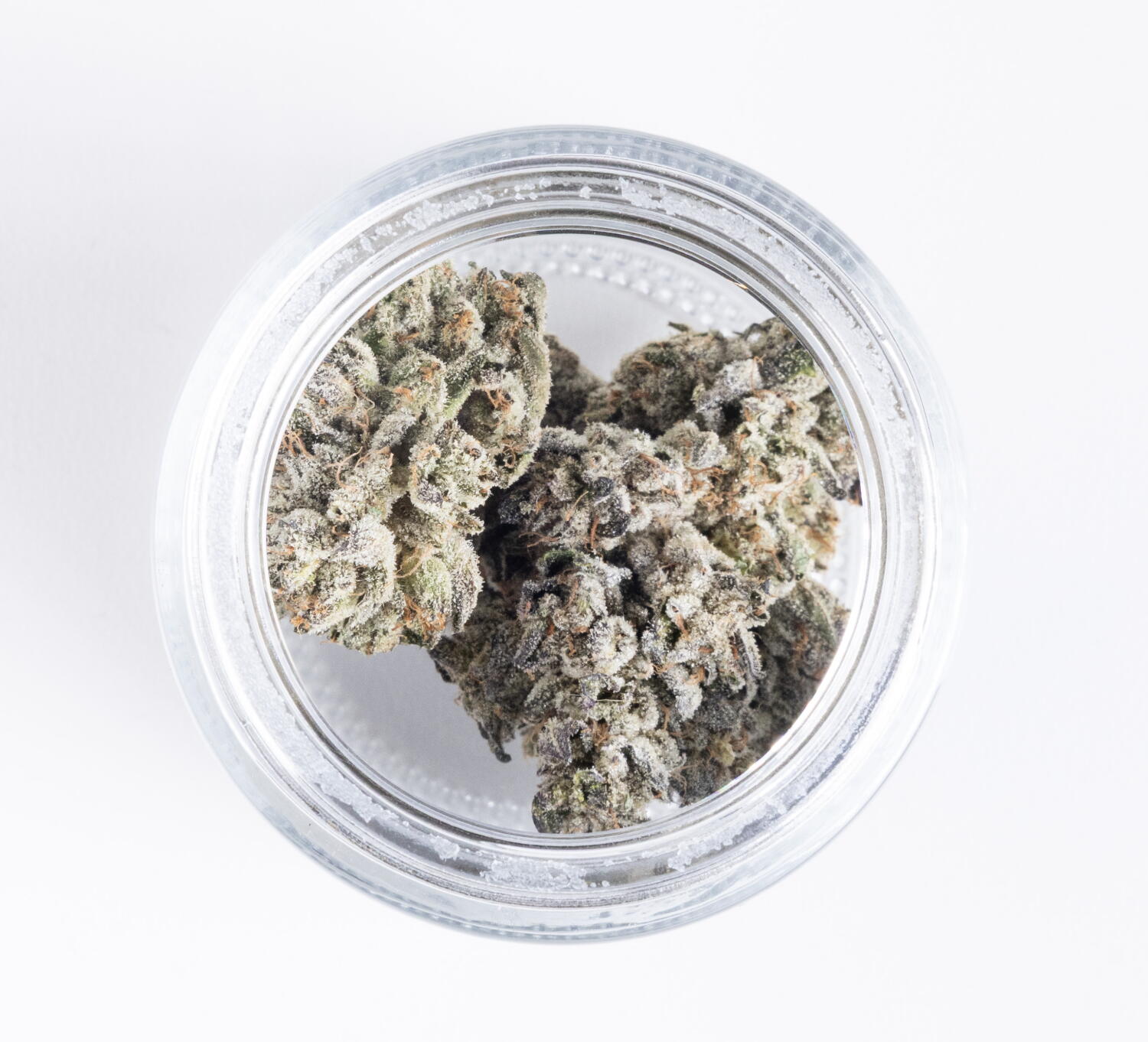
A cured cannabis bud is a dense resinous factory packed with cannabinoids, terpenes, flavonoids, lipids, and plant waxes. In many high-potency strains, tetrahydrocannabinol (THC) and cannabidiol (CBD) alone account for more than twenty to thirty percent of the sample's total dry weight. Meanwhile, state regulators require laboratories to detect pesticides at the parts-per-billion (ppb) level.
That creates a brutal signal-to-noise problem. Searching for a few parts per billion of myclobutanil or bifenazate inside a concentrated cannabis extract is chemically equivalent to hunting for a single grain of salt dissolved in an Olympic swimming pool filled with pine tar.
When testing facilities purchase a turnkey $470,000 system—typically a Liquid Chromatography-Tandem Mass Spectrometry (LC-MS/MS) or Gas Chromatography-Tandem Mass Spectrometry (GC-MS/MS) platform marketed with pre-packaged cannabis testing workflows—they are buying a machine calibrated in pristine factory conditions. Manufacturers demonstrate these instruments using clean solvent standards spiked with known quantities of pesticides. In a sterile vendor showroom, the data looks immaculate.
Once that same instrument hits a commercial laboratory floor, the reality changes within days.
Matrix Effects and Ion Suppression
To understand why an expensive machine fails, you have to look at what happens inside the ionization source. In an LC-MS/MS setup, a liquid extract of the cannabis sample is vaporized and given an electrical charge so magnets and radio frequencies can sort the molecules by mass.
Cannabinoids and plant lipids co-elute—meaning they exit the chromatography column at the exact same time as the target pesticides. Because cannabinoids exist in concentrations millions of times higher than the pesticides, they hog the available electrical charge. Analytical chemists call this ion suppression. The pesticide is physically present in the sample, passing right through the detector, yet the machine registers almost nothing because the cannabinoids stole the charge required to make the pesticide visible.
Conversely, plant compounds can mimic the molecular weight and fragmentation pattern of regulated chemicals, triggering false positives that force labs to fail clean batches of flower.
- Detector Fouling: Sticky resin buildup coats the sensitive internal lenses and quadrupoles of the mass spectrometer within dozens of injections, causing sensitivity to plummet.
- Sample Dilution Traps: To reduce sticky buildup, technicians dilute the cannabis extract heavily with solvent. However, diluting a sample by a factor of one hundred also dilutes the trace pesticides by a factor of one hundred, pushing them below the machine's limit of detection.
- Clean-Up Loss: Aggressive filtration methods like QuEChERS (Quick, Easy, Cheap, Effective, Rugged, and Safe) or solid-phase extraction strip away plant waxes, but they frequently strip away specific pesticides at the exact same time, skewing recovery rates.
The Business Model Behind Turnkey Lab Failures
Why did so many laboratories buy these specific systems if the chemistry is so unforgiving? Follow the money.
Between 2018 and 2024, dozens of states legalized medical or adult-use cannabis on aggressive timelines. Entrepreneurs rushed to open compliance laboratories, often backed by private equity investors who understood real estate and retail but knew nothing about analytical chemistry. Instrument manufacturers saw a gold rush.
Instead of selling raw hardware to PhD chemists who would spend six months developing and validating custom extraction methods, equipment vendors began selling "cannabis-in-a-box" solutions. The pitch was seductive: buy this $470,000 instrument, load our proprietary software method, use our branded sample preparation kits, and start billing cultivators within two weeks.
For an undercapitalized lab owner facing burn rates of tens of thousands of dollars a month while waiting for state licensing, a turnkey promise was irresistible. Many signed multi-year lease-to-own financing agreements paired with expensive annual service contracts that tacked on another $40,000 to $60,000 per year.
The flaw in the turnkey model is that cannabis is not a uniform commodity. A high-terpene live resin concentrate requires a completely different extraction and chromatography protocol than a sugary infused gummy, a distillate vape cartridge, or dense indoor flower. A single pre-programmed vendor method cannot reliably handle all four matrices without severe calibration drift. When labs tried to push hundreds of diverse samples a week through a rigid, vendor-supplied workflow, the machines choked.
Regulatory Blind Spots and "Lab Shopping"
The hardware failures do not exist in a vacuum. They are amplified by a broken regulatory structure that actively punishes rigorous science.
Unlike pharmaceuticals or municipal drinking water, cannabis lacks federal oversight. Because cannabis remains federally controlled in the United States, neither the Environmental Protection Agency (EPA) nor the Food and Drug Administration (FDA) sets national testing standards or validates official analytical methods. Every legal state has invented its own regulatory island.
One state mandates testing for 66 pesticides; a neighboring state tests for over 100, with entirely different action limits. Some states require laboratories to hold ISO/IEC 17025 accreditation, an international standard for testing competence. Yet ISO accreditation only verifies that a lab follows its own documented procedures consistently—it does not guarantee that the underlying chemical method actually works on tricky cannabis resins.
How Market Pressure Breaks Quality Control
In almost every legal market, cultivators pay the testing laboratories directly and choose which lab gets their business. This creates an immediate conflict of interest known throughout the industry as lab shopping.
Consider a hypothetical scenario illustrating how this dynamic plays out in a competitive state market. Imagine two testing facilities operating ten miles apart. Lab A spends extra time on rigorous sample cleanup, runs frequent calibration checks, and halts its $470,000 mass spectrometer every 48 hours for deep cleaning. Because Lab A's instrument runs cleanly, it catches low-level pesticide contamination and fails 12 percent of the harvests submitted to it. Lab B relies on the manufacturer's fast, minimally diluted turnkey method, skips frequent maintenance to maximize daily sample volume, and suffers from severe ion suppression. Because Lab B's machine is blind to trace residues, it fails only 2 percent of samples.
Cultivators sitting on hundreds of thousands of dollars of perishable inventory quickly figure out which lab passes their crop. Within six months, Lab A loses half its client base and struggles to pay off its equipment leases, while Lab B expands.
Regulators rarely catch the discrepancy until a whistle-blower comes forward or a third-party audit tests retail products off dispensary shelves. Even when state agencies conduct proficiency testing—sending blind samples spiked with known contaminants to licensed labs—the tests often fail to mirror real-world conditions. Proficiency samples are frequently sent in clean solvents or homogenized hemp material rather than sticky, high-THC extracts, allowing poorly calibrated machines to pass the state's exam while failing on actual commercial products.
The Invisible Split Between LC and GC Platforms
Another expensive trap buried in the $470,000 price tag involves fundamental physics. No single mass spectrometer can detect every regulated pesticide.
Pesticides fall into two broad chemical categories based on how they behave under heat and pressure:
- Polar, thermally labile compounds (such as abamectin, imidacloprid, and spinosad) break down if heated too aggressively. They must be separated in a liquid stream using an LC-MS/MS system.
- Non-polar, volatile, or halogenated compounds (such as chlordane, pentachloronitrobenzene, and chlorfenapyr) do not ionize well in liquid streams. They require vaporization in a gas stream using a GC-MS/MS system.
To cut capital costs, some equipment vendors marketed high-end LC-MS/MS systems equipped with dual ionization sources, claiming a single $470,000 machine could capture the entire state pesticide list without forcing the lab to buy a second GC-MS/MS instrument.
In theory, dual-source ionization saves a lab $250,000 in capital expenditure and valuable bench space. In practice, forcing an LC-MS/MS to detect stubborn GC-amenable pesticides in a heavy cannabis matrix stretches the hardware past its physical limits. Detection thresholds hover right on the razor's edge of state action limits. Minor fluctuations in laboratory room temperature, nitrogen gas purity, or column age push signal readings below reliable thresholds, turning pass/fail compliance decisions into statistical coin flips.
What Competent Labs Actually Do to Survive
Experienced analytical chemists who successfully run cannabis testing operations treat vendor promises with deep skepticism. They recognize that buying a $470,000 mass spectrometer is only the entry fee, not the finish line.
To extract reliable data from cannabis, veteran lab directors abandon off-the-shelf workflows and build custom, defense-in-depth protocols:
1. Custom Method Development Over Turnkey Software
Rather than trusting pre-loaded instrument methods, senior chemists spend months building matrix-matched calibration curves. This means spiking known quantities of pesticides directly into verified pesticide-free cannabis flower, distillate, and edible matrices—not clean methanol—so the software accounts for ion suppression accurately.
2. Aggressive Front-End Sample Cleanup
The best protection for an expensive mass spectrometer happens before a single microliter of sample enters the machine. Top labs invest heavily in automated solid-phase extraction, dispersive cleanups, and cold-temperature lipid precipitation (winterization) to strip out plant waxes and chlorophyll. Removing the gunk upstream keeps the instrument's ionization source clean and extends hardware uptime.
3. Orthogonal Instrumentation
Rather than forcing one $470,000 machine to do everything poorly, reliable laboratories pair dedicated LC-MS/MS and GC-MS/MS systems, assigning each pesticide to the specific physics best suited to detect it.
4. Isotope-Dilution Internal Standards
To combat ion suppression in real time, accurate labs spike every single client sample with isotopically labeled internal standards—synthetic versions of the target pesticides where specific hydrogen or carbon atoms are replaced with heavier isotopes like deuterium or carbon-13. Because the heavy standard behaves identically to the real pesticide inside the cannabis extract, if cannabinoids suppress the pesticide's signal by 40 percent, they suppress the internal standard by 40 percent too. The software measures that drop and automatically corrects the final calculation.
Adding isotopic internal standards adds thousands of dollars a month in recurring chemical costs, which is why corner-cutting labs skip them.
The Structural Reckoning Ahead
The fallout from underperforming testing hardware is shifting from an internal laboratory headache to an existential threat for the legal cannabis industry. Consumer trust rests entirely on the assumption that state-mandated testing labels mean something. When investigative journalists, independent researchers, and state regulators pull off-the-shelf vape cartridges and pre-rolls only to discover banned fungicides and insecticides that cleared state compliance portals, the core value proposition of the regulated market collapses.
State regulators are slowly waking up to the hardware and methodology gap. Several mature cannabis markets—including California, Colorado, and Michigan—have begun building state-run reference laboratories capable of auditing private facilities, standardizing mandatory extraction protocols, and revoking licenses from labs that generate statistical anomalies. At the same time, consolidation is sweeping the testing sector. Undercapitalized labs saddled with debt on underperforming turnkey machines are shuttering, leaving behind larger, better-funded analytical networks that employ seasoned PhD chemists rather than entry-level technicians pressing a green start button.
A $470,000 mass spectrometer is an extraordinary piece of scientific engineering, capable of weighing individual molecules at parts-per-trillion sensitivity. Placed in the hands of a rigorous analytical team with validated methods and strict maintenance schedules, it protects public health. Sold as an automated cash register to operators cutting corners in an unregulated race to the bottom, it simply manufactures expensive illusions of safety.