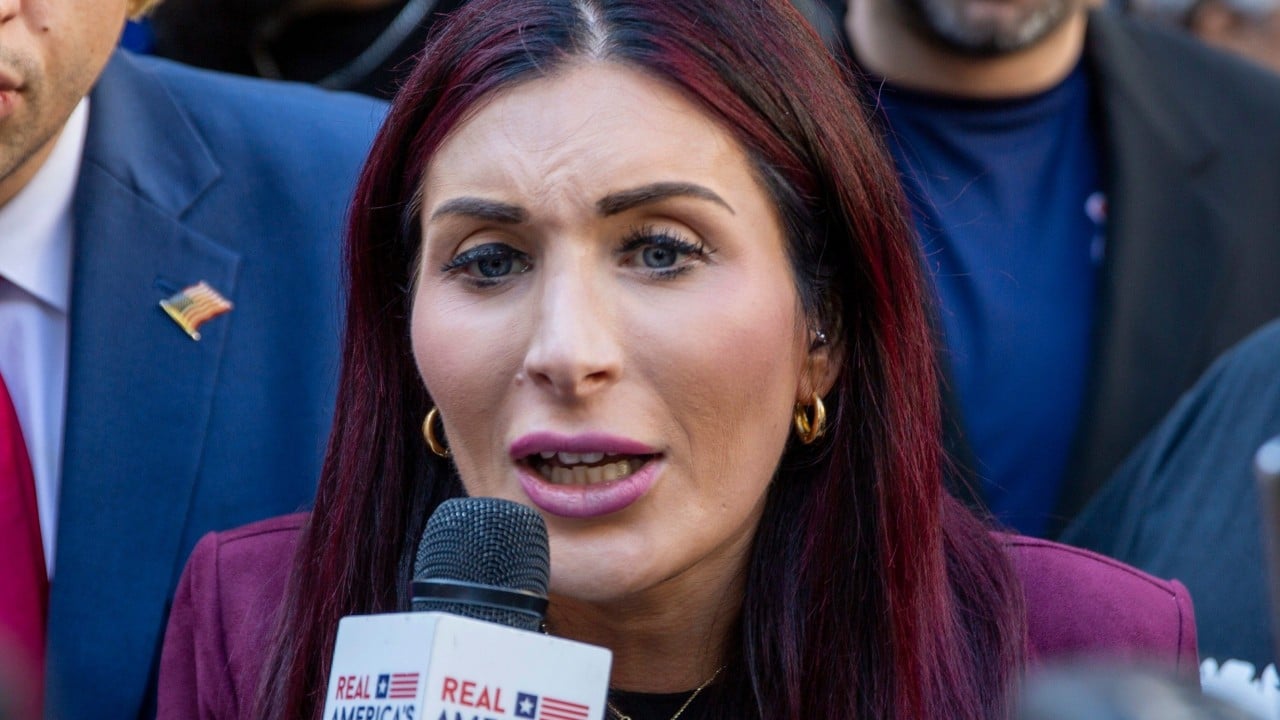
Political influence operations rely on feedback loops built within closed information ecosystems. When right-wing activist Laura Loomer stepped off a train in Kyiv, experienced an air raid, and subsequently sat down with Ukrainian President Volodymyr Zelenskyy at Mariinsky Palace, media outlets framed the event as a simple, dramatic personal epiphany. This framing misses the structural dynamics at play.
The encounter between an influential MAGA commentator and the president of a nation at war represents a systematic realignment of narrative distribution networks. By examining the mechanics of media incentive structures, geopolitical signaling, and elite access, we can decode how a high-profile critic transformed into an advocate within 72 hours—and what this shift indicates for the future of American foreign policy.
The Three Vectors of Influence Realignment
The shift in Loomer’s stance on Ukraine cannot be explained by sentimentality; it is best analyzed through three distinct structural mechanisms.
1. Direct Empirical Shock vs. Mediated Echo Chambers
For years, digital commentators operate within secondary information pipelines that reward narrative consistency over empirical verification. Loomer’s prior commentary—characterizing Ukraine as an illegitimate actor and adopting Kremlin-aligned framing—was optimized for domestic engagement metrics.
The introduction of direct physical experience acts as an immediate disrupter to this incentive loop. Witnessing incoming strike alerts and touring damaged cultural infrastructure like the Kyiv-Pechersk Lavra breaks the detachment required to maintain abstract disinfo narratives. The empirical shock forces the actor to choose between outright denial of physical reality or an immediate recalculation of public position.
2. High-Value Access as an Incentive Reframing Mechanism
Access is the ultimate currency for independent political commentators. Access to state actors grants unprecedented credibility, content differentiation, and reach.
- The Primary Channel: Sitting down for a direct interview with a head of state in a combat zone instantly elevates an independent commentator above mainstream journalistic competitors.
- The Diplomatic Bridge: Meeting with senior state officials, including Deputy Head of the Presidential Office Sergiy Kyslytsya, converts an outside agitator into a de facto diplomatic conduit.
- Institutional Legitimacy: Validation from the highest political authority—manifested by Donald Trump’s public endorsement of the meeting on social media—signals to the broader movement that this shift carries official sanction.
3. Religious and Moral Identity Arbitrage
Russian strategic communications long sought to capture Western conservative audiences by posturing as a defender of traditional Christian values. Loomer’s visit to the Dormition Cathedral following Russian strike damage shattered this specific narrative bridge.
By framing Russian actions as direct attacks on historic Christian sites, the political commentary shifted from economic isolationism ("taxpayer dollars spent abroad") to ideological defense. This re-anchors the conservative moral obligation, converting Ukraine's defense from a perceived liberal globalist mandate into an imperative to protect shared cultural heritage.
Strategic Implications for the MAGA Information Pipeline
This pivot exposes a critical vulnerability in decentralized political media ecosystems: high dependency on central node validation.
[Kremlin-Aligned Echo Chamber] ──(Disrupted By)──> [Empirical Field Reality]
                                                          │
                                                          ▼
[Mainstream Right Audience] <──(Validated By)─── [High-Access Interviews]
When primary nodes alter their outputs, secondary distributors face a strategic choice. They must either pivot alongside the node to preserve coalition alignment or attempt to hold the previous line at the risk of isolation. Loomer’s public acknowledgment of falling victim to foreign disinformation opens a pathway for other conservative figures to alter their positioning without suffering catastrophic loss of face.
The broader lesson for statecraft is clear: decentralized, highly skeptical media influencers cannot be engaged through traditional institutional diplomatic channels. Foreign governments seeking to alter domestic political sentiment in allied nations must bypass standard diplomatic corps, grant high-level direct access to non-traditional media figures, and leverage physical field realities to dismantle abstract disinformation networks at the source.


