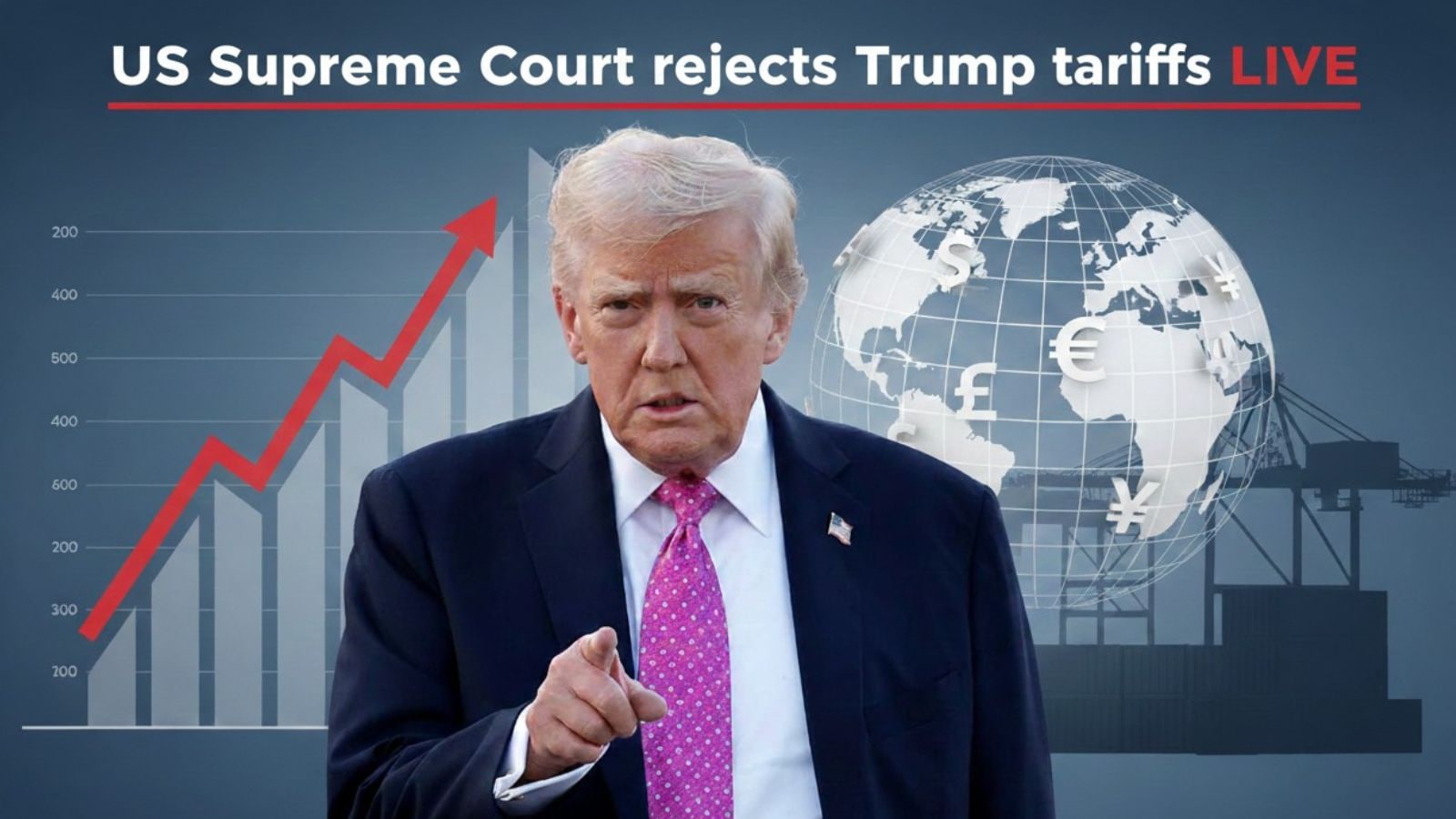
The financial press is wringing its hands because India paused trade talks following a US Supreme Court ruling on tariffs. They call it a "setback." They call it "uncertainty." They are wrong. This isn't a breakdown; it’s a sophisticated exercise in strategic patience that most Western analysts are too short-sighted to recognize.
The consensus view suggests that India is reacting out of fear or instability. In reality, New Delhi just realized that the American legal system did them a massive favor. By creating a temporary vacuum of clarity regarding executive tariff power, the Court gave India the perfect excuse to stop negotiating against itself.
The Myth of the "Missed Opportunity"
Mainstream reporting treats trade agreements like a bus you can't afford to miss. If you don't board now, you’re stranded. I’ve sat in rooms where billions were left on the table because one side felt "rushed" by a news cycle. Smart players know that the bus always circles back, and usually with better seats if you wait.
India’s Ministry of Commerce isn't stalling because they are unprepared. They are stalling because the valuation of the deal just changed. When the US Supreme Court weighs in on the limits of presidential authority—specifically regarding Section 232 or similar trade mechanisms—it shifts the "Value at Risk" for every export-oriented sector in India.
Why sign a deal with an administration whose primary leverage—unilateral tariff threats—is currently being litigated or restructured by its own judiciary? You don't buy a house while the deed is being contested in probate court. You wait for the verdict.
The "Certainty" Trap
"Businesses need certainty," the pundits scream.
No, they don't. Businesses need favorable terms. Certainty on bad terms is just a documented path to bankruptcy.
The "lazy consensus" argues that India needs this trade deal to offset its decoupling from China. This ignores the fact that India is currently the one with the high-ground. Global capital is desperate to find a China-alternative. That desperation makes the US the petitioner, not the judge. By pausing the talks, India is signaling that it will not be bullied into a "standard" deal that favors American dairy or medical device giants at the expense of its own burgeoning middle class.
Understanding the Legal Volatility
Let’s look at the mechanics. Most trade negotiations rely on the "Fast Track" authority or the perceived permanence of executive orders. When the Supreme Court intervenes in tariff logic, it creates a precedent that can be used to dismantle deals retroactively.
If India had pushed forward, they would be tethering their GDP growth to a legal framework that is currently under a microscope.
- Scenario A: India signs a deal today. Six months later, a court ruling invalidates the specific tariff exemptions promised in that deal. India is stuck honoring its concessions while the US side of the bargain evaporates.
- Scenario B: India waits. The legal dust settles. India negotiates from a position of "We saw your system fail, now give us a discount for the risk we’re taking."
Scenario B is the only one a sane person chooses.
The Flaw in "People Also Ask" Logic
If you search for why trade talks stall, you get answers about "protectionism" or "diplomatic friction." These are surface-level distractions.
The real friction is the Cost of Compliance. For an Indian firm to align with US trade standards, it often requires a total overhaul of labor and environmental reporting. That is an expensive, one-way street. If the US cannot guarantee that the tariff "carrot" will stay on the stick, why would any Indian CEO authorize the "stick" of compliance costs?
I have seen companies spend $50 million on compliance for a trade corridor that disappeared three years later because of a change in DC’s political wind. India is protecting its domestic industry from that exact volatility. It’s not protectionism; it’s risk management.
The Sovereignty of the "Slow-Walk"
The US expects trade partners to jump when a court rules or an election happens. India, with a civilizational memory that spans millennia, doesn't operate on a four-year news cycle.
By delaying, India is also testing the resilience of the "Friend-shoring" rhetoric. If the US is truly committed to moving supply chains out of East Asia and into South Asia, a six-month delay shouldn't break the relationship. If it does, then the relationship was never "strategic"—it was predatory.
The Institutional Failure of Trade Journalism
The reason you’re reading panicked headlines about "stalled talks" is that trade journalists are addicted to "momentum." They track "rounds of talks" like sports scores.
- Round 1: Success!
- Round 2: Progress!
- Round 3: Delay (Panic!)
This is a fundamental misunderstanding of how high-stakes geopolitical commerce works. Silence is a tactic. Delay is a tool. The "momentum" they crave is usually just the sound of a country giving up its sovereignty for a short-term stock market bump.
India is currently the fastest-growing major economy. It has the demographic dividend. It has the talent. The US needs India's market more than India needs US trade "allowances" that can be stripped away by a 5-4 judicial split in Washington.
Stop Asking "When Will the Deal Happen?"
The question is a trap. The right question is: "Does India even need a formal FTA with the US right now?"
The answer is likely no. Discrete, sector-specific agreements on semiconductors and critical minerals are moving forward regardless of the broad trade talk status. The "Big Deal" is a vanity project for diplomats. The real work is happening in the silos.
If you are an investor or a business leader, ignore the "delay" narrative. India isn't backing away from the table. They are just waiting for the US to realize that the table has moved, and the price of a seat just went up.
Stop waiting for a signature to validate your strategy. The delay is the strategy.
Trade isn't about friendship. It's about who blinks first. Right now, India’s eyes are wide open, and they’re staring directly at a fractured US legal system, waiting for the better price that is inevitably coming.
Go find a better metric than "progress reports" from bureaucrats. Follow the capital, not the headlines.