The headlines are screaming about a masterstroke. 30 million barrels of Russian Urals crude snapped up by Indian refiners following US waivers. The narrative is predictably lazy: India has outmaneuvered Western sanctions, secured its energy future, and saved billions in the process. It is framed as a geopolitical chess move that leaves Washington blinking and New Delhi grinning.
It is a fantasy.
What the mainstream financial press calls a "strategic win" is actually a desperate doubling down on a volatile, low-quality supply chain that is eroding India’s long-term refining edge. We are witnessing the slow-motion institutionalization of a "discount addiction." When you build your entire energy security strategy around being the world’s most prominent bargain hunter for distressed assets, you aren’t a superpower. You’re a liquidator.
The Myth of the Sovereign Masterstroke
The consensus view suggests India is exercising "strategic autonomy." This is a comforting term used by diplomats to describe a lack of better options. By gorging on Russian crude, India hasn’t freed itself from Western influence; it has merely swapped one set of chains for a more unpredictable, rustier pair.
Reliance Industries and Indian Oil Corp aren't buying this oil because they’ve unlocked a new era of Indo-Russian synergy. They are buying it because the price of Brent-linked grades remains structurally high and their own domestic production is a rounding error.
When the US grants a waiver, it isn't "allowing" India to win. It is using India as a pressure valve to keep global prices from hitting $120. Washington needs Indian refiners to keep the lights on in the global economy so American voters don't revolt at the pump. India is acting as a subcontractor for global price stability, taking on all the reputational and logistical risk while the US pulls the strings on the waivers.
The Refining Death Spiral
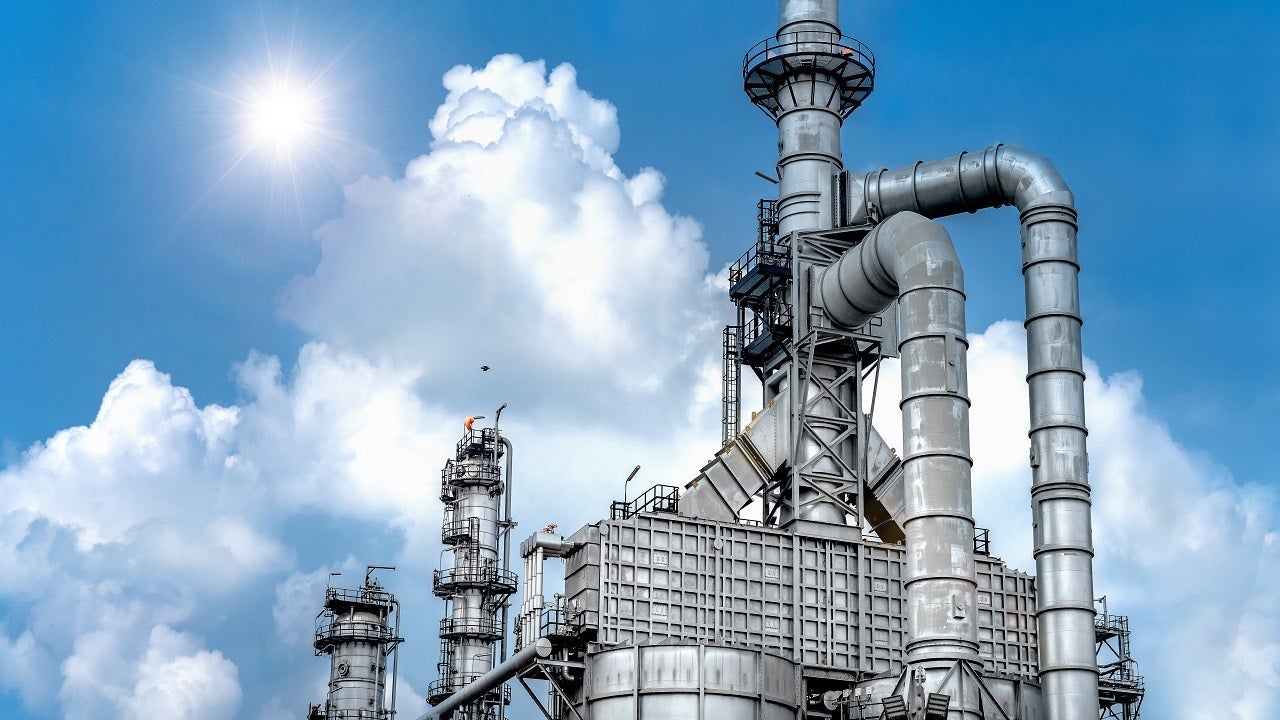
Here is what the analysts miss: Crude oil isn't a monolithic commodity. Every refinery is a precision instrument tuned to a specific diet. For decades, Indian refiners spent billions upgrading their facilities to handle complex, heavy, high-sulfur crudes from the Middle East and South America. These "complex" refineries were India’s competitive advantage. They could take the "trash" of the oil world and turn it into high-value Euro VI diesel and gasoline.
By pivoting so aggressively to Russian Urals—a medium-grade, sour crude—India is underutilizing its most expensive industrial assets.
The Hidden Costs of the Discount
- Metallurgical Stress: Urals crude often carries chemical signatures that differ from the Saudi Light or Iraqi Basrah grades these plants were built for. Constant switching increases maintenance cycles.
- Yield Degradation: If you run a high-complexity refinery on medium-grade crude, your "complexity gain" vanishes. You are essentially using a Ferrari to deliver pizzas.
- Opportunity Cost: While India chases the Russian discount, it is neglecting the development of long-term, stable term contracts with Atlantic Basin producers who are leading the transition to "green" molecules and carbon-captured crude.
I have seen companies blow millions on "cheap" feedstock only to realize the downstream processing costs and equipment wear-and-tear ate the margin alive. This isn't just about the price per barrel at the port of Sikka. It’s about the lifecycle cost of the refinery.
The Rupee-Rouble Dead End
The most "courageous" part of the narrative is the shift away from the petrodollar. "India is settling in Rupees!" the nationalists cheer.
Ask any Russian treasurer what they plan to do with a mountain of Indian Rupees sitting in a VTB Bank account in Delhi. The answer is: nothing. They can’t buy Airbus parts with it. They can’t buy high-end semiconductors with it. They can’t even use it to pay for their own imports from China.
This has resulted in a comical standoff where Russia is forced to invest those Rupees back into Indian government bonds or local infrastructure just to avoid a total loss. This isn't a "new financial architecture." It’s a barter system masquerading as a modern economy. It creates a massive, artificial imbalance that will eventually snap. When Russia demands payment in UAE Dirhams or Chinese Yuan—which they already are—India’s "sovereign" leverage evaporates.
The Logistics of a Ghost Fleet
The 30 million barrels aren't arriving on standard, Tier-1 insured tankers. Much of this volume is moved by the "shadow fleet"—vessels with opaque ownership, questionable insurance, and aging hulls.
India is betting its coastal environment on the hope that a twenty-year-old tanker, insured by a shell company in Dubai, doesn't split open in the Indian Ocean. A single major spill would wipe out five years of "savings" from the Russian discount in a weekend. The mainstream media ignores this because "environmental risk" doesn't fit into a tidy spreadsheet about EBITDA margins.
The Premise is Flawed
People often ask: "Shouldn't India put its own people first by buying the cheapest energy possible?"
It’s a false choice. Putting people first means building a resilient, multi-polar energy grid that doesn't rely on the whim of a US Treasury waiver or the desperation of a pariah state.
By locking into Russian supply, India is de-incentivizing its own transition to renewables and domestic natural gas. Why innovate when you can just buy "blood oil" at a $10 discount? It is a sedative for the energy sector. It feels good now, but the muscles are atrophying.
The Brutal Reality of the US Waiver
The US waiver is not a gift. It is a leash.
The moment the geopolitical winds shift—perhaps a change in the White House or a new escalation in Eastern Europe—those waivers can vanish with a keystroke. India has built a massive portion of its industrial base on a permission slip from a foreign power.
If you want to see what happens to countries that get too comfortable with "sanctioned discounts," look at China’s relationship with Iranian oil. It creates a black-market economy that eventually becomes impossible to regulate, corrupts the banking sector, and leaves the nation vulnerable to sudden, catastrophic supply shocks.
Stop calling this a win. Start calling it what it is: a high-stakes gamble on a decaying asset class, funded by a temporary diplomatic hallucination.
The discount isn't a profit margin. It's a risk premium. And right now, India is significantly underinsured.
Build your own energy. Buy your own future. Stop scavenging for leftovers at the edge of a war zone.