Call young people parasites long enough, and they will eventually show you how hard they are to kill.
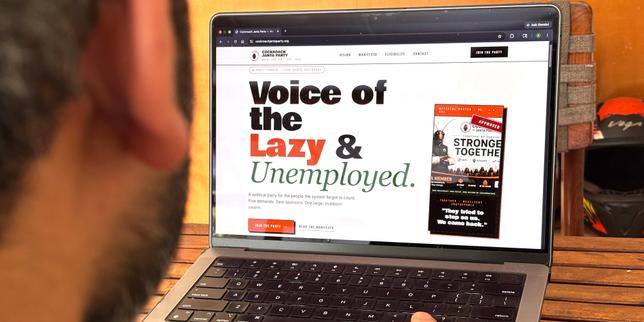
That is the raw reality driving the Cockroach Janta Party (CJP), a satirical political movement that has exploded across India over the past seven days. What started as an internet joke has rapidly evolved into a major political headache for Prime Minister Narendra Modi’s government. By turning a massive insult from a top official into a badge of honor, millions of frustrated, jobless young citizens are proving that absurdist humor might be the most potent weapon left against an entrenched political machine.
It’s a bizarre spectacle. But underneath the cockroach masks and internet memes lies a deep, volatile anger that the Indian government completely miscalculated.
The Slur That Sparked an Infestation
The whole thing blew up because of a stunningly tone-deaf comment from the very top of India’s legal system. On May 15, 2026, during a court hearing, Chief Justice of India Surya Kant lashed out at activists and unemployed youth, calling them "parasites of society" and comparing them to cockroaches who "don't get any employment" and instead "start attacking everyone" on social media.
The backlash was instant. The Chief Justice tried to clarify his remarks the next day, claiming he was only talking about people with fake law degrees. But nobody bought it. The damage was done.
Enter Abhijeet Dipke, a public relations student at Boston University and former strategist for the Aam Aadmi Party. On May 16, Dipke hopped on X and announced a new platform for all the "cockroaches" out there. The criteria for joining? You had to be unemployed, lazy, chronically online, and capable of ranting professionally.
He called it the Cockroach Janta Party. The name itself is a direct, mocking spin on the ruling Bharatiya Janata Party (BJP).
The growth was frighteningly fast. In less than a week, the CJP’s Instagram account rocketed past 20 million followers. To put that in perspective, the ruling BJP has been building its machine for over forty years and sits at around 8.8 million followers on the platform. A parody page about bugs managed to double the ruling party's reach in a matter of days.
Turning Absurdist Satire Into Concrete Demands
If you think this is just a bunch of teenagers posting bugs for laughs, you're missing the point. The CJP is tapping into a massive reservoir of economic pain. Young Indians are dealing with brutal graduate unemployment, skyrocketing inflation, and a devastating string of government exam leaks—like the recent NEET medical entrance scandal—that have shattered the career prospects of millions of students.
The party’s manifesto uses dark humor to strike at very real, protected political targets. While the website promises they won't set up a "secret Cockroach CARES fund" (a jab at Modi's controversial PM CARES fund), their actual demands are incredibly sharp.
- A complete ban on post-retirement government jobs for judges, a practice critics say compromises judicial independence.
- A 20-year ban on politicians switching parties, targeting the frequent, money-fueled defections that destabilize local governments.
- Subjecting the party itself to the Right to Information (RTI) Act to force total financial transparency.
- A formal "right to employment" law providing jobs or financial allowances for citizens between 21 and 60.
This isn't just internet trolling. Activists like Anjali Bhardwaj have actively helped refine these points, turning a viral meme into a legitimate civic platform.
When the Government Gets Scared
You can always tell when an anti-establishment movement starts to sting because the state apparatus panics. On May 21, the government dropped the hammer. The CJP’s X account, which had quickly amassed 200,000 followers, was abruptly withheld inside India.
Anonymous officials admitted that the Ministry of Electronics and Information Technology (MeitY) acted on orders from the Intelligence Bureau. The justification? The parody account supposedly posed a "threat to the sovereignty of India" and was spreading "inflammatory content."
Blocking a satirical page about cockroaches on national security grounds screams desperation. It shows a government that is fundamentally terrified of losing control over the youth narrative. South Asia has already seen massive youth-led movements upend governments in Sri Lanka and Bangladesh. The Indian establishment knows exactly how fast online fury can turn into a physical occupation of the streets.
And the movement is already spilling offline. Volunteers dressed in full cockroach suits have started showing up at public demonstrations and organizing community clean-up drives, including along the polluted Yamuna River. Protests under the CJP banner have popped up in Bihar, Haryana, Uttar Pradesh, and West Bengal.
The Myth of the Apolitical Youth
For years, older generations and political analysts shrugged off India's youth as cynical, distracted, or entirely captured by Hindu nationalist rhetoric. The CJP completely destroys that assumption.
What we're seeing in 2026 isn't a lack of political interest. It's a total rejection of traditional party structures. Young people are tired of being ignored by an aging political class that views joblessness as a personal failure rather than a systemic disaster. High-profile figures like filmmaker Anurag Kashyap and opposition MP Shashi Tharoor have publicly backed the movement, recognizing it as a healthy, necessary valve for public anger.
Digital movements are notoriously fickle. They burn hot and can vanish in a week. But even if the government successfully bans every single CJP account, they can't delete the underlying math. India has the largest youth population in the world, and too many of them have degrees, debt, and absolutely no future.
If you want to understand where Indian politics is heading, stop looking at the heavily managed prime-time news broadcasts. Look at the kids wearing cockroach masks. They've realized that when the system treats you like a pest, your only option is to become impossible to crush.
If you are a young voter in India right now, don't let the algorithms dictate your frustration. Use this momentum to look up your local representatives, demand accountability for the recent exam leaks, and file RTI applications on local infrastructure spending. The satire got everyone's attention; now it's time to do the boring, heavy lifting of actual democracy.


