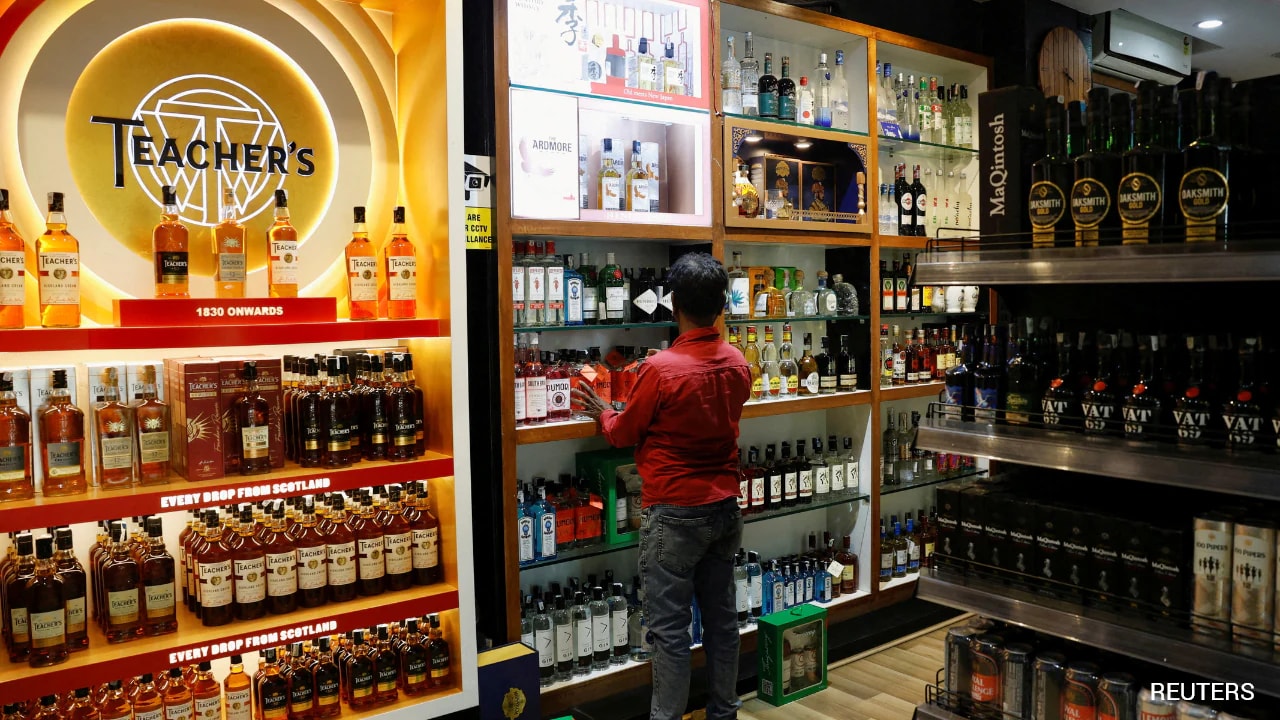
Every time New Delhi sneezes, London’s spirits executives catch a cold.
The headlines are predictable. "Liquor Industry Worried As India Probes UK's Scotch Whisky Import." Trade associations issue trembling statements. Financial analysts downgrade European beverage stocks by two percentage points before their morning espresso cools. The prevailing narrative paints a straightforward villain and a helpless victim: protectionist Indian regulators weaponizing anti-dumping laws against innocent Scottish distillers who just want to sell honest single malts to a thirsty middle class. If you liked this piece, you might want to read: this related article.
That narrative is lazy. Worse, it is commercially fatal for anyone actually operating in the global spirits trade.
If you are panicking over India scrutinizing UK Scotch imports, you do not understand how spirits economics work in South Asia. You are reading press releases written by PR firms in Mayfair instead of looking at customs ledgers in Mumbai. An investigation into Scotch whisky dumping isn't a death knell for the industry; it is an overdue stress test that will finally purge the toxic transfer-pricing habits crippling the sector's long-term profitability. For another perspective on this event, see the recent coverage from MarketWatch.
The Anatomy of the Lazy Consensus
Mainstream business coverage treats international trade probes like natural disasters—unpredictable, destructive, and entirely out of management's control. When India’s Directorate General of Trade Remedies (DGTR) opens an inquiry into whether UK exporters are dumping bottled-in-origin or bulk Scotch into the Indian market at artificially depressed prices, the financial press immediately frames it as a retaliation tactic or a roadblock to the long-stalled UK-India Free Trade Agreement (FTA).
They miss the point entirely.
India is the largest whisky-consuming nation on the planet by volume. By value, however, it remains a fraction of what it should be. Why? Because for decades, multinational conglomerates—think Diageo, Pernod Ricard, and William Grant & Sons—have treated India not as a true luxury market, but as a volume dumping ground for young, bulk malt spirit used to blend local Indian-Made Foreign Liquor (IMFL).
Let’s define the terms precisely, because commentators confuse them constantly. Dumping, in strict World Trade Organization (WTO) parlance, occurs when a company exports a product at a price lower than the price it normally charges in its own home market. Transfer pricing is the accounting mechanism by which a parent company in Scotland sells bulk whisky to its wholly-owned subsidiary in India.
When those two concepts collide inside a market saddled with a 150% basic customs duty, magic happens on spreadsheets. To survive a 150% tariff wall and still put a bottle on a shelf in Bengaluru for 2,000 rupees, multinational importers have spent years aggressively compressing their declared Cost, Insurance, and Freight (CIF) values.
Indian domestic distillers—companies like Radico Khaitan, Allied Blenders and Distillers, and Piccadily Agro—finally got tired of watching foreign giants manipulate CIF values to undercut locally produced single malts. They filed a complaint. The government listened.
And now London is crying foul.
Battle Scars From the Tariff Wall
I have watched European spirits brands blow tens of millions of dollars trying to outsmart Indian excise and customs structures. Years ago, I advised a mid-sized independent bottler out of Speyside that was desperate to crack the Delhi and Mumbai hotel circuits. Their board was obsessed with top-line case volume. To hit their targets, they structured a deal with a local distributor that invoiced their three-year-old bulk blend at pennies above production cost, recouping their margin through inflated "marketing consultancy fees" billed back to London.
It worked for fourteen months. Then the Directorate of Revenue Intelligence froze three containers at Nhava Sheva port.
The resulting valuation audit tied up their working capital for two years, destroyed their relationship with their local bottling partner, and left them with a tax penalty that wiped out five years of projected European profits. They weren't victims of Indian protectionism. They were victims of their own refusal to price their product honestly for the market they were entering.
When big conglomerates play the same game at scale, they distort the entire pricing architecture of the category. By artificially depressing the declared import value of bulk Scotch, multinationals have kept the entry price of "Scotch-blended" Indian whiskies artificially low. This starves domestic Indian barley farmers and local craft distillers of margin, while simultaneously training Indian consumers to view Scotch as a cheap commodity rather than a scarce, aged agricultural product.
Dismantling the Wrong Questions
Whenever regulatory friction hits the beverage sector, executives and investors ask the exact same flawed questions. Let's tear them apart.
"Will an anti-dumping duty kill Scotch demand in India?"
No. Demand for Scotch in India is remarkably price-inelastic at the top end and driven entirely by status signaling at the bottom end. A drinker in Gurugram buying a bottle of Johnnie Walker Black Label or Chivas Regal isn't checking the CIF valuation at the port; they are buying social currency. If an anti-dumping duty forces importers to declare realistic base prices, retail prices might tick up by 8% to 12%. Nobody abandons their preferred status symbol over a 10% price hike in a market where inflation already runs hot. What it will kill is the razor-thin, unprofitable volume-chasing at the bottom of the barrel. Good riddance.
"Does this derail the UK-India Free Trade Agreement?"
This gets the causality backward. Trade probes do not derail FTAs; stalled FTAs breed trade probes. Negotiators in London and New Delhi have been haggling over whisky tariffs and immigration visas for years. Indian trade officials know that UK negotiators desperately want the 150% whisky tariff slashed to 50% or lower. By launching a formal dumping investigation right now, New Delhi is simply establishing a baseline of true production costs before any tariff cuts are signed. Otherwise, if India drops the tariff from 150% to 75% while UK exporters continue declaring rock-bottom transfer prices, domestic Indian producers get annihilated overnight. New Delhi isn't sabotaging the deal; they are auditing the books before handing over the keys.
"Are Indian single malts actually a threat to Scotch?"
Ask the judges at the World Whiskies Awards. Brands like Indri, Amrut, and Paul John aren't novelty acts anymore; they are routinely beating heritage Speyside and Highland distilleries in blind tastings. Because India’s tropical climate accelerates maturation—creating an angel's share of 10% to 12% per year compared to Scotland's 2%—a four-year-old Indian single malt carries the oak extraction and flavor complexity of a twelve-year-old Scotch. Domestic producers don't need government handouts to make great liquid. They just need foreign competitors to stop playing accounting games at the border.
The Uncomfortable Truth About Bulk Scotch
If you look closely at Scotch Whisky Association (SWA) export data, a glaring truth jumps off the page. By volume, India routinely ranks as the number one export destination for Scotch whisky globally, taking in hundreds of millions of bottles' worth of spirit annually. Yet by export value, India frequently trails markets like the United States, France, and Singapore.
Think about that discrepancy.
France—a country with roughly one-twentieth of India’s population—generates substantially more revenue per liter for Scottish distillers than India does. Why? Because France buys bottled single malts and premium blends at transparent wholesale prices. India is overwhelmingly shipped bulk spirit in steel ISO tanks, which is then blended with neutral grain spirit made from Indian molasses or grain, bottled locally, and sold for a few dollars a bottle.
Multinational drinks giants have used this bulk-import model to pad their global volume metrics for quarterly earnings calls. Analysts love seeing "double-digit volume growth in emerging markets." What those analysts rarely interrogate is the margin profile of those cases after excise duties, state-by-state distribution bribes, and transfer-pricing adjustments are factored in.
An Indian government probe forces a reckoning on this exact metric. If DGTR mandates floor prices or imposes countervailing duties on under-invoiced bulk Scotch, the multinationals will be forced to abandon empty volume chasing. They will have to pivot toward higher-margin, bottled-in-Scotland expressions.
Imagine a Scenario Where London Loses the Probe
Let’s run a clear thought experiment. Imagine a scenario where India’s trade investigators rule decisively against UK exporters, slapping a 30% anti-dumping duty on bulk Scotch imports entering Indian ports for the next five years.
What actually happens to the industry?
- The Bottom Falls Out of Cheap Blends: Local Indian bottlers who rely on cheap Scottish bulk malt to give their molasses-based whiskies a "Scotch" badge on the label face an immediate margin crunch. They are forced to either raise retail prices or switch to 100% Indian malt whisky.
- Domestic Craft Distillers Boom: Indian malt producers—who have been investing heavily in copper pot stills and six-row Indian barley—suddenly find themselves with massive pricing power. Their domestic supply chains become the primary source of aged malt for the Indian blending industry.
- Scottish Distillers Regain Pricing Discipline: Deprived of the ability to dump excess young grain and malt spirit into Mumbai at break-even prices, Scottish distillers stop overproducing cheap filler liquid. Warehouse inventory in Scotland shifts back toward longer maturation cycles, increasing the intrinsic value and scarcity of true aged Scotch globally.
- Premiumization Accelerates: With the price gap between cheap bulk-blended imports and genuine bottled-in-Scotland single malts narrowing, Indian consumers trade up. Instead of buying three bottles of mediocre blended spirit, the aspirational buyer purchases one bottle of authentic single malt.
Every single stakeholder ends up healthier—except the middlemen who profited from regulatory arbitrage.
The Downside Nobody Wants to Admit
Is a regulatory crackdown completely painless? Of course not. Taking a contrarian stance doesn't mean ignoring collateral damage.
If India enforces strict anti-dumping measures, small independent Scottish bottlers and family-owned distilleries without massive balance sheets will get crushed first. Diageo and Pernod Ricard have armies of tax lawyers, local bottling infrastructure across multiple Indian states, and deep political connections in New Delhi. They can absorb a two-year legal battle and restructure their supply chains. A small distillery in Campbeltown trying to export five pallets of single malt through an independent Mumbai importer does not have that luxury. They will get priced out of the fastest-growing spirits market in the world before they ever pour a dram.
Furthermore, aggressive trade enforcement always risks tit-for-tat escalation. If London feels New Delhi is unfairly targeting one of Scotland's crown-jewel exports, UK trade officials will inevitably drag their feet on pharmaceutical approvals, IT service visas, and textile tariff reductions that Indian exporters desperately want. Trade wars rarely stay confined to a single aisle of the supermarket.
What Smart Operators Are Doing Right Now
While average executives are waiting around for politicians in London and New Delhi to save their margins, sharp operators in the spirits sector are already rewriting their India playbooks. If you have capital tied up in Asian spirits distribution, stop whining about the probe and execute three immediate shifts:
- Audit Your Transfer Pricing Before the Government Does: If your Indian subsidiary is declaring CIF values that sit more than 15% below your lowest European wholesale price, you are sitting on a ticking time bomb. Restructure your inter-company invoices now. Take the tax hit voluntarily on your own timeline rather than paying triple in retroactive penalties while your stock rots in a bonded warehouse.
- Invest in Local Indian Malt Capacity: Stop viewing Indian distillers solely as competitors. Partner with them. Joint ventures and contract distilling agreements with Indian malt producers bypass the 150% import tariff completely while giving you access to liquid that matures three times faster than it does in Northern Europe.
- Kill Your Low-Margin Volume SKUs: If a product line only makes financial sense in India because you are squeezing pennies out of customs declarations, discontinue it. Reallocate that marketing budget to high-margin, bottled-in-origin single malts where consumers willingly pay for provenance and brand equity.
The era of treating India as an opaque dumping ground for cheap bulk spirit is over. Regulators in New Delhi have the data, domestic producers have the product quality, and the days of hiding behind convoluted customs invoices are numbered.
Liquor executives can keep crying to the financial press about unfair probes, or they can finally start pricing their whisky like it's actually worth drinking.


