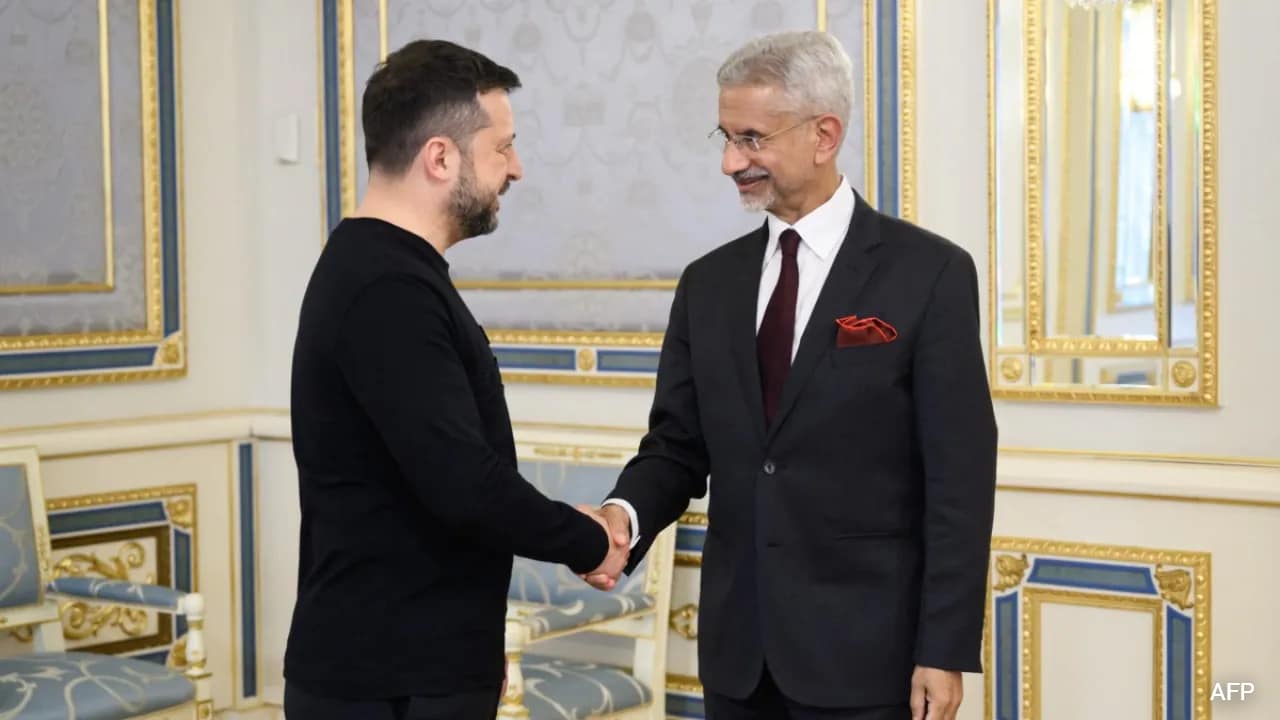
Western capitals keep asking the same tired question. Why won't New Delhi cut off Moscow? External Affairs Minister Subrahmanyam Jaishankar gave them an answer they didn't want to hear. Buying or not buying oil won't solve the war in Ukraine. It's a blunt reality check that exposes years of Western double standards.
When European nations scrambled to keep their own lights on while funding Kremlin energy pipelines, nobody accused them of treason. Yet when a developing nation of over one billion people secures discounted crude to protect its citizens from inflationary shocks, critics scream about moral failure. The West expects emerging economies to shoulder the economic costs of geopolitical disputes they didn't start.
Let's look at the numbers. Before the conflict began, India imported negligible amounts of Russian crude. That figure skyrocketed past forty percent of total imports at times. Critics treat this shift as a betrayal of democratic values. They forget that energy markets are ruthless. Refiners follow price tags, not moral pamphlets. When Western sanctions upended global supply chains, European buyers outbid developing nations for Middle Eastern oil. India simply did what any rational government would do. They kept their citizens safe from crushing fuel poverty by taking the cheapest barrel available.
The Geography of Survival
Energy security isn't an abstract theory for New Delhi. It's a daily survival calculation. More than six hundred million people in South Asia remain vulnerable to energy price spikes. A sudden fuel shortage crashes local supply chains, stalls agriculture, and pushes millions below the poverty line.
Western politicians live in a different fiscal reality. They can absorb a thirty percent hike in utility bills without toppling a government. Prime Minister Narendra Modi's administration cannot afford that luxury.
You have to understand the historical context here. For decades, traditional Western allies looked away when India faced regional threats. They lectured New Delhi on strategic autonomy while denying critical tech transfers. Now, those same capitals demand absolute alignment on a European security crisis.
This transactional approach goes both ways. India isn't joining anti-Moscow coalitions because those partnerships offer zero guarantees against neighboring adversaries. Beijing remains a massive security threat along the Himalayan border. Weakening India's economic engine through self-imposed energy embargoes helps nobody except regional rivals.
Strategic Autonomy in Action
Diplomatic double standards have a long shelf life. European countries spent decades preaching free-market capitalism while quietly buying Russian gas through complex intermediary networks. When the war broke out, those same nations took months to unwind their dependence. Some sectors still rely on Russian inputs.
Jaishankar has repeatedly called out this hypocrisy on global stages. His media appearances masterfully dismantle lazy journalistic traps. He routinely reminds interviewers that European needs are treated as vital national security priorities. Indian needs are somehow framed as illicit profiteering.
Refining Russian crude inside Indian facilities and exporting the final product legally to global markets keeps global supply chains stable. If New Delhi completely boycotted Russian extraction, global crude prices would spike past two hundred dollars a barrel. That shock would trigger a worldwide depression. India's pragmatic purchasing actually cushions the global economy against total collapse.
The Myth of Moral Purity in Foreign Policy
International relations are built on interests, not warm hugs. Governments don't wage economic war against themselves for symbolic gestures that fail to stop actual bullets.
Look at how global trade adapts. Sanctions create shadow fleets, alternative payment clearinghouses, and new trade corridors. Moscow rerouted its energy exports toward Asia long before Western diplomats finished drafting their sanctions packages. Refusing to buy Russian oil wouldn't shorten the conflict by a single day. It would simply starve Indian households of affordable energy while padding the profit margins of other opportunistic buyers.
Pragmatism wins over purity every single time. Washington and Brussels finally realized this underlying truth, quietly granting waivers and turning a blind eye to refined Indian petroleum exports heading toward Western ports. They know they need the supply.
Stop viewing diplomacy through a childish lens of good versus evil. Every sovereign state plays a hand designed to maximize domestic stability and long-term leverage. India is playing its cards with cold, calculated precision.
Secure your own energy grid before telling a developing nation how to buy its fuel. Plan your portfolio around long-term supply resilience, diversify your import partners away from geopolitical flashpoints, and stop expecting emerging economies to bleed for Western foreign policy goals.


