The fluorescent lights of a mid-sized recruitment firm in Ohio don’t flicker, but the people beneath them do.
Sarah, a hiring manager who has spent fifteen years reading the tea leaves of the American labor market, stares at a spreadsheet that tells two conflicting stories. On paper, the nation is feasting. The latest Department of Labor report just landed like a celebratory firework, boasting 272,000 new jobs added to the economy in a single month. It blew past every expert's prediction. It’s a number that should suggest champagne corks popping in every boardroom from Manhattan to Mountain View.
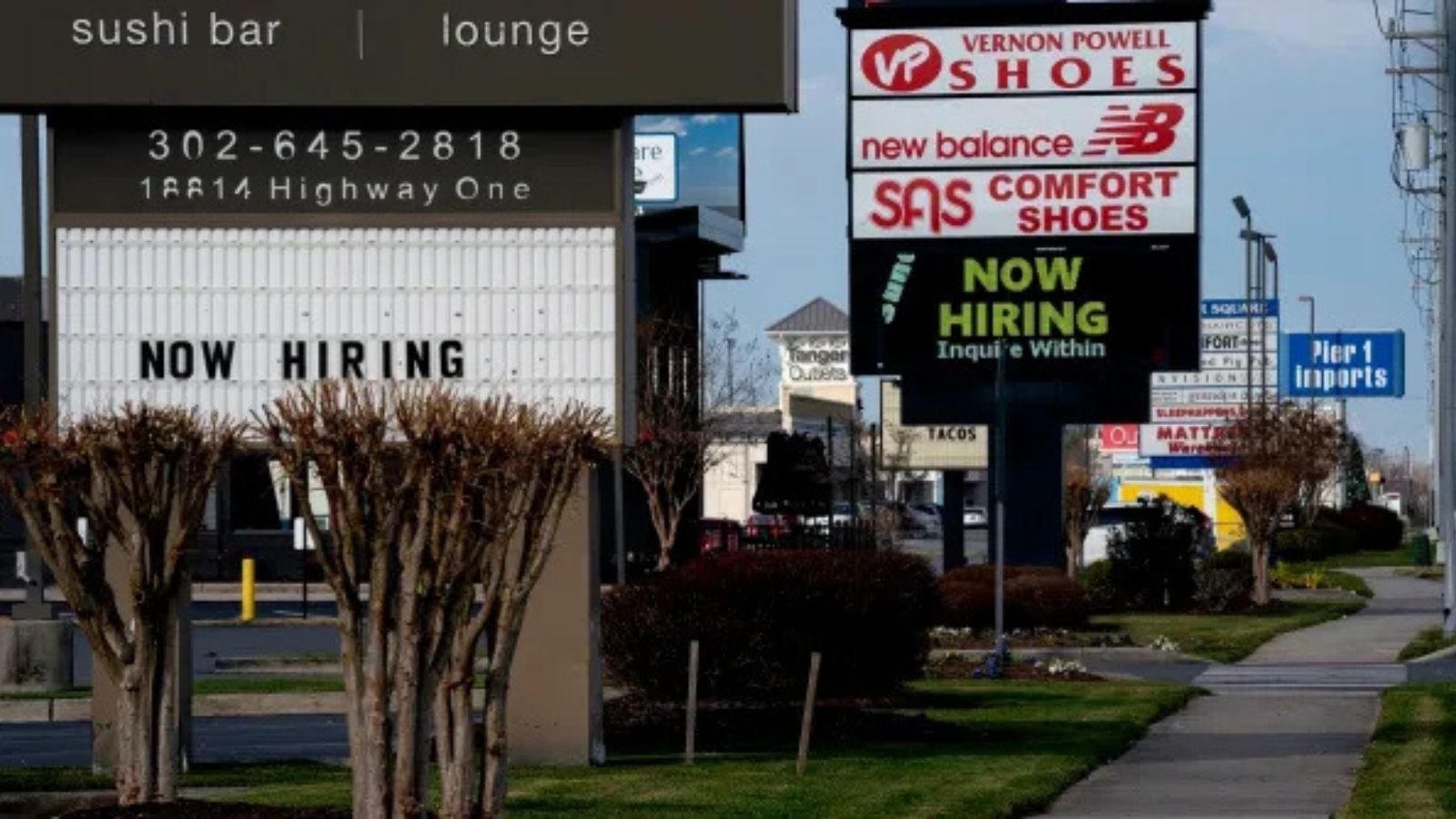
But Sarah looks at her "Open Roles" column and sees a different reality. The phones aren't ringing with the same urgency they did a year ago. The "Help Wanted" signs in the windows of the bistro downstairs have been there so long the paper is turning yellow.
The headline says we are winning. The data says we are drifting.
To understand why a "blowout" jobs report can actually feel like a cold splash of water, we have to look past the monolithic "272,000" and look at the hands performing the work. This isn't just about decimal points and interest rates. It’s about the soul of the American paycheck.
The Two-Job Trap
While the payroll numbers surged, another figure lurked in the shadows of the same report, uninvited and deeply uncomfortable. The household survey—a different metric that tracks individuals rather than business filings—showed a sharp decline in employment.
How can both be true?
Consider a hypothetical worker named Elias. Elias is 42. He lost his stable, middle-management position in a corporate restructuring six months ago. Today, Elias isn't "unemployed" in the eyes of the government. In fact, he might count as two or even three "jobs" in the payroll data. He’s driving for a ride-share app in the mornings. He’s stocking shelves at a big-box retailer three nights a week.
On the payroll report, Elias looks like a success story of economic expansion. In reality, he is one man running twice as hard to stay in the same place. He is the embodiment of the "multiple jobholder" spike that economists are currently whispering about. When we see payrolls jump while the unemployment rate actually ticks up to 4%, we are seeing a workforce that is beginning to fracture.
We are adding "gigs," but we are losing "careers."
The 4% threshold is a psychological ghost. For 27 consecutive months, the United States kept unemployment below that line, the longest streak since the moon landing era of the 1960s. Breaking that streak feels like losing a shield. It signals that the friction in the engine is finally starting to generate heat.
The Ghost of the Wage-Price Spiral
High job growth usually means workers have leverage. In a healthy narrative, Sarah the recruiter would be offering signing bonuses and flexible hours to lure top talent. And indeed, average hourly earnings rose 0.4% last month, bringing the annual increase to 4.1%.
This is where the story gets cruel.
For the Federal Reserve, sitting in their marble halls in Washington D.C., those rising wages aren't a cause for celebration. They are a "red flag." To them, your raises are "inflationary."
There is a profound, almost tragic irony in the current economic theater: The better the worker does, the more likely the "powers that be" are to keep interest rates high, making it harder for that same worker to buy a home or finance a car. It is a tug-of-war where the prize is a stalemate.
If wages grow too fast, the Fed keeps the "higher for longer" stance on interest rates. This crushes the dreams of first-time homebuyers who are watching their potential mortgages evaporate into the ether of 7% interest rates. We are trapped in a cycle where a "good" report for the worker is "bad" news for the market, and "bad" news for the market eventually trickles down to become a pink slip for the worker.
The Disappearing Youth and the Aging Core
If you look closer at the demographics of this supposed boom, you find a troubling void. The labor force participation rate for younger workers and those entering the market is showing signs of exhaustion.
The "prime-age" workforce—those between 25 and 54—is still holding the line. They are the ones, like Elias, who have no choice but to work. They have mortgages, children, and aging parents. They are the bedrock. But beneath them, the entry-level rungs of the ladder are being pulled up.
Companies are hesitant. They are "hoarding" the talent they have because they remember how hard it was to find people in 2021, but they aren't exactly throwing the doors open for the next generation. This creates a stagnant pond. Without new blood and upward mobility, the "272,000" number starts to look less like growth and more like a desperate reshuffling of existing pieces.
The Invisible Stakes of the Summer
Statistics are a blunt instrument used to describe a sharp reality.
When the news cycle moves on to the next political scandal or celebrity wedding, the weight of this report will stay with the people in the grocery store aisles. They are the ones looking at the price of eggs—up again—and comparing it to the "strong" wage growth they supposedly received.
The disconnect between the "Macro-Economy" (the one discussed on cable news) and the "Micro-Economy" (the one discussed around the kitchen table) has never been wider. The macro-economy says: "Look at this robust growth! We are the envy of the world!" The micro-economy says: "I have three jobs and I still can't afford to move out of my parent's basement."
This is the "Red Flag" the headlines mentioned but didn't explain. A red flag isn't a crash. It’s a warning. It’s a flare sent up from a ship that is still moving but has taken on water in the lower decks.
The Federal Reserve is waiting for the labor market to "cool." They want to see those payroll numbers drop. They want the fever of the economy to break so they can finally lower interest rates. But "cooling" is a clinical word for someone losing their livelihood. "Soft landing" is an aviation metaphor for a pilot who still has to walk away from a plane that might not fly again.
The Narrative of the Near Future
We are living in an era of the "Vibecession." The data is technically positive, but the "vibes" are catastrophic.
This isn't because people are ungrateful or economically illiterate. It’s because they can feel the thinness of the ice. They see that the 272,000 jobs are heavily concentrated in healthcare and government—sectors that are essential but don't necessarily signal a roaring, innovative private sector expansion. They see the "Full-Time" numbers shrinking while "Part-Time" numbers swell.
Sarah the recruiter closes her laptop. The office is quiet. She knows that tomorrow she will have to tell three qualified candidates that the "roles have been put on indefinite hold."
She will then drive home past a billboard touting the "Strongest Economy in Decades."
The true story of the American economy isn't found in the aggregate. It’s found in the gap between what we are told and what we feel. It’s found in the quiet calculation of a father wondering if he can survive on four hours of sleep to pick up an extra shift. It’s found in the anxiety of a small business owner who wants to hire but can't see six months into the future.
The red flags aren't just data points on a chart. They are the shadows cast by a sun that is starting to set on a specific kind of American certainty. We are working more, earning more, and somehow, ending up with less.
The numbers are jumping. The people are just trying to keep their balance.