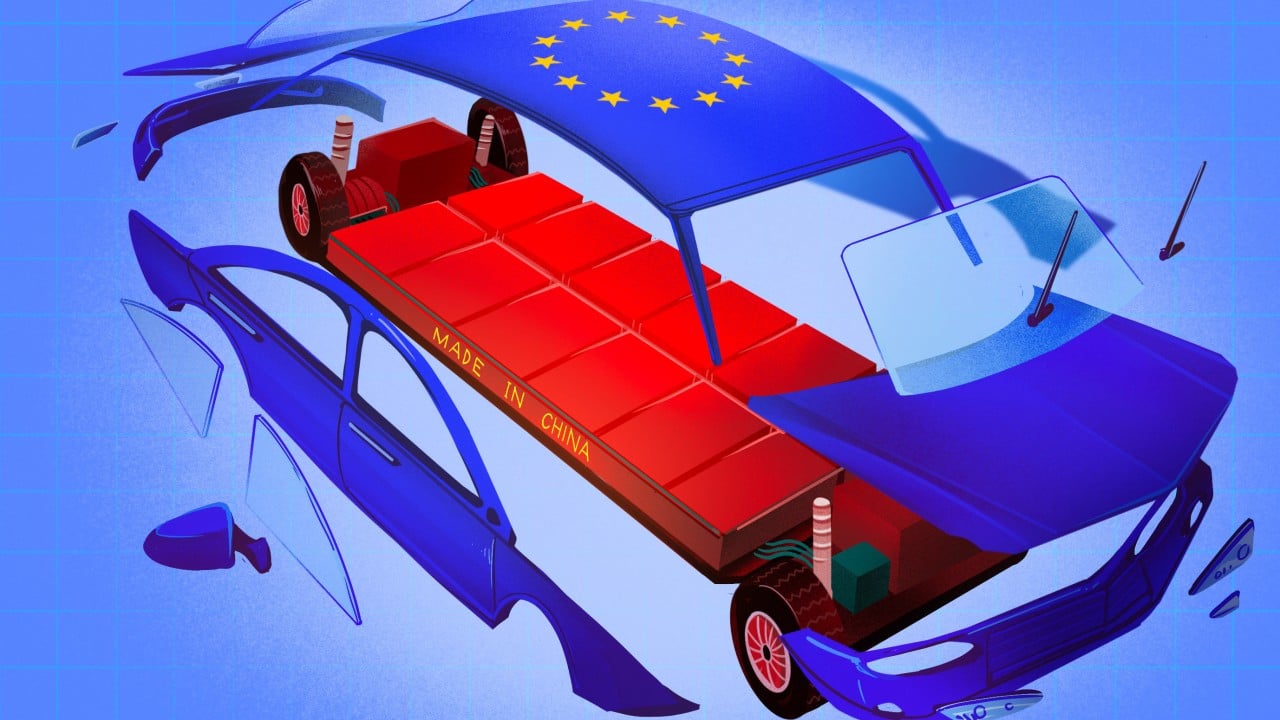
Brussels wants the world to believe that a wave of protective trade barriers and local content mandates will resurrect its fading automotive supremacy. By forcing Chinese electric vehicle manufacturers to build factories inside the European Union rather than shipping finished cars from Shanghai, policymakers claim they can absorb foreign supply chains and achieve technological independence by 2028. It is a comforting narrative. It is also entirely wrong.
The strategy does not isolate foreign competition. It invites it into the living room. European legacy brands are not using this transition to out-innovate their rivals. Instead, they are quietly surrendering their core engineering identity, adopting foreign software and battery platforms just to keep assembly lines moving. What is being sold as a strategic catch-up campaign is actually the structured management of industrial decline.
The Mirage of the Forced Technology Transfer
In March, the European Commission unveiled the Industrial Accelerator Act, a legislative mechanism designed to restrict subsidies and public contracts to vehicles assembled within the bloc using a high percentage of local components. The unspoken goal of this policy is simple. Brussels hopes to replicate the exact blueprint that Beijing used in the 1990s, when foreign automakers were forced into joint ventures to access the Chinese consumer market, eventually surrendering their technical secrets to domestic firms.
The logic collapses under scrutiny. When Western car companies entered China thirty years ago, they held an absolute monopoly on internal combustion engine technology, leaving Chinese partners eager to copy their mechanical blueprints. Today, the power dynamic is reversed. European manufacturers are the ones lagging behind in battery chemistry, thermal management, and software integration.
They have little to teach and everything to learn. Chinese firms setting up operations in Hungary or Spain are not bringing outdated tools. They are bringing proprietary, vertically integrated ecosystems that European suppliers cannot replicate at a competitive cost.
Buying Survival on Borrowed Platforms
The desperation among domestic manufacturers is becoming impossible to hide. Stellantis did not invest heavily in its partnership with Leapmotor out of a desire to collaborate. It did so because developing an affordable, native electric platform for small European city cars would take too long and cost too much.
The consequence is stark. A new generation of European vehicles will soon roll off regional assembly lines carrying historic domestic badges, but their digital nervous systems and structural architectures will be entirely designed in Hangzhou.
This arrangement keeps regional factories open, but it hollows out local engineering capabilities. When a legacy manufacturer stops designing its own powertrain platforms, it ceases to be a technology company. It becomes a contract assembler for a more advanced competitor.
Smaller regional automotive suppliers are bearing the brunt of this shift. Between 2021 and 2026, capital expenditure by European automotive component manufacturers remained completely flat, pinned down by high energy costs and rigid regulatory frameworks. Over the exact same period, Chinese supply-chain capital spending grew by more than a third, ballooning past the one-trillion-dollar mark.
European component builders are hitting a structural wall. They cannot compete with the massive industrial scale of vertically integrated giants like BYD or CATL. As foreign battery and electronics manufacturers set up their own localized supply networks within Europe, traditional domestic tier-one suppliers face a long, agonizing displacement.
Charging Networks as the Ultimate Industrial Anchor
Focusing strictly on vehicle assembly numbers ignores where the real control of the market is shifting. While European politicians argue over import tariffs and local employment quotas, foreign manufacturers are quietly building the physical infrastructure that will lock in consumer loyalty for the next decade.
BYD is currently rolling out a massive ultra-fast charging network across major European transit corridors. These flash charging stations are designed to deliver massive bursts of power far exceeding current local standards. They use localized stationary battery storage to bypass the aging, slow-to-grade European electrical grids, allowing vehicles to add hundreds of kilometers of range in under five minutes.
Control the infrastructure, control the market. A consumer choosing their next vehicle will care far less about where a battery cell was packed and far more about which brand guarantees access to the fastest, most reliable charging network on the continent. By building the infrastructure that European utilities have failed to deliver, foreign players are securing a permanent structural advantage that no tariff can dissolve.
The year 2028 will not mark the moment Europe pulls level with its global rivals. It will simply mark the completion of the transition from an export-driven threat to an entrenched, localized reality. Factories in Szeged and Barcelona will undoubtedly employ European workers and assemble vehicles stamped with local validation, but the intellectual property, the profits, and the technological direction will remain anchored thousands of miles away. No amount of regulatory branding can change the reality of who holds the strings.


:max_bytes(150000):strip_icc():focal(999x0:1001x2)/taylor-swift-albums-1-93026ca98408417097660e117a10a6a9.jpg)