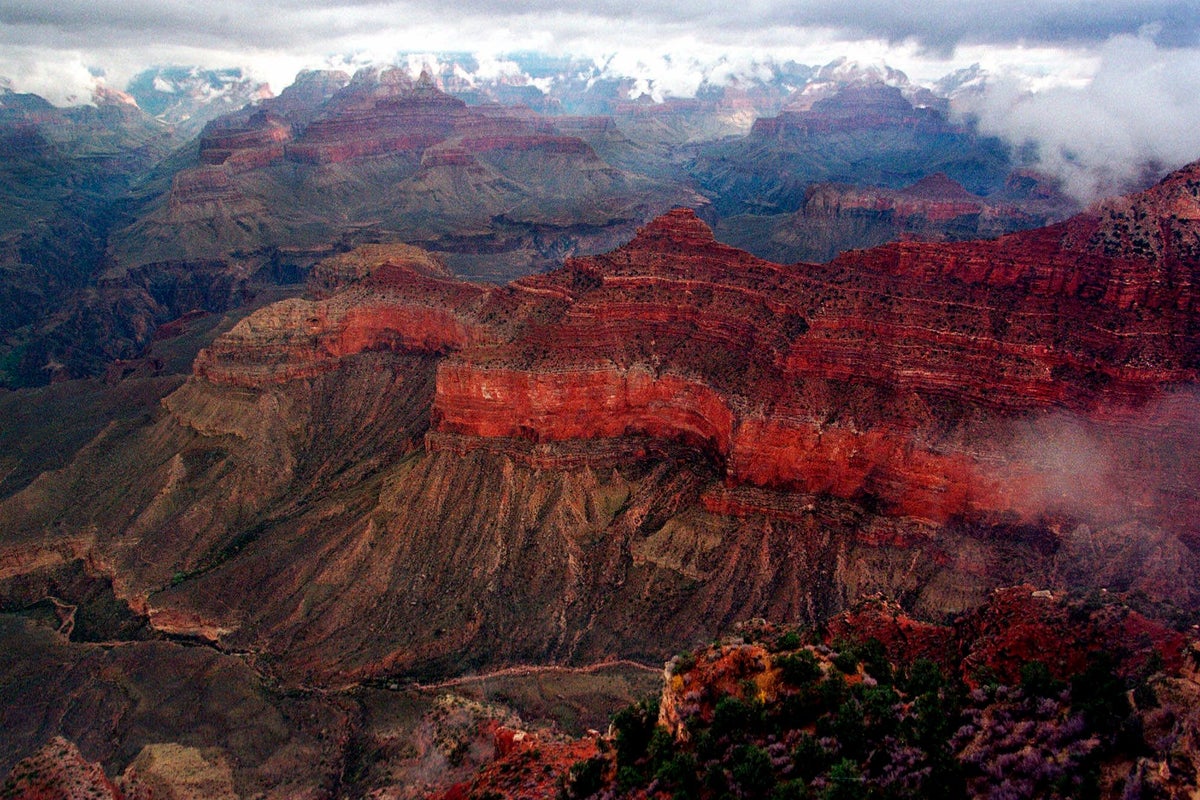
The air at the South Rim of the Grand Canyon trickles through the ponderosa pines at a comfortable seventy-five degrees. It feels like a promise. Tourists step out of air-conditioned tour buses, snap photos of the painted stone vastness stretching to the horizon, and think to themselves that the earth is beautiful, majestic, and entirely manageable.
They are wrong.
Step over the edge. Descend just a few hundred feet down the Bright Angel or South Kaibab trails, and the atmosphere begins to shift. It does not happen all at once. It happens like a slowly tightening vice. For every thousand feet you drop into the belly of the canyon, the temperature spikes by about 5.5 degrees Fahrenheit. By the time you reach the canyon floor, near the roaring, muddy Colorado River, you are no longer in the high alpine forests of Arizona. You have stepped into a geographic furnace.
Recently, three people walked into that furnace and never walked out.
Their stories are different, yet tragically identical. A 41-year-old man from Missouri collapsed on the Bright Angel Trail. A 69-year-old Texan was found unresponsive near the River Trail. A 60-year-old woman lost her life attempting a grueling multi-day trek. They were not foolish people. They were adventurers, vacationers, parents, and friends who fell victim to a psychological optical illusion unique to the desert Southwest.
To understand why the Grand Canyon claims lives every summer, you have to understand how the human brain processes danger. When we look at a mountain like Everest or Rainier, the peril is obvious. It towers above us, shrouded in ice, screaming its hostility into the sky. The logic of climbing a mountain is simple: the higher you go, the harder it gets. If you run out of energy, turning around means gravity is on your side. You walk down to safety.
The Grand Canyon reverses this entire cognitive map.
You begin your hike at the easiest possible moment. You are fresh. Your water bottles are full. Gravity gently pulls you down into the spectacular, sun-drenched depths. Every step is effortless. The danger is completely invisible because it lies beneath you, waiting at the bottom of the inverted mountain.
Let us construct a scenario based on the physiological realities reported by search and rescue teams. Imagine a hiker named Sarah. She is physically fit, runs half-marathons, and arrived at the park with a hydration pack and a sense of excitement. At 8:00 AM, the rim is cool. She decides to hike down to Indian Garden, a lush oasis about four.five miles into the canyon.
The descent is glorious. The red rock walls tower higher and higher, blocking out the world above. Sarah feels invincible. But as she drops deeper, the canyon walls begin to act like bricks in a wood-fired pizza oven. The ancient stone absorbs the intense desert sun all day long and radiates that heat back out into the narrow corridors of the trails.
By 11:00 AM, Sarah reaches her destination. She feels tired, but the adrenaline of the scenery masks her fatigue. She drinks some water. Her water is warm now, tasting faintly of plastic. She looks up. The rim where her car is parked looks impossibly distant, a tiny green sliver against a harsh blue sky.
Now comes the trap.
To get home, Sarah must climb out. There are no ski lifts. There are no rescue helicopters waiting on standby for tired hikers; air density at high temperatures makes flying inside the canyon incredibly hazardous, meaning rescuers often cannot land even if they want to. Every single foot she descended must now be conquered in reverse, against gravity, under a sun that has now reached its zenith.
The temperature at the bottom is now 115 degrees Fahrenheit.
When the human body encounters extreme ambient heat, it initiates a desperate triage protocol. Your heart rate escalates, pumping blood away from your internal organs and toward your skin to radiate heat away. You sweat. You sweat at a rate of up to two quarts of water per hour. In the dry desert air, that sweat evaporates instantly. You do not feel wet. You do not realize how much fluid you are losing until your cells are already screaming for moisture.
Sarah begins her ascent. Within thirty minutes, her internal thermostat breaks down.
This is where the psychological horror of heat illness takes root. The brain, starving for blood flow because the cardiovascular system is franticly trying to cool the skin, begins to misfire. Confusion sets in. A dangerous lethargy washes over the mind. Hikers suffering from advanced heat exhaustion or heat stroke often make fatal decisions. They stop eating because their stomach is nauseous. They stop drinking because swallowing warm water feels impossible. Some even wander off the trail, seeking shade under precarious ledges where they become invisible to searching rangers.
The heat becomes a physical weight, pressing down on the chest, making every breath feel like inhaling fire. Your muscles cramp as your electrolyte levels plummet. Your kidneys begin to shut down to preserve fluid. Finally, the internal body temperature crosses the critical threshold of 104 degrees. Heat stroke. The brain's regulatory center fails completely. Delirium takes over, followed by collapse.
National Park Service rangers see this sequence play out dozens of times every year. They are some of the most highly trained wilderness medics in the world, yet they find themselves fighting an uphill battle against geography and human nature. When the call comes in over the radio, rescuers must hike down into the same oppressive heat carrying heavy medical gear, risking their own lives to save someone who misjudged the inverted mountain.
The three recent deaths are a stark reminder that the wilderness does not negotiate. It does not care about your fitness level, your determination, or the cost of your hiking boots.
We live in an era where technology convinces us that we have conquered the wild. We have GPS units on our wrists, satellite communicators in our pockets, and synthetic fabrics that promise to wick away moisture. But these tools create a false sense of security. They lull us into believing that nature is an amusement park with safety nets hidden just out of sight.
The Grand Canyon possesses no safety nets.
The solution to this recurring tragedy is not to close the park or fence off the trails. The solution is a radical shift in perspective. Hikers must learn to respect the canyon for what it truly is: a beautiful, unforgiving desert that happens to be upside down.
If you must hike during the summer months, the rules are absolute. You do not hike between the hours of 10:00 AM and 4:00 PM. You carry salty snacks alongside your water to prevent hyponatremia, a lethal condition caused by drinking too much water without replacing lost salts. Most importantly, you accept that turning around before you feel tired is not an act of cowardice. It is an act of survival.
As the sun sets over the South Rim, the shadows lengthen, stretching across the vast chasms in shades of deep purple and gold. The air cools once more. From the safety of the overlook, the canyon appears peaceful, static, and silent. But deep within those ancient stone layers, the heat of the day lingers, trapped in the rocks, a silent monument to the forces that shape our planet and the fragile lines we cross when we dare to step beneath the rim.