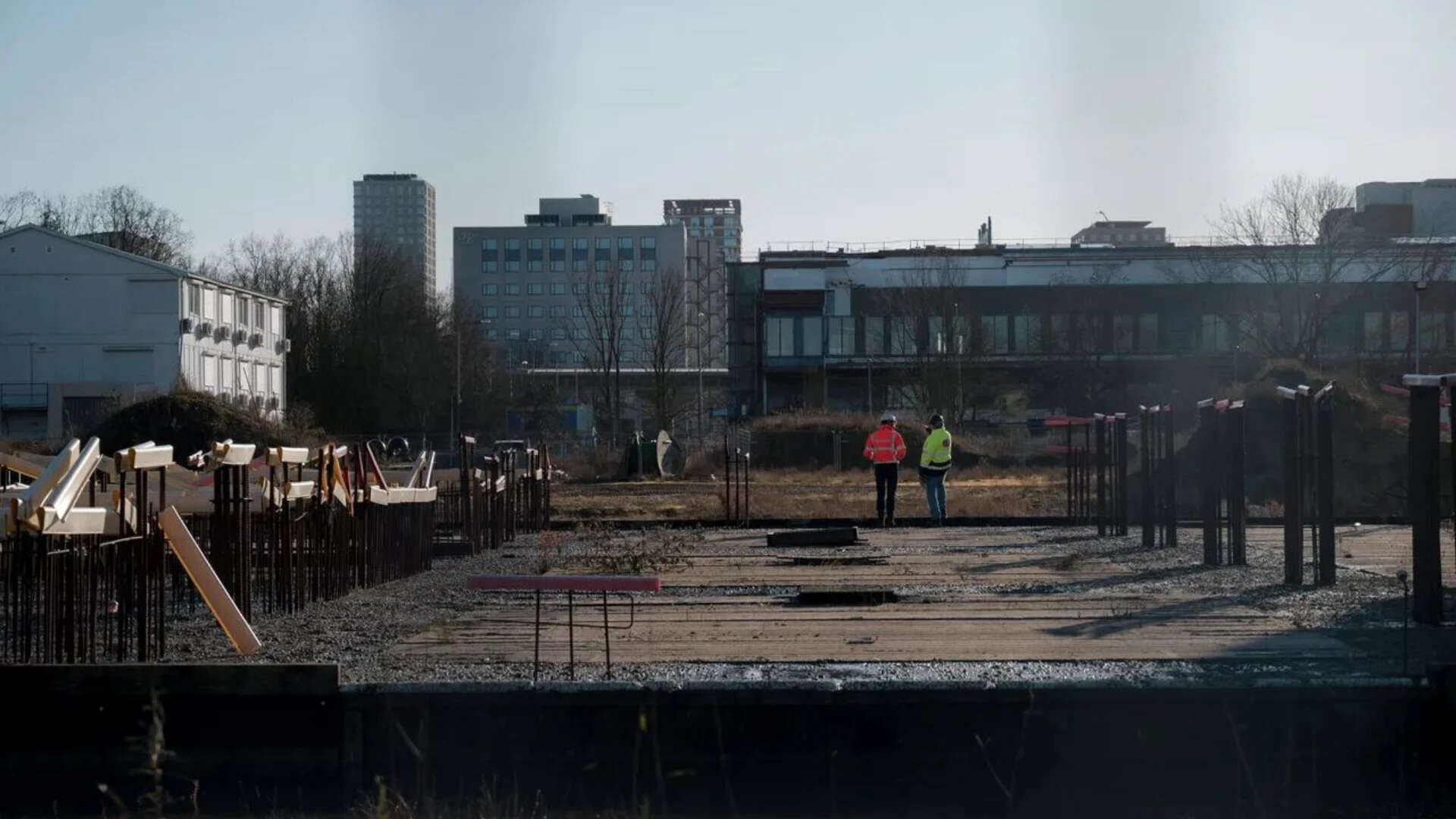
Direct physical intervention against cloud infrastructure marks a structural shift in the risk calculations for hyperscale deployments. The July 2026 sabotage attempt against a 78-megawatt Microsoft data centre development site in Amsterdam's Westport—where activists threw balloons containing acetic acid, hydrogen peroxide, salt, and acrylic paint over perimeter fencing—illustrates how physical asset vulnerabilities, municipal energy constraints, and geopolitical friction intersect.
The incident target, a multi-story facility managed by developer Pure DC and leased to Microsoft, highlights a widening gap between corporate expansion targets and local physical capacity. Analyzing this event requires looking past surface-level vandalism to examine the systemic drivers behind physical activism against high-density compute facilities.
The Tri-Factor Friction Model
Hyperscale infrastructure projects face physical and regulatory friction driven by three interconnected vectors: resource prioritization, regulatory loophole arbitrage, and geopolitical exposure.
1. Municipal Grid Congestion and Resource Allocation
Hyperscale facilities require sustained high-density energy and liquid cooling capacity. In regional hubs like Amsterdam, grid infrastructure operates near maximum capacity. A single 78-megawatt facility draws electrical power equivalent to tens of thousands of residential units.
When local grids experience capacity shortages, municipal authorities often implement moratoriums on new hyperscale developments. Developers frequently navigate these bans by utilizing regional jurisdictional gaps or reclassifying projects under lighter regulatory tiers. When project approvals bypass local utility constraints through administrative exceptions, public resistance shifts from legislative channels to direct intervention.
2. Geopolitical and Corporate Policy Alignment
Data infrastructure is no longer evaluated solely as neutral real estate; it is increasingly viewed as an operational component of corporate and state defense policies. Protests targeting the Amsterdam site explicitly cited cloud computing contracts with defense agencies and foreign military operations, specifically Azure workloads linked to the Israeli Defense Forces.
The concentration of diverse corporate, defense, and AI workloads within identical physical facilities means localized political opposition to a customer's activities creates physical operational risk for every entity sharing that infrastructure stack.
3. Asymmetric Physical Attack Vectors
The chemical combination used in the Amsterdam incident—acetic acid and hydrogen peroxide designed to degrade concrete matrices and accelerate structural steel oxidation—demonstrates an intent to inflict long-term material degradation rather than immediate kinetic destruction.
While the developer reported zero structural damage or construction delays, the method reveals a specific threat model: low-cost, asymmetrical chemical tactics targeted at foundational structural elements, foundations, and external HVAC systems during early-stage civil engineering phases.
The Cost Function of Hyperscale Physical Delay
Physical disruption directly degrades capital efficiency across the asset lifecycle. The total cost of site friction can be modeled through four core variables:
- Holding Costs ($C_h$): Incurred capital charges on unamortized real estate, long-lead electrical transformers, and site security per day of delay.
- Grid Reservation Penalties ($C_p$): Financial assessments or loss of utility power purchase agreement (PPA) queue placement resulting from missed commissioning windows.
- Secondary Security Capex ($C_s$): Capital required to retrograde facilities with advanced perimeter monitoring, chemical filtration for air intakes, and reinforced structural barriers.
- Brand and Legal Liability ($C_l$): Litigation costs from municipal challenges and tenant breach-of-SLA claims caused by delayed operational readiness.
When local friction delays commissioning by 6 to 18 months, the compounding capital costs frequently negate the original geographical efficiency gains that drove site selection in that jurisdiction.
Structural Vulnerabilities in Modern Site Selection
The standard site selection matrix prioritizes proximity to fiber interconnects, low latency, and access to wholesale power markets. This framework ignores crucial qualitative risks:
- Arbitrage Fragility: Bypassing local moratoriums using legacy permits creates community resistance that manifests during the construction phase, when physical assets are most exposed.
- Shared Multi-Tenant Risk: Combining high-profile defense workloads and civilian AI compute inside single physical structures expands the operational attack surface for all tenant applications.
- Perimeter Defense Limitations: Physical security models designed around traditional perimeter intrusion detection fail to counter low-altitude, throw-over, or airborne chemical distribution methods targeting structural foundations or external cooling loops.
Tactical Framework for Hyperscale Risk Mitigation
To prevent physical delays and protect capital deployment in high-density markets, infrastructure operators must restructure site selection and facility design.
Decentralized Siting Beyond Saturated Hubs
Concentrating compute capacity within established tier-one hubs like Amsterdam, Frankfurt, or Northern Virginia concentrates both electrical grid stress and political opposition. Capital allocation must pivot toward tier-two and tier-three regions where renewable energy generation capacity exceeds local demand, reducing grid friction.
Segregation of Sensitive Workloads
Data center operators should physically segregate high-profile military, surveillance, and government workloads into specialized, dedicated facilities rather than mixing them within commercial hyperscale campuses. Isolating contentious workloads lowers the risk profile of general-purpose commercial compute infrastructure.
Hardened Foundation and Intake Architecture
Construction standards must adapt to asymmetric chemical and environmental threats. Early-stage site builds require protective sealants on exposed concrete footings, non-corrosive structural alloys, and advanced chemical monitoring systems on air intake manifolds to protect cooling loops from ambient chemical contamination.
Operators that fail to factor community resource limits and asymmetric physical threats into their capital deployment models will face compounding construction delays, rising security expenditures, and ongoing operational friction across saturated European and North American power markets.