Civil engineering solutions to catastrophic volcanic disruptions almost always fail because of scale, cost, and dynamic hydrological energy. When Mount St. Helens erupted on May 18, 1980, the resulting debris avalanche deposited roughly 3 billion cubic yards of volcanic material into the upper 17 miles of the North Fork Toutle River valley. The deposit, averaging 150 feet in depth, buried the existing river system, leaving a sterile, highly unstable environment characterized by rapid erosion, extreme sediment loads, and highly unpredictable hydrology.
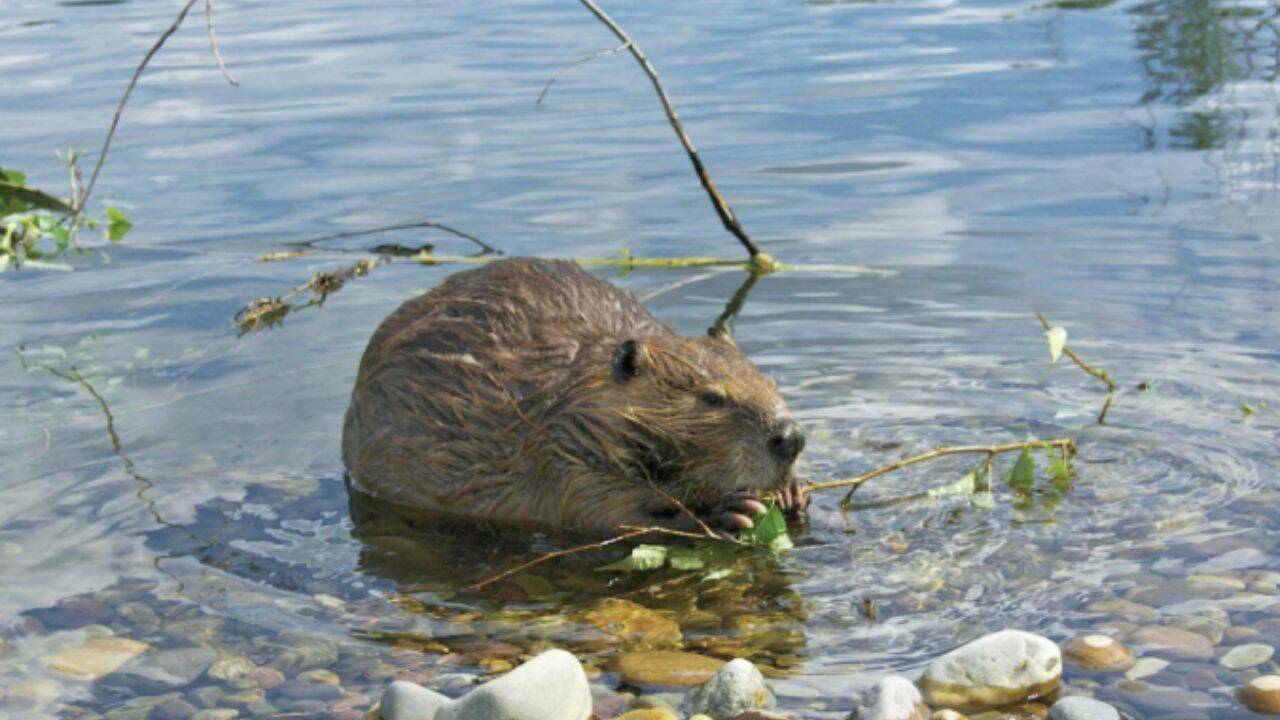
Traditional civil engineering attempts to stabilize this environment required massive capital expenditure, including the construction of a multi-million-dollar sediment retention structure. In tandem with these mechanical interventions, a low-cost, self-replicating biological strategy was deployed in the wider watershed: the strategic reintroduction of the North American beaver (Castor canadensis). By introducing 58 beavers into the impacted tributaries, ecologists initiated a decentralized, self-correcting geomorphological engine that transformed highly unstable, sediment-choked channels into highly productive, biodiverse wetland systems.
The success of this biological intervention is not a sentimental story of nature healing itself. Instead, it is a quantifiable case study in hydraulic engineering, sediment transport dynamics, and systemic trophic feedback loops.
The Volcanic Disruption Model: Post-Eruptive Geomorphology
To understand the impact of the biological intervention, one must first establish the baseline physical constraints of the post-eruptive Toutle River valley. The debris avalanche and subsequent lahars (volcanic mudflows) completely reset the local geomorphology. This created several immediate physical challenges:
- Extreme Sediment Yield: The unconsolidated volcanic ash, pumice, and glacial till possessed a highly erosive nature. Without vegetation to bind the soil, precipitation events triggered severe rill and gully erosion, transporting millions of tons of sediment downstream.
- Hydrological Instability: The loss of the forest canopy and the compaction of the soil surface eliminated the landscape's natural water-storage capacity. Runoff became flashier, characterized by extreme peak flows during winter storms and negligible baseflows during summer droughts.
- High Water Temperatures: The complete removal of riparian vegetation exposed shallow stream channels to direct solar radiation. Summer water temperatures frequently exceeded the lethal threshold for native salmonids, such as coho salmon and steelhead trout.
- Severe Channel Incision: Runoff quickly concentrated into single-thread channels. Due to the high gradient and loose sediment bed, these channels underwent rapid incision (downcutting), isolating the stream from its historic floodplain and lowering the surrounding water table.
Under these conditions, passive ecological recovery was bottlenecked by physical instability. Stream channels were too volatile for aquatic vegetation to establish, and the lack of stable pool habitats prevented fish from spawning or rearing.
The Beaver as a Decentralized Hydrological Engine
The reintroduction of Castor canadensis succeeded because the animal acts as a direct countermeasure to these physical bottlenecks. A beaver dam is a porous, flexible, and self-maintaining weir. The geomorphological and hydrological impacts of these structures can be calculated through fundamental fluid mechanics and sediment transport equations.
Stream Power Reduction
The primary driver of channel incision and sediment transport is stream power. Total stream power ($\Omega$) is defined by the equation:
$$\Omega = \rho g Q S$$
Where:
- $\rho$ is the density of water ($1000 \text{ kg/m}^3$)
- $g$ is the acceleration due to gravity ($9.81 \text{ m/s}^2$)
- $Q$ is the water discharge ($\text{m}^3/\text{s}$)
- $S$ is the energy slope of the channel
By constructing a series of dams, beavers alter the energy slope ($S$). Instead of a continuous, steep gradient characterized by high velocity and high erosive capacity, the stream profile is converted into a stepped series of low-gradient pools separated by short, abrupt drops. The reduction in local slope decreases stream power, forcing a transition from an erosional regime to a depositional regime.
Sediment Deposition Mechanics
The transport of sediment is governed by shear stress ($\tau_0$), which is expressed as:
$$\tau_0 = \rho g R S$$
Where $R$ is the hydraulic radius of the channel. When beavers impound water, they increase the cross-sectional area of the channel, which decreases the average velocity ($v$) of the water according to the continuity equation:
$$Q = A v$$
Where $A$ is the cross-sectional area. As velocity drops, the shear stress falls below the critical shear stress required to keep sediment in suspension. Coarse sediment (sand and gravel) deposits at the upstream end of the beaver pond, while fine silts and clays settle out in the quiet waters near the dam. This process of deposition reverses channel incision, raising the streambed (aggradation) and reconnecting the stream with its ancestral floodplain.
The 58-Beaver Intervention Metrics
In the early 1980s, wildlife biologists relocated 58 beavers into the headwater streams surrounding Mount St. Helens, including tributaries of the Green and Toutle rivers. The selection of these sites was strategic, focusing on second- and third-order streams where the valley width was sufficient to allow floodwaters to spread across the valley floor rather than blow out the newly constructed dams.
The survival and spatial distribution of these relocated populations followed a predictable colonization curve:
| Phase | Duration | Population Dynamics | Physical Infrastructure Built |
|---|---|---|---|
| Phase I: Establishment | Years 1–3 | High mortality; exploratory movement; limited dam building. | Temporary lodges; small, single-thread dams. |
| Phase II: Expansion | Years 4–8 | Exponential population growth; territorial expansion into secondary tributaries. | Primary-secondary dam complexes; extensive canal networks. |
| Phase III: Equilibrium | Years 9+ | Population stabilization based on food availability (carrying capacity). | Multi-generational complexes; continuous maintenance of key dams. |
The relocated beavers did not merely build isolated dams; they constructed complex, interconnected networks of primary dams, secondary overflow dams, and lateral transport canals. This spatial distribution maximized the area of inundated floodplain per capita, exponentially increasing the efficiency of each individual beaver's engineering labor.
Systemic Feedback Loops of Beaver-Mediated Wetlands
The physical transformation of the volcanic valleys by beavers triggered a cascade of positive ecological feedbacks. These feedback loops can be categorized into three distinct, yet mutually reinforcing, systems.
[Beaver Dam Construction]
         │
         ▼
[Decreased Stream Power & Velocity]
         │
         ├─────────────────────────────────────────┐
         ▼                                         ▼
[Sediment Deposition & Aggradation]      [Lateral Water Dispersion]
         │                                         │
         ▼                                         ▼
[Elevated Streambed & Reconnected Floodplain] [Elevated Shallow Water Table]
         │                                         │
         └───────────────────┬─────────────────────┘
                             │
                             ▼
               [Thermal & Chemical Buffering]
                             │
                             ▼
               [High-Productivity Wetland Ecosystem]
1. Hydrological Feedback: Groundwater Storage and Flow Attenuation
Beaver dams act as leaky barriers that force surface water into the subsurface. The hydraulic head created by the pond drives lateral water flow into the surrounding alluvial aquifer. This process of groundwater recharge yields two distinct hydrological benefits:
- Peak Flow Attenuation: During winter storm events, the storage capacity of the beaver ponds and the surrounding unsaturated soil absorbs a portion of the runoff volume. The physical drag of the dam structures and riparian vegetation slows down the flood wave, reducing peak discharge downstream.
- Baseflow Augmentation: The water stored in the alluvial aquifer during high-flow periods is slowly released back into the stream channel during the dry summer months. This maintains higher summer baseflows, preventing the streams from drying up into isolated, stagnant pools.
2. Thermal and Chemical Buffering
Water temperature in the post-eruption blast zone was a critical limiting factor for aquatic life. The deep ponds created by the beavers, combined with the continuous upwelling of cool groundwater downstream of the dams, created strong thermal stratification.
During the heat of summer, the bottom layers of the beaver ponds remained several degrees cooler than the surface water. This provided thermal refugia for cold-water fish. Furthermore, the slow-moving, organic-rich sediment in the ponds acted as a biochemical reactor, transforming dissolved nutrients. Anaerobic zones in the sediment promoted denitrification, reducing high nitrogen levels and filtering out pollutants, which significantly improved downstream water quality.
3. Trophic Cascade and Biological Colonization
The physical stabilization of the stream channel allowed vegetation to take root. Willow, alder, and cottonwood colonized the newly formed, moist margins of the beaver ponds. This vegetative recovery created a self-sustaining cycle:
- Material Source: The growing riparian forest provided the beavers with an abundant supply of food and construction materials.
- Structural Stability: The root systems of these plants bound the volatile volcanic sediment, securing the banks and reducing the likelihood of catastrophic dam failures during flood events.
- Habitat Complexity: The submerged wood of the beaver dams and the overhanging vegetation became hot spots for aquatic macroinvertebrates, which are the primary food source for juvenile salmonids.
- Salmonid Recruitment: Coho salmon and steelhead utilized the slow-flowing, woody margins of the ponds as overwintering habitat, shielding them from high-velocity winter flows.
Comparative Cost-Benefit Analysis: Anthropogenic vs. Biotic Engineering
To evaluate the efficiency of the beaver reintroduction, it must be compared directly against conventional civil engineering approaches to watershed stabilization.
Anthropogenic Civil Engineering: The Sediment Retention Structure (SRS)
To control the massive influx of sediment from the Mount St. Helens blast zone, the U.S. Army Corps of Engineers constructed a massive, 1,800-foot-long, 184-foot-high concrete-and-earth fill dam on the North Fork Toutle River, completed in 1989.
While highly effective at trapping coarse sediment, the SRS has significant structural and economic limitations:
- Capital Expenditure: Initial construction costs exceeded $120 million, with ongoing maintenance, dredging, and spillway modification costs running into tens of millions of dollars.
- Fish Passage Barrier: The structure completely blocked the upstream migration of adult salmonids and destroyed downstream habitat quality by trapping vital gravels, leaving only fine sediment to migrate downstream.
- Static Capacity: Once the reservoir behind the structure fills with sediment, its trapping efficiency drops dramatically, requiring costly dredging operations to maintain functionality.
Biotic Engineering: Castor canadensis
In contrast, the 58-beaver reintroduction required minimal initial capital (primarily capture, transport, and monitoring costs) and virtually zero maintenance capital.
The comparative operational profiles highlight the stark differences between these two strategies:
| Metric | Anthropogenic SRS | Biotic Beaver Complexes |
|---|---|---|
| Initial Capital Expenditure | High (>$120 Million) | Extremely Low (<$100,000) |
| Operational Maintenance | High (Requires continuous dredging/engineering) | Zero (Self-maintaining and self-repairing) |
| Ecological Impact | Negative (Blocks fish migration, degrades downstream habitat) | Positive (Creates thermal refugia, increases biodiversity) |
| Geomorphological Adaptation | Static (Cannot adapt to changing river channels) | Dynamic (Dams migrate with active channel shifts) |
| Lifespan | Finite (Fills with sediment; requires decommissioning) | Semi-infinite (Self-replicating populations) |
While beavers cannot replace the sheer, volume-based sediment trapping capacity of a massive concrete structure on the mainstem of a river, their deployment in the headwaters dramatically reduces the volume of sediment that ever reaches the mainstem. By trapping sediment at the source, the biological intervention extends the functional lifespan of downstream civil infrastructure.
Limitations, Failure Modes, and Ecological Constraints
Using biological agents for environmental remediation is not a flawless strategy. Highly dynamic natural systems present specific physical thresholds beyond which beaver-mediated engineering fails.
The primary physical constraint is the channel gradient. High-gradient streams (slopes greater than 6%) possess a level of stream power that typically overwhelms beaver dams during high-flow events, leading to frequent washouts.
Additionally, beavers require a continuous source of deciduously woody vegetation for food and building materials. In areas where the volcanic blast completely sterilized the soil or where coniferous trees dominate, the lack of immediate food sources (like willow or aspen) limits colonizing populations. In these contexts, beavers are forced to abandon their dams or migrate, leaving the unmaintained structures to wash out during winter storms.
This creates a high-risk failure loop:
$$\text{Lack of Riparian Food} \longrightarrow \text{Dam Abandonment} \longrightarrow \text{Dam Failure} \longrightarrow \text{Channel Incision} \longrightarrow \text{Water Table Drop} \longrightarrow \text{Loss of Riparian Vegetation}$$
To prevent this cycle, modern restoration projects utilize Beaver Dam Analogs (BDAs)—man-made, post-driven wooden structures—to temporarily stabilize the channel and raise the water table. This mechanical step allows riparian vegetation to establish before releasing live beavers, addressing the resource bottleneck.
Strategic Recommendation for Watershed Management
The empirical data from the Mount St. Helens recovery demonstrates that biological engineering should be integrated into large-scale watershed management and disaster recovery frameworks. Instead of treating wildlife management and civil engineering as competing philosophies, modern resource managers should deploy them as a nested, two-tiered system.
The first tier utilizes heavy, static civil engineering infrastructure at the lowest points in the basin to manage catastrophic sediment and flood volumes. The second tier deploys beaver populations (supported by BDAs where vegetation is sparse) throughout the upper tributaries to stabilize headwater streams, reduce overall stream power, and slow sediment transport at the source.
By utilizing biological agents to manage the high-frequency, low-magnitude geological processes of a watershed, agencies can significantly lower infrastructure maintenance costs while accelerating ecological recovery.