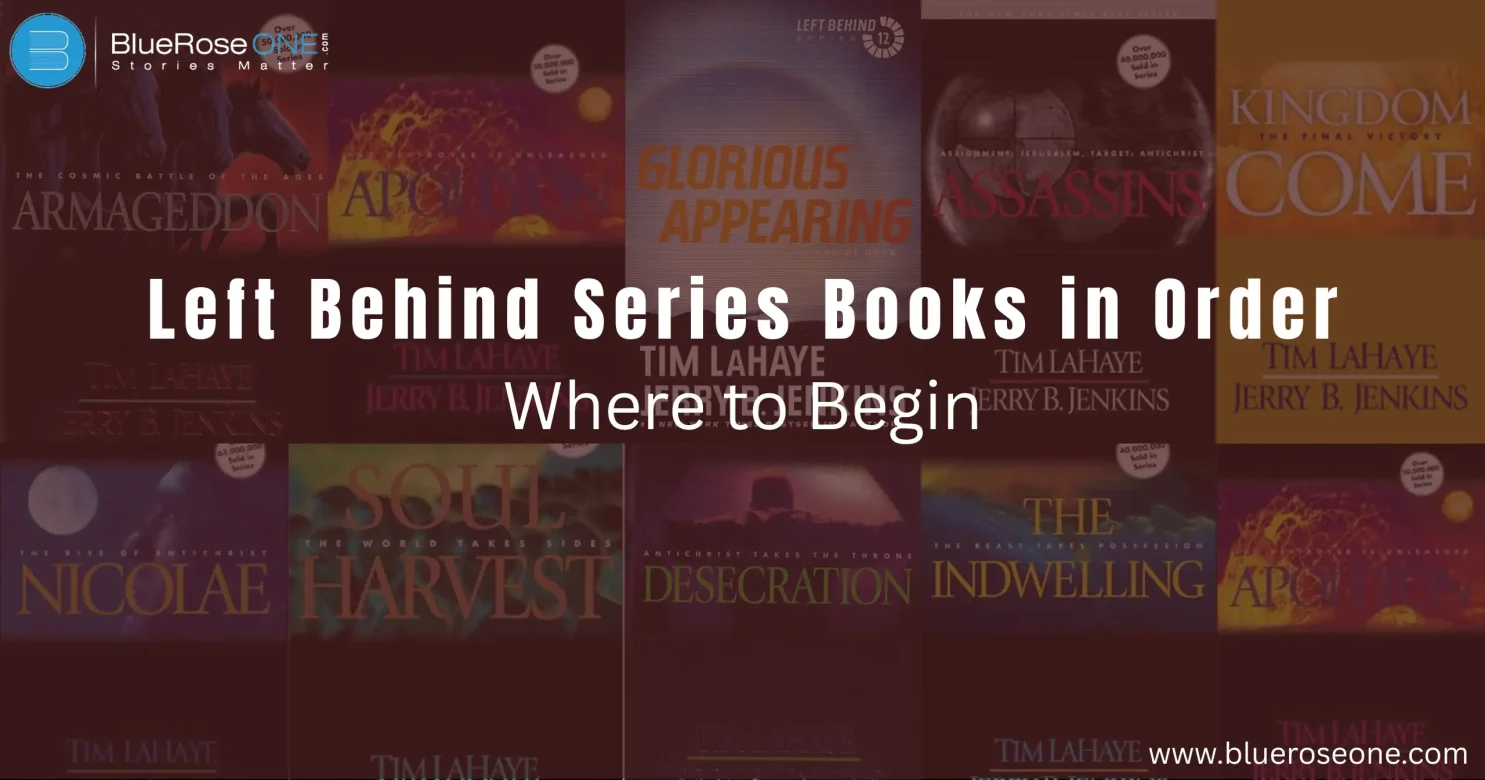
You’ve probably seen the covers in a thrift store or your aunt’s bookshelf. Those dramatic clouds, the bold font, and that lingering sense of "what if?" Tim LaHaye and Jerry B. Jenkins didn’t just write a set of books; they created a cultural juggernaut that basically redefined Christian fiction in the nineties. But if you’re looking to dive into the Left Behind series in order, things get messy fast.
It’s not just sixteen books. It’s sixteen books plus prequels, plus a kids' spin-off series that has about sixty installments, plus movies that range from "okay for the era" to "Kirk Cameron is here." People get stuck. Do you start with the first book published, or do you go back to the beginning of the timeline?
Honestly, the way you choose to read these says a lot about how you like your spoilers. Some folks want the mystery of the disappearance first. Others want the backstory of how the Antichrist actually got his start in Romania.
Why the Left Behind Series in Order Matters for the Plot
The story kicks off with a massive, worldwide disappearance. Millions of people vanish in the blink of an eye. Clothes are left behind in neat piles. Cars veer off roads. Planes fall from the sky because the pilots are just... gone. It’s the Rapture, at least according to the specific dispensationalist theology the authors are using.
If you read them out of sequence, the tension evaporates. The series follows the "Tribulation Force," a group of people who realized they missed the boat and are now trying to survive the seven years of chaos that follow. It’s a ticking clock. If you jump into book ten, The Remnant, without reading Apollyon, you’re going to be wondering why there are giant locusts stinging people and why everyone is hiding in Petra.
The Core Sequence: The Published Order
Most fans will tell you to stick to the order they were released. This is how the world first experienced the story. You start with the shock of the event and slowly learn the "why" alongside the characters like Rayford Steele and Buck Williams.
- Left Behind (1995) – The plane ride where it all starts.
- Tribulation Force (1996) – The core group forms.
- Nicolae (1997) – The rise of the Antichrist.
- Soul Harvest (1998) – The search for loved ones continues.
- Apollyon (1999) – Plague after plague.
- Assassins (1999) – Things get political and violent.
- The Indwelling (2000) – The midpoint of the seven years.
- The Mark (2000) – The infamous Mark of the Beast comes into play.
- Desecration (2001) – The Antichrist takes over the temple.
- The Remnant (2002) – Survival in the desert.
- Armageddon (2003) – The lead-up to the final battle.
- Glorious Appearing (2004) – The climax of the entire series.
For a long time, that was it. Twelve books. Done. But then the authors decided to go back and fill in the gaps, which is where the confusion for new readers usually starts.
The Prequels: To Read or Not to Read?
In 2005 and 2006, three prequels were released: The Rising, The Regime, and The Rapture.
If you’re a completionist, you might think, "Hey, I’ll start there." Maybe don't. These books give away the "twist" of who the villain is—though, let's be real, his name is Nicolae Carpathia and he's pretty obviously the bad guy from page one. Reading the prequels first changes the genre from a supernatural mystery-thriller into a biographical tragedy. You watch a child grow up to be the literal personification of evil. It's a different vibe.
The final book, Kingdom Come, was published last (2007) but takes place after the events of Glorious Appearing. It covers the Millennial Kingdom. Most people find it a bit slower than the high-octane action of the middle books, but if you want the full theological "wrap-up," it’s essential.
The Chronological Timeline
If you want to experience the Left Behind series in order of the actual events as they happen in history (well, fictional history), the list looks like this:
- The Rising: Nicolae Carpathia's birth and early years.
- The Regime: How he rose to power in the UN.
- The Rapture: The moments leading right up to the disappearance.
- Left Behind through Glorious Appearing: The main seven-year saga.
- Kingdom Come: The aftermath and the final end.
The Weird World of the Spin-offs
We can't talk about this series without mentioning Left Behind: The Kids. There are forty main books and several "super books" in that run. They follow a group of teenagers who were also left behind.
Surprisingly, these are often considered better paced than the adult novels. They deal with the same events but from a ground-level perspective. If you have a younger reader interested, or if you just want a quicker version of the story, these are actually quite solid. They follow the same timeline as the main series but focus on different characters like Vicki and Judd.
Why People Still Read These Today
Let's talk about the elephant in the room. The prose isn't Hemingway. It’s "airport fiction" style—fast-paced, heavy on dialogue, and very focused on plot. But it tapped into a massive cultural anxiety that still exists.
Even if you aren't religious, the series works as a "post-apocalyptic" survival story. It’s about how people react when the world as they know it ends in sixty seconds. It’s about the underground resistance. It’s about tech and tracking—there’s a lot of focus on how the Antichrist uses globalism and technology to control the population, which feels weirdly prescient when you read it in 2026.
The books also served as a gateway for many into the world of "End Times" theology. Whether you agree with the interpretation or not, you can't deny the impact. Millions of copies sold. Multiple movie attempts (the Nic Cage one was... a choice). It’s a massive part of publishing history.
Common Misconceptions and Pitfalls
One big mistake readers make is thinking the movies follow the books closely. They don't. The 2014 movie starring Nicolas Cage only covers the first half of the first book. The older Kirk Cameron movies cover the first three books but take some massive liberties with the plot. If you want the real story, you have to go to the page.
Another thing? Don't expect "The Rising" to feel like "Left Behind." The prequels were written a decade later. The style is slightly different. The world had changed. The authors were writing for a fan base that already knew the ending, so the foreshadowing is laid on pretty thick.
Strategy for a First-Time Reader
If you're starting today, here is the best way to handle the Left Behind series in order:
Start with the original 1995 book, Left Behind.
If you aren't hooked by the time they get off the plane, the series probably isn't for you. If you are hooked, power through the original twelve. Save the prequels for when you’re feeling "homesick" for the characters after the main story ends. Think of them like the Star Wars prequels—better appreciated when you know where everyone ends up.
Practical Tips for the Journey
- Check Used Book Stores: These are the most common books in the world at thrift shops. You can probably get the whole set for twenty bucks.
- Audiobooks: They are actually great for the "boring" travel parts of the books. Jerry B. Jenkins writes a lot of scenes of people flying in planes or driving cars.
- Keep a Character Map: By book six, there are a lot of minor characters in different "safe houses" around the world. It helps to keep track of who is in Chicago and who is in Israel.
The series is a product of its time, but its look at global catastrophe and the human spirit is still fascinating. It’s a wild ride through a very specific vision of the future.
To get started, track down a copy of the first book (the one with the blue/cloud cover) and see if you can make it through the first seventy pages. That’s usually where the "event" happens. From there, just follow the publication dates. You’ll know you’re on the right track if the stakes keep getting higher and the villains get more charismatic.
Avoid starting with the prequels unless you really love biographical world-building over immediate action. Once you finish the main twelve, decide if you want the "happily ever after" (or at least the theological version of it) in Kingdom Come. Most people find that the natural end of the journey is at the end of Glorious Appearing, but the choice is yours.
Grab the first book, skip the movie trailers for now, and just see where the story takes you. It’s a lot more than just a religious tract; it’s one of the biggest suspense stories ever told.