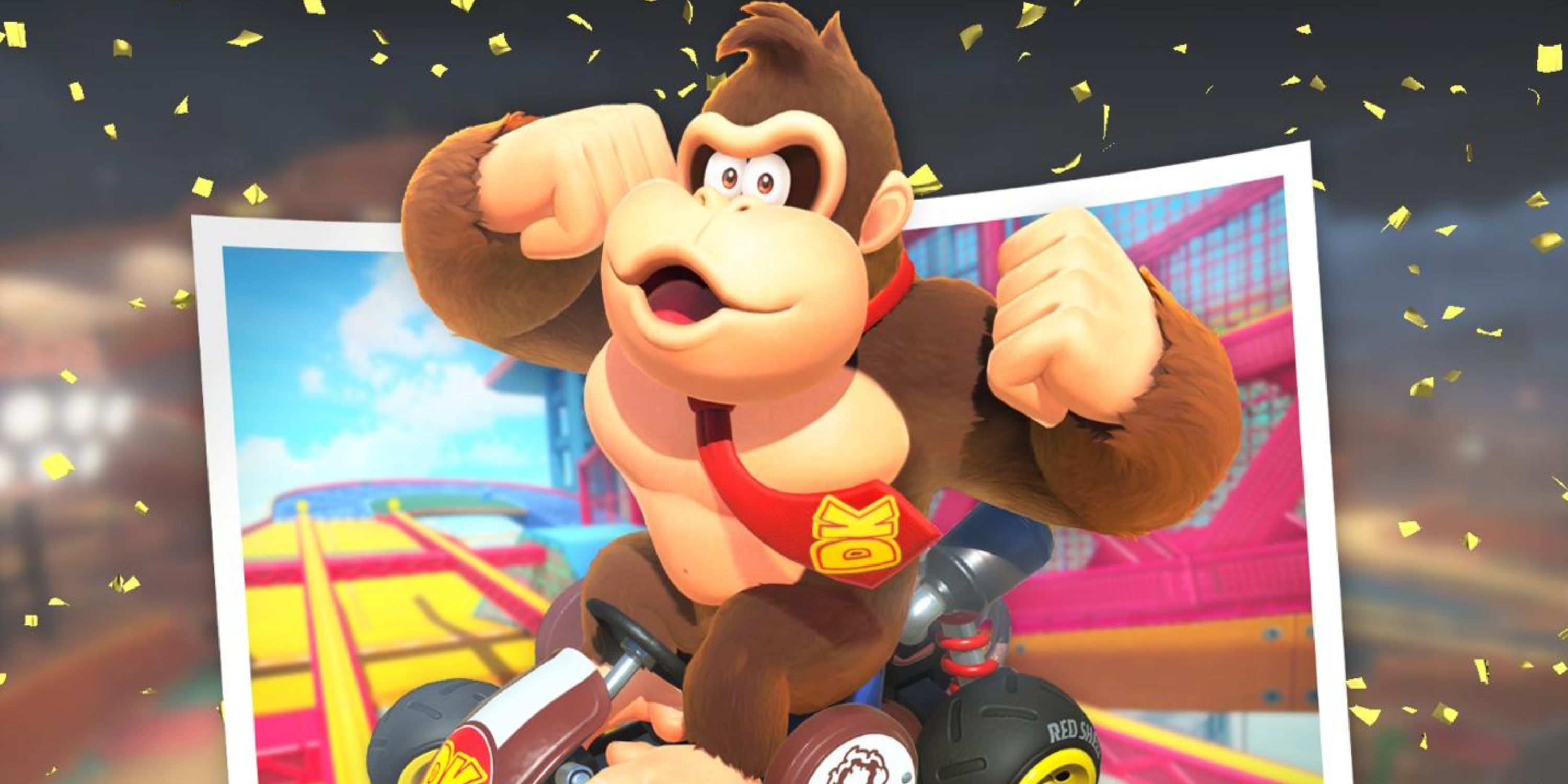
Super Nintendo World was already a massive hit, but honestly, it felt a little small. You walk through that green pipe and see Peach's Castle, and it’s magical, sure. But there was always this giant, mysterious temple door sitting there in the back. Everyone knew what was behind it. Well, now we finally have Donkey Kong Mario Kart world vibes coming to life in the form of the Donkey Kong Country expansion, and it basically doubles the stakes of what a theme park can actually do.
It’s big.
The expansion isn’t just a few trees and a banana stand. We are talking about a full-scale jungle immersion that bridges the gap between the precision of the Mario Kart software and the chaotic, kinetic energy of the Donkey Kong games. If you’ve ever played Donkey Kong Country on the SNES or the newer Tropical Freeze, you know the vibe is totally different from Mario’s primary colors. It’s grittier. It’s louder. And the way it integrates with the existing "World" is actually a masterclass in engineering.
Why the Donkey Kong Mario Kart world vibe feels so different
Most people think of these two franchises as the same thing because DK has been a staple in the Mario Kart roster since the 64 days. But the physical world they are building at Universal Studios Japan—and soon Orlando—treats them as distinct biomes. Mario’s area is all about verticality and those spinning gold coins. The Donkey Kong section, officially titled Donkey Kong Country, focuses on "The Golden Temple" and a very specific piece of tech that has the industry buzzing.
That tech? The "sideways" roller coaster.
Usually, when you’re on a coaster, the wheels are under you. Boring. In this new world, they’ve developed a "jumping" mine cart. The actual track you see is a fake, "broken" rail, while the real mechanism is hidden on a second track underneath or to the side. It makes it look like your cart is literally leaping over gaps in the track, just like in the games. This is the kind of stuff that makes the Mario Kart: Bowser’s Challenge ride look like a warm-up. It’s physical. It’s fast. It’s terrifying in a way Mario rarely is.
The lore connection between the Kart and the Jungle
We have to talk about the history here because it’s weirdly deep. Donkey Kong actually debuted in a Mario game, but since then, the two have had this "friendly rivals" thing going on. When you look at the Donkey Kong Mario Kart world connection, you see it most clearly in the tracks. Think about DK Mountain or Dino Dino Jungle. These aren't just background levels; they are the inspiration for the physical architecture of the park.
Universal and Nintendo didn't just want a photo op. They wanted a "living" world.
The Power-Up Bands from the Mario area work here too. But instead of just hitting blocks, you’re doing rhythm-based challenges on bongos. You’re collecting letters—K-O-N-G—which is a direct nod to the completionists who spent hours hunting for secrets in the 90s. It’s a layer of gamification that actually rewards you for knowing the source material.
What most people get wrong about the expansion
There is a huge misconception that this is just a "new land" for the sake of more space. It’s actually a response to the bottlenecking issues in the original Super Nintendo World. By adding the Donkey Kong area, Universal is essentially creating a "second hub."
- The crowd flow is designed to pull people away from the Bowser’s Challenge line.
- The food is completely different—think tropical, heavy on the fruit, less about the "cheesy pizza" Mario vibe.
- The scale is massive; the Golden Temple is tall enough to be seen from almost anywhere in the park.
Shigeru Miyamoto himself has been incredibly hands-on with this. During the Nintendo Directs where he walked through the construction site, you could see he wasn't just checking boxes. He was obsessed with the color of the stone and the way the foliage looked. He wants it to feel like the screen has been peeled back.
Breaking down the Mine-Cart Madness experience
The centerpiece is Mine-Cart Madness. This isn't just a coaster; it's the evolution of the Donkey Kong Mario Kart world concept. While the Mario Kart ride uses Augmented Reality (AR) headsets to simulate shells and bananas, the DK ride is all about physical stunts.
You aren't wearing goggles here. You're feeling the wind and the "drop" as you hit those jumps. It’s a brave move. In an era where everything is becoming digital and "screen-based," Nintendo went the opposite direction. They went with heavy machinery and gravity. It’s a perfect contrast. Mario is the digital hero; DK is the physical powerhouse.
Honestly, the engineering required to make a mine cart look like it's jumping over a broken track without actually killing the passengers is insane. It involves a cantilevered arm system that keeps the vehicle attached to a hidden rail while the "show rail" sits several feet away. It’s an illusion that only works because of the jungle’s dense themeing hiding the "guts" of the ride.
What this means for the future of Nintendo Parks
If you’re looking at this from a business or fan perspective, the message is clear: Nintendo is building a "Universe," not just a "Land." By successfully integrating the Donkey Kong Mario Kart world elements, they’ve proven that the Power-Up Band ecosystem can span multiple franchises.
Rumors are already flying about what's next. Zelda? Kirby? Pokémon?
The success of the DK expansion proves that fans want more than just the "A-List" Mario characters. They want the deep cuts. They want the Funky Kong merch. They want to drink out of a coconut. It’s about the vibe. The Mario area is frantic and bright; the DK area is adventurous and a little bit wild.
Actionable Tips for Visiting
If you are planning to head to Japan or waiting for the Orlando opening (Epic Universe), you need a strategy. This isn't a "walk-up and see" kind of place.
- Get the Band early. Don't wait until you get into the DK area to buy your Power-Up Band. Buy it at the entrance of the park or at a hotel. You'll need it the second you step foot in the jungle to start collecting those K-O-N-G letters.
- The "Single Rider" secret. The Mario Kart ride has a great single rider line, but the Mine-Cart Madness ride is expected to have even longer wait times due to the lower "hourly capacity" of the carts. Check the app every 15 minutes.
- Eat at the Jungle Beat Shakes. Everyone crowds the Toadstool Cafe, but the new DK-themed snacks are designed to be "walkable." Grab a DK-themed snack and keep moving to hit the mini-games while everyone else is sitting down for a 45-minute meal.
- Look for the "hidden" stickers. Just like in Mario Kart 8 Deluxe, there are hidden stamps and icons throughout the environment that you can only "see" or interact with via the app and your band. Some are tucked behind waterfalls.
The Donkey Kong expansion is the missing piece of the puzzle. It takes the foundation of the Mario Kart technology and adds a layer of physical thrill that was frankly missing from the initial opening. It’s a jungle out there, and it’s exactly what the park needed to feel complete.
Don't just stand in the Mario Kart line all day. Get into the trees. Look for the golden bananas. The tech behind the "jumping" carts is something you’ll be talking about for years after you leave. It’s a rare moment where the real world actually manages to keep up with the video game logic we grew up with.