The ink is barely dry on the announcement that Hong Kong will host the 2027 Hyrox World Championships, and the hype machine is already redlining. Local tourism officials and sports commentators are high on their own supply. They are telling anyone who will listen that bringing this functional fitness phenomenon to AsiaWorld-Expo in June 2027 is a massive victory. They claim it will inject tens of millions into the economy, pack out hotels, and solidify the city as Asia's premier events hub.
They are wrong. They are falling for the classic, lazy consensus that hosting any event with the word "World" attached to it automatically translates into a windfall for local businesses. For a different view, read: this related article.
I have spent over a decade analyzing sports tourism economics and watching cities blow millions chasing vanity metrics. The reality of fitness tourism is vastly different from the glossy projections presented in government press releases. The 2027 Hyrox World Championships will not add muscle to Hong Kong’s tourism trade. It will be an exercise in economic isolation, leaving the broader city economy completely starved for actual revenue.
The Mirage of the Fitness Tourist
To understand why this event will underdeliver, you have to understand the specific psychology of the functional fitness athlete. Tourism boards love to look at registration numbers and conflate a high head count with high economic impact. They assume every participant behaves like a high-rolling executive traveling for a banking conference. Further reporting on this matter has been published by Bleacher Report.
They do not.
Hyrox athletes are hyper-disciplined, budget-conscious, and entirely focused on performance optimization. They are not coming to Hong Kong to drink cocktails in Lan Kwai Fong, buy luxury goods in Causeway Bay, or spend thousands on fine dining.
Imagine a scenario where thousands of athletes arrive in June. What does their economic footprint actually look like?
- The Diet Reality: They do not eat at high-margin local restaurants. They buy plain chicken breasts, white rice, and bananas from local supermarkets like CitySuper. They pack their own supplements, hydration powders, and energy bars.
- The Nightlife Ghost Town: They do not spend money at bars or nightclubs. They are asleep by 9:00 PM to ensure maximum recovery and a low resting heart rate.
- The Merchandise Bubble: The money they do spend on gear stays entirely within the event ecosystem. It goes directly to global sponsors like Puma or Velites at the expo booths. The local economy sees none of it.
Fitness tourists are notorious penny-pinchers when it comes to everything outside of their direct sport. They treat the host city as a laboratory, not a destination.
The AsiaWorld-Expo Geography Trap
The single biggest flaw in the argument that Hyrox will boost Hong Kong tourism is the physical location of the event. AsiaWorld-Expo sits on Lantau Island, directly adjacent to Hong Kong International Airport. It is a masterpiece of logistics, but an absolute disaster for local urban tourism.
Because the venue is connected to the airport terminal, it creates a self-contained vacuum.
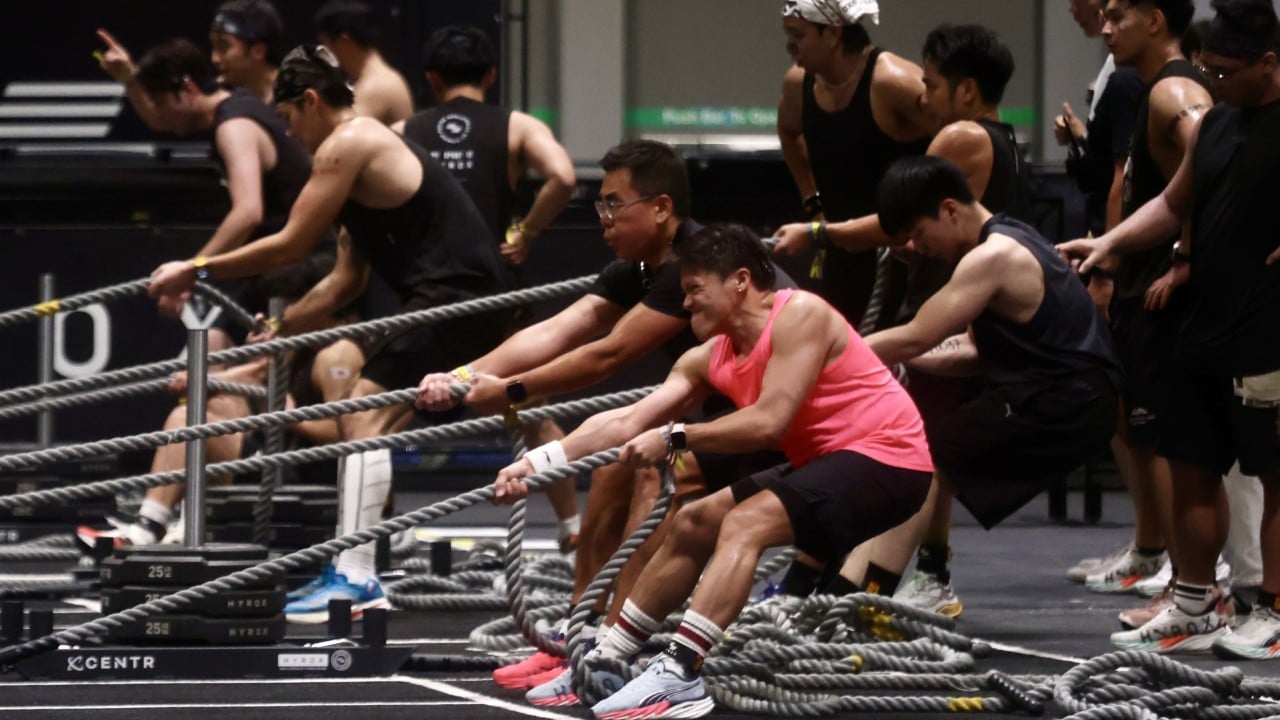
International competitors will fly in, board the Airport Express for exactly one stop, or simply walk to the Regal Airport Hotel or SkyCity Marriott. They will check in, walk to the expo halls, run their 8 kilometers, complete their 100 wall balls, and fly right back out.
This is what economists call geographic leakage. The spending is entirely concentrated within a micro-radius owned by mega-corporations and the airport authority itself. The taxi drivers in Kowloon, the family-run dim sum shops in Mong Kok, and the boutique hotels on Hong Kong Island will not see a single cent of this money. The event could be taking place in Frankfurt, Chicago, or Stockholm—the physical experience for the athlete remains identical, and their interaction with the actual culture of Hong Kong remains effectively zero.
The Broken Math of Sports Tourism Multipliers
When consulting firms generate economic impact reports for events like Hyrox, they rely on highly flawed "multiplier effects." They argue that every dollar spent by an athlete circulates through the economy and multiplies by three or four times.
This math ignores the substitution effect. June is already a high-traffic period for regional travel. By filling airport hotels and transport corridors with thousands of fitness enthusiasts who are consuming low-yield services, the city effectively displaces higher-spending leisure and corporate travelers.
A corporate traveler staying at the Four Seasons pays premium rates, dines out at Michelin-starred venues, uses local corporate services, and entertains clients. A Hyrox athlete occupying a hotel room at the airport minimizes all discretionary spending. Replacing high-yield travelers with low-yield functional fitness athletes is a net negative for the city's tourism GDP.
Furthermore, we must address the issue of government subsidization. While the exact financial backing for the 2027 bid remains under wraps, major sports events in Hong Kong routinely draw from public coffers or specialized mega-event funds. If tax dollars are used to subsidize an event that primarily generates revenue for global fitness brands and a handful of airport-adjacent hotels, the local public is paying for a corporate marketing campaign.
What True Sports Tourism Success Requires
If a city wants to use sports to drive actual economic value, it cannot rely on indoor arena sports that isolate participants from the environment. Look at the events that genuinely move the needle:
- The Hong Kong Sevens: This event works because it is fundamentally built around entertainment, hospitality, and social interaction. It brings high-spending corporate crowds who spend an entire week consuming high-margin goods across the entire territory.
- Major Trail Running Ultra-Marathons: Events like the HK100 force participants out into the New Territories and rural areas. Athletes must stay in local guest houses, use local transport, and interact with small businesses across different districts over several days.
Hyrox is the exact opposite. It is an industrialized, standardized fitness product designed to be identical anywhere in the world. The concrete floor in Hong Kong is the same as the concrete floor in Nice or Las Vegas.
To suggest that hosting this event will magically rejuvenate a struggling retail and tourism sector is a fundamental misunderstanding of retail dynamics. It is an easy headline for politicians who want to score quick points for making the city look "global" again, while ignoring the structural issues plaguing local commerce.
Stop celebrating the mere acquisition of international sports titles. Start looking at the cold, hard data of who is coming, where they are sleeping, and exactly where their money goes. Until Hong Kong shifts its focus toward hosting high-yield, culturally integrated events, these mega-fitness expos will remain nothing more than an expensive vanity project for the sports bureau.