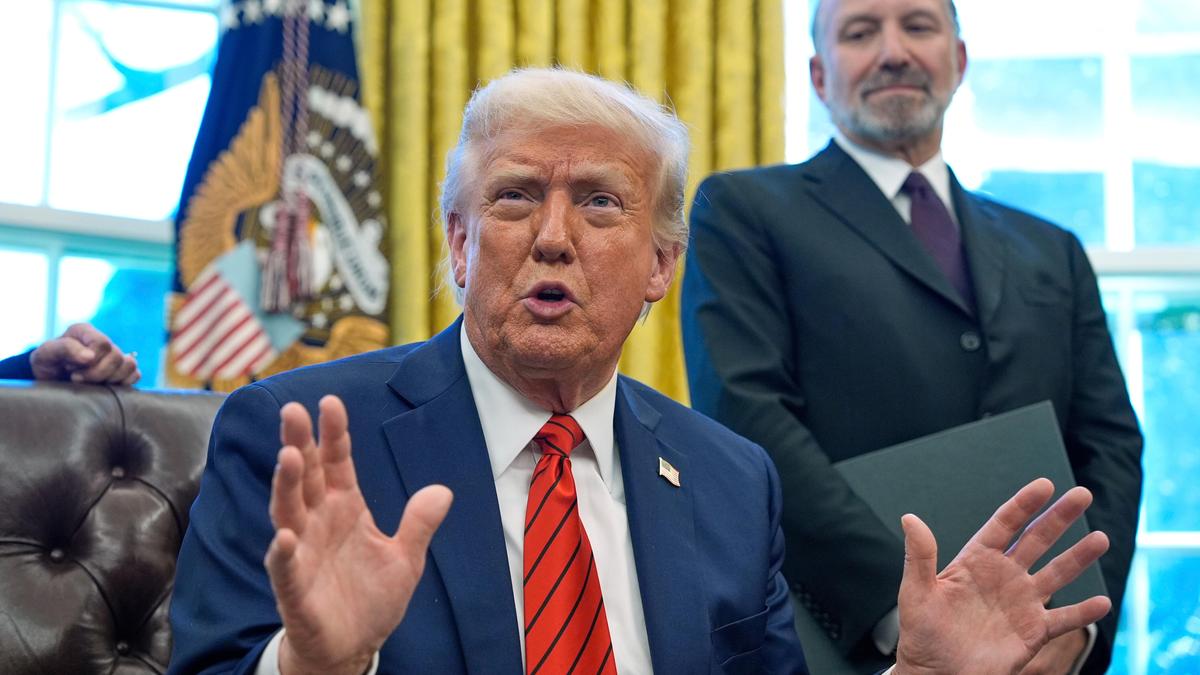
The standoff in the world’s most volatile maritime choke point has entered a precarious new phase. President Donald Trump abruptly halted Project Freedom—the high-stakes military operation designed to escort commercial vessels through the Strait of Hormuz—just forty-eight hours after its launch. The White House insists the pause is a gesture of goodwill to facilitate a "grand deal" with Tehran, but the reality on the water suggests a far more complex calculation involving global energy collapse and a breakdown in naval insurance markets.
For months, the Strait has been the epicenter of a global economic cardiac arrest. Since the initiation of Operation Epic Fury in late February, which saw joint U.S. and Israeli strikes against Iranian nuclear and military infrastructure, the waterway has been effectively sealed. The result was immediate. Oil prices surged, and gas prices in the U.S. spiked by 50%, a political nightmare for an administration that campaigned on domestic affordability. By pausing the escort mission, Trump is attempting to trade military de-escalation for the restoration of global trade, essentially betting that a "one-page framework" can replace the thunder of carrier-based jets.
The Invisible Wall of Insurance and Risk
While the headlines focus on the movement of destroyers and the rhetoric of "blasting Iran into oblivion," the true catalyst for the pause may be found in the boardrooms of London’s maritime insurers.
When Project Freedom was announced, the goal was to "guide" hundreds of stranded ships out of the Persian Gulf. However, the move was immediately labeled a "ceasefire violation" by Tehran. For a commercial captain, a U.S. Navy escort isn't a shield; it is a target. Insurers reportedly refused to cover vessels participating in the American mission, citing the extreme risk of "asymmetric intervention"—a polite term for Iranian mines, drone swarms, and fast-attack craft that can overwhelm traditional naval defenses in the narrow confines of the Strait.
Without insurance, the ships remained anchored. The "Humanitarian gesture" Trump touted was a fleet of ghost ships that couldn't move because the financial risk outweighed the military protection. The pause isn't just about giving peace a chance; it is a recognition that you cannot force commerce through a war zone when the private sector won't sign the check.
The Two-Plan Tussle
The negotiations mediated by Pakistan have revealed two fundamentally irreconcilable visions for the Middle East. The U.S. proposal is a "Libya-style" disarmament. It demands the total dismantlement of Iran’s nuclear infrastructure and a permanent reopening of the Strait in exchange for conditional sanctions relief.
The U.S. 15-Point Framework
- Total Nuclear Exit: Dismantlement of all enriched uranium stockpiles.
- Maritime Guarantee: A new regional framework where the U.S. and its allies oversee Hormuz security.
- Asset Release: Unfreezing billions in Iranian funds, but only after verification of compliance.
The Iranian 10-Point Counter-Proposal
- Sovereignty Tolls: Iran maintains the right to "regulate" the Strait, effectively treating it as territorial water.
- Total Withdrawal: All U.S. forces must exit the region entirely.
- Reconstruction Fund: A demand for a comprehensive economic settlement to cover "decades of lost investment."
The gap between these two positions is a canyon. Iran’s Revolutionary Guard recently signaled that they would allow safe passage "under new procedures," but these procedures likely involve the very tolls and inspections that the U.S. went to war to prevent. The Trump administration is essentially asking for a surrender, while Tehran is betting that the global oil crisis will eventually force the West to accept their "new maritime regime."
The Economic Clock is Ticking
The pressure on the White House is not just coming from the Pentagon, but from the American consumer. The Bureau of Labor Statistics recently showed the consumer price index jumping a full percentage point in a single month. For the average American, the war in the Middle East has translated to an extra $150 in monthly expenses.
Critics in Congress are already demanding to know if the administration anticipated the scale of this disruption. But in the world of high-stakes brinkmanship, the economic pain is the point. Iran knows that every day the Strait is closed, the political pressure on Trump grows. Conversely, the U.S. knows that the "highly effective Blockade" on Iranian ports is strangling what remains of Tehran's economy.
The "legendary" status of Operation Epic Fury is now being weighed against the cold reality of $6-a-gallon gas and a looming global recession. Trump’s warning that "the bombing starts" if a deal isn't reached is a classic negotiation tactic, but it rings hollow if the very act of bombing further destabilizes the markets the U.S. is trying to save.
The pause in Project Freedom is a tactical retreat dressed as a diplomatic overture. It buys time for mediators in Islamabad to find a middle ground that likely doesn't exist. If the "big assumption" of an Iranian agreement fails, the region faces an escalation that will make the current blockade look like a minor shipping delay. The world is watching the Strait, not for the next ship to pass, but for the first sign that diplomacy has finally run out of fuel.
The next forty-eight hours will determine if the Strait of Hormuz remains a gateway for the world's energy or a graveyard for its current economic order.
Trump Pauses Hormuz Mission
This video provides the immediate context of the President's decision to pause the naval operation and the subsequent threats of renewed military action.