Press releases make green aviation sound effortless. You announce a tender, break ground on a refinery, slap a 2030 target on the press kit, and suddenly an international aviation hub looks like a climate pioneer.
That is the lazy consensus circulating around Hong Kong’s push to build its first Sustainable Aviation Fuel (SAF) production facility. The narrative is tidy. Hong Kong International Airport (HKIA) needs to stay competitive against Singapore’s Changi Airport. Global airlines face tightening emissions mandates. Therefore, building a local SAF plant in Hong Kong is the obvious, visionary move.
It isn't. In fact, looking at the hard physics of feedstock supply chains, land economics, and refining chemistry, a standalone SAF plant in Hong Kong risks becoming an expensive, underutilized monument to political signaling.
I have watched energy developers burn tens of millions of dollars on biofuel projects that looked immaculate in a boardroom pitch deck, only to choke to death at the factory gate because nobody did the basic math on raw material logistics. Aviation decarbonization does not fail in the engineering phase. It fails in the supply chain. And Hong Kong’s supply chain reality is brutal.
The Feedstock Mirage in a City Without Farms
To understand why a local Hong Kong refinery is a treacherous bet, you have to strip away the marketing jargon and look at what SAF actually is. Today, virtually all commercial SAF is produced through a pathway called HEFA—Hydroprocessed Esters and Fatty Acids.
HEFA is not magic. It is basic chemical refining that takes waste lipids—specifically Used Cooking Oil (UCO), animal tallow, and industrial grease—and reacts them with hydrogen to strip out oxygen, turning sludge into drop-in jet fuel.
Here is the problem. Hong Kong is a high-density financial and logistics metropolis with almost zero agricultural output and limited industrial food processing.
If you build a commercial-scale HEFA refinery in Hong Kong, where do you get the grease?
Local restaurants and hotels in Hong Kong generate a fraction of the used cooking oil required to feed even a modest biorefinery. To hit the volumes needed for a 2030 mandate—even a conservative 1% to 2% blending target for flights departing HKIA—that plant must import almost every single drop of its raw feedstock.
Where does that feedstock come from? Mainland China.
Mainland China is the world’s largest collector and exporter of used cooking oil. But there is a catch that standard business reporting completely ignores. China is aggressively building out its own domestic SAF refining capacity to meet its own aviation decarbonization goals. At the same time, European and American refiners are vacuuming up Asian UCO at premium prices to satisfy mandates like the European Union’s ReFuelEU Aviation regulation.
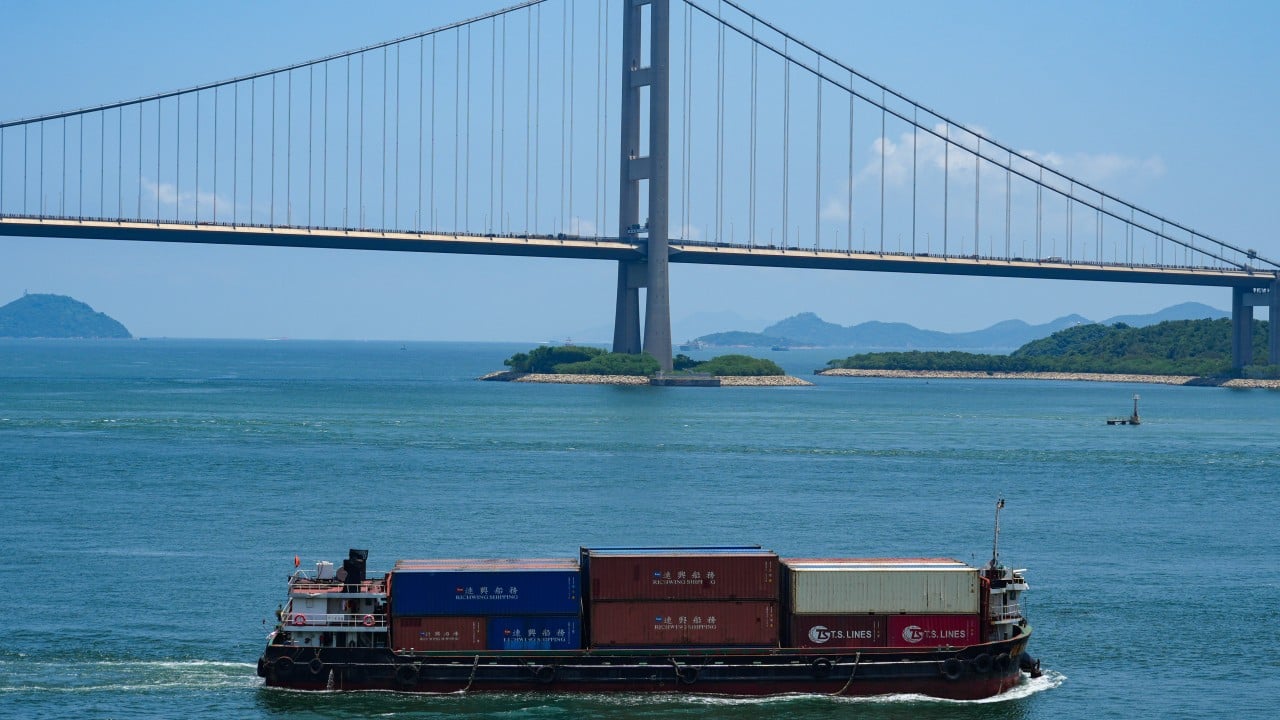
Imagine a scenario where Hong Kong spends hundreds of millions of dollars constructing a specialized hydroprocessing facility, only to find itself bidding against state-backed mainland refineries and cash-flush European oil majors for shrinking shipments of Chinese cooking oil. You end up importing waste oil by barge from Guangdong, refining it on some of the most expensive industrial land on earth, and selling fuel at a structural cost disadvantage.
You have not created energy security. You have simply moved the refining step across a river while multiplying your capital expenditure.
Why Singapore Wins the Game Hong Kong Is Trying to Play
Every aviation policy decision in Hong Kong is haunted by the ghost of Singapore. When Singapore announced its 1% SAF mandate starting in 2026—rising to 3% to 5% by 2030—and secured massive production capacity via Neste’s Tuas refinery expansion, Hong Kong’s aviation establishment panicked.
The knee-jerk reaction was predictable: Singapore has a plant, so we need a plant.
That is a fundamental misreading of industrial geography. Singapore did not become an SAF powerhouse because it passed a clever airport mandate. Singapore succeeded because Jurong Island is one of the largest, most deeply integrated petrochemical refining complexes in the world.
Neste did not build a billion-euro biorefinery in Singapore from scratch in an empty field. They plugged a renewable diesel and SAF unit directly into an existing ecosystem of deepwater ports, hydrogen pipelines, wastewater treatment plants, and decades-old chemical engineering talent. Furthermore, Singapore sits right next to Malaysia and Indonesia—the global epicenters of palm oil processing and agricultural residues.
Hong Kong has none of that.
Hong Kong dismantled its heavy manufacturing base decades ago. Its port infrastructure is built for containerized consumer goods, not bulk chemical tankers and hazardous hydrogen storage. Building a greenfield SAF refinery in Hong Kong requires constructing every piece of supporting infrastructure from zero, in a jurisdiction where environmental impact assessments and land reclamation take years, and construction labor costs are among the highest in Asia.
When you copy a competitor’s strategy without having their underlying assets, you do not catch up. You just overpay for inferior results.
The Accounting Trick Nobody Talks About
If Hong Kong shouldn't prioritize building a massive domestic refinery, how does it protect HKIA’s status as a premier global transit hub?
The industry already solved this problem, even if politicians hate admitting it because it doesn't come with a ribbon-cutting ceremony. It is called Book and Claim.
In the physical world, moving SAF is stupid. Jet fuel is a commodity. Once SAF is blended with conventional Jet A-1 fuel, it is chemically indistinguishable from fossil fuel. Shipping physical batches of sustainable fuel from a refinery in Guangzhou or Tianjin across the border to Hong Kong just so it can be pumped into a Cathay Pacific wingtank adds transport emissions, logistical friction, and unnecessary cost.
Under a rigorous Book and Claim system, an airline or corporate buyer pays for the environmental attributes of SAF produced anywhere in the region. The fuel is physically pumped into a plane near the refinery—say, at an airport in Mainland China—eliminating transport costs. Meanwhile, the carbon reduction credit is retired and claimed by the flight departing Hong Kong.
Critics call Book and Claim "greenwashing" or "paper shuffling." Those critics do not understand commodity markets.
Electricity grids have used Renewable Energy Certificates for decades because you cannot paint electrons green and route them to a specific house. Aviation fuel works the exact same way. Organizations like the International Air Transport Association (IATA) and the Roundtable on Sustainable Biomaterials (RSB) have spent years building strict chain-of-custody registries to prevent double-counting.
By obsessing over physical production inside Hong Kong’s tiny borders, policymakers are ignoring the city’s actual superpower: financial engineering, registry verification, and green capital allocation. Hong Kong does not need to refine the fuel. Hong Kong needs to be the clearinghouse that finances, trades, and certifies the fuel produced across the Greater Bay Area.
Is SAF Actually Sustainable or Just Expensive Greenwashing?
Let’s address the elephant in the terminal. Passengers and corporate travel managers constantly ask whether SAF actually cuts emissions, or if it is just an excuse to tack a "green surcharge" onto ticket prices.
The brutal truth sits right in the middle.
SAF does not eliminate carbon emissions at the tailpipe. When you burn SAF in a Rolls-Royce Trent XWB engine at 35,000 feet, it still emits carbon dioxide, nitrogen oxides, and contrail-forming particulates. The climate benefit comes entirely from the lifecycle carbon accounting—the fact that the carbon released during flight was recently absorbed from the atmosphere by the plants or animals that produced the waste oil, rather than pumped up from underground fossil reserves.
According to ICAO (International Civil Aviation Organization) lifecycle assessment methodologies, HEFA-based SAF reduces net greenhouse gas emissions by roughly 70% to 80% compared to fossil jet fuel.
That is a real, measurable reduction. It is not zero, and anyone claiming "net-zero flights" via SAF today is lying to you. Worse, SAF currently costs two to four times as much as conventional Jet A-1.
Because fuel accounts for roughly 25% to 30% of an airline’s operating expenses, mandating high blends of expensive SAF directly translates to higher airfares. For a long-haul transit hub like Hong Kong, which relies on price-sensitive connecting passengers flying between Europe, North America, and Southeast Asia, inflating ticket prices with uncompetitive local fuel costs is commercial suicide. If flying through HKIA costs $80 more than flying through Doha, Dubai, or Seoul, passengers will click on the cheaper itinerary every single time.
The Next-Gen Trap: Power-to-Liquids
When you point out the feedstock shortage for waste-oil SAF, proponents immediately pivot to the next shiny object: e-SAF, also known as Power-to-Liquids (PtL).
The pitch sounds like alchemy. You take captured carbon dioxide from the air, combine it with green hydrogen split from water using renewable electricity, and synthesize pure jet fuel via the Fischer-Tropsch process. Zero cooking oil required. Infinite scalability.
Here is the reality check. Making e-SAF requires staggering amounts of cheap, abundant, zero-carbon electricity.
Hong Kong’s power grid is overwhelmingly reliant on natural gas and imported nuclear power, with residential and commercial electricity tariffs among the highest in the region. Wind and solar generation within Hong Kong’s territory is negligible due to geography and typhoon risks.
Trying to produce green hydrogen and synthetic e-SAF in Hong Kong is like trying to run an aluminum smelter in downtown Manhattan. The energy economics do not work. e-SAF makes sense in places with vast expanses of desert solar or relentless wind—places like Inner Mongolia, Western Australia, or the Atacama Desert. It will never make economic sense on a crowded island off the southern coast of China.
The Downside of My Own Argument
I will be the first to admit the flaw in relying purely on cross-border imports and financial mechanisms instead of building local capacity.
Geopolitics is messy. Relying entirely on Mainland China for physical SAF supply or Book and Claim credits exposes Hong Kong’s aviation sector to sudden regulatory shifts in Beijing. If China decides to restrict biofuel exports or mandate that all domestically produced SAF stays within mainland aviation networks to meet national climate targets, Hong Kong airlines could suddenly find themselves locked out of the supply pool, facing steep penalties under international schemes like CORSIA (Carbon Offsetting and Reduction Scheme for International Aviation).
Having a physical asset on your own soil gives you a small, guaranteed insurance policy against supply chain nationalism. A local facility, even an economically suboptimal one, proves political commitment to international regulators and ensures a baseline trickle of fuel regardless of border friction.
That is a valid strategic hedge. Nobody wants to be caught empty-handed when global mandates bite in 2030.
What Smart Aviation Leaders Should Actually Do
If you are an airline executive, an infrastructure investor, or a policymaker looking at Hong Kong’s 2030 aviation targets, stop treating a local refinery as the finish line. A facility inside Hong Kong should only ever be a specialized, small-scale demonstration hub—not the backbone of the city's fuel supply.
Here is where the smart money goes instead:
- Co-invest across the border, not inside it. Capital from Hong Kong should be flowing directly into joint-venture biorefineries in Guangdong province, where land is available, industrial hydrogen infrastructure already exists, and feedstock aggregation happens naturally. Build the physical plants where the physics make sense, and pipe or barge the finished product into HKIA’s fuel farm.
- Monopolize the financial infrastructure. Establish Hong Kong as Asia’s premier SAF trading and Book and Claim exchange. Use the city’s legal system, banking dominance, and ESG auditing standards to verify and trade sustainable fuel certificates for the entire Indo-Pacific region. Let other cities deal with the grease traps; Hong Kong should own the ledger.
- Shift mandates to passenger-funded levies. Follow Singapore’s lead on pricing mechanics rather than blindly copying its refining strategy. Instead of forcing airlines to absorb volatile, sky-high SAF costs—which destroys route profitability—implement a transparent, flat SAF levy on departing tickets tied directly to flight distance. It removes price-shock unpredictability for carriers and guarantees a predictable revenue pool to underwrite long-term offtake agreements.
Building a refinery in Hong Kong makes for a great groundbreaking photo op. It reassures nervous politicians that they are "doing something" about climate change while keeping pace with regional rivals.
But steel and concrete do not care about press releases. Without local feedstock, cheap renewable power, or existing petrochemical integration, a standalone Hong Kong SAF plant will spend its entire lifecycle fighting basic industrial economics. Hong Kong built its empire by financing, insuring, and moving the world's goods—not by trying to manufacture them on expensive rock. Forgetting that lesson now won't save the climate, and it certainly won't save the airport.