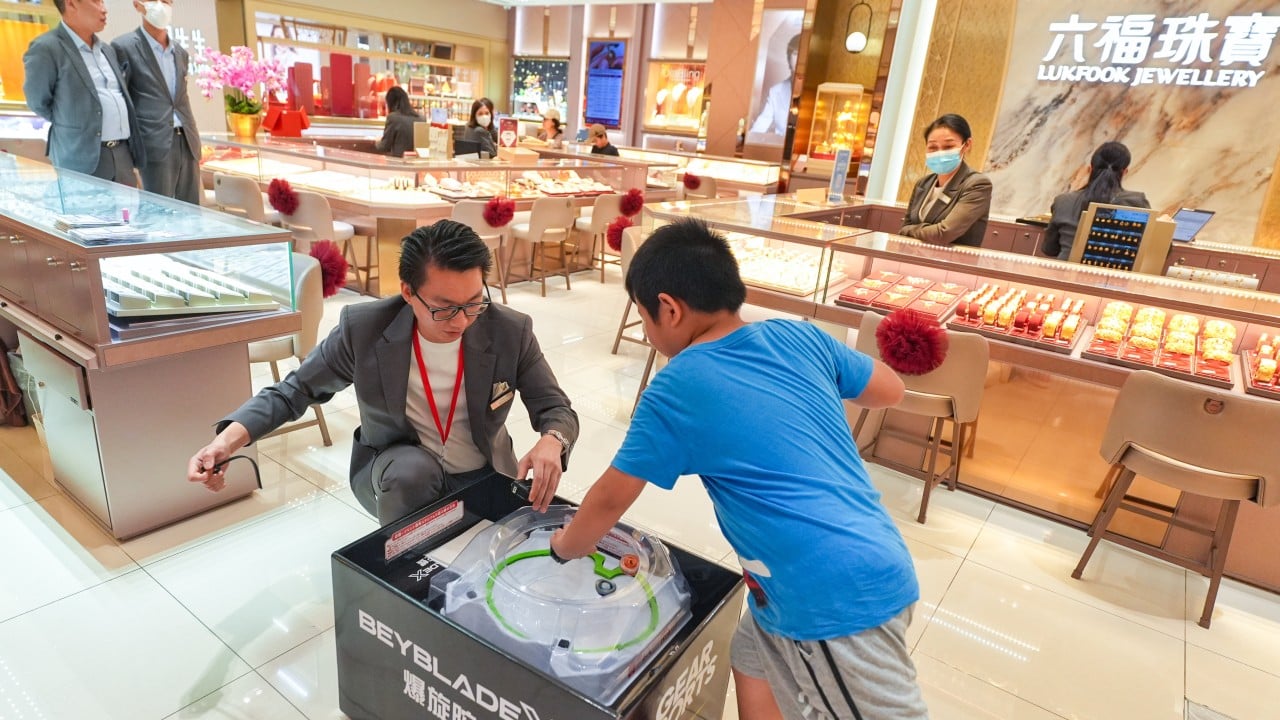
Every retail analyst in town is asking the wrong question about the recent spike in mall foot traffic driven by spinning top tournaments. They are staring at quarterly revenue bumps, tracking plastic arena rentals, and asking that tired, anxious question: how long will the trend last?
Stop worrying about expiration dates. You are missing the entire point of what is happening on the concrete floors of these shopping centres.
I have spent the last two decades watching commercial real estate operators panic every time a tenant cycles out or a consumer habit shifts. I have seen developers blow millions on sterile lifestyle concepts, indoor climbing walls, and artisan coffee corridors, praying for organic foot traffic. They treat retail space like a static warehouse for goods. That strategy is dead.
What is happening right now with high-speed plastic tops and stadium battles in Hong Kong properties is not a temporary fad. It is a brutal, brilliant lesson in physical platform economics.
The Flawed Premise of the Temporary Trend
The lazy consensus in financial media goes like this: nostalgic toys create a sugar rush of retail spending, families flood the atrium, merchants sell out of stock, and then the kids get bored, move to the next digital distraction, and the mall goes back to ghost-town status.
This argument assumes that retail space exists to sell merchandise. That is a nineteenth-century mindset.
Physical retail no longer competes with online shopping on convenience, price, or inventory depth. If a consumer wants a plastic toy, they can tap a screen and have it on their doorstep in twelve hours without fighting through a turnstile or waiting for an elevator. Malls that try to win on product availability are already corpses.
The properties hosting these competitive metal-and-plastic tournaments understand a fundamental truth that analysts keep ignoring: attention is the only asset class left that matters.
When a developer converts a central atrium into a battle zone, they are not renting square footage to a toy vendor. They are manufacturing a physical arena for high-stakes, tribal human engagement. The spinning tops are just the excuse. The real product is the density of human energy, the friction of competition, and the desperate hunger for shared physical reality in an increasingly isolated digital age.
The Economics of Spatial Friction
Let us look at the actual mechanics of why this works, stripped of the marketing gloss.
Commercial rent is traditionally calculated on foot traffic per square metre. It is a linear metric for a non-linear world. A thousand people walking past a luxury handbag window with dead eyes and their heads down in smartphones generate zero commercial value. A hundred kids screaming at the edge of a stadium, parents filming on phones, grandparents spending three hours at a nearby noodle shop waiting for the next round to start—that is hyper-dense economic activity.
Hong Kong developers operate in one of the most punishing real estate markets on earth. Space is astronomically expensive. Every square foot must justify its existence through yield or velocity.
When you introduce a competitive hobby league into a retail property, you change the physics of the building:
- Dwell time explodes from twenty minutes to four hours.
- Food and beverage conversion rates double because exhausted competitors and parents need calories.
- Secondary retail stores experience halo spending simply because families are trapped in the building by rain or enthusiasm.
The risk, of course, is brand dilution. High-end tenants get nervous when their marble-floored corridors are overrun by screaming teenagers and discarded cardboard packaging. This is the downside of the contrarian playbook: you alienate the status-quo luxury brands to capture the chaotic, messy, high-velocity cash of community-driven retail. Most mall operators do not have the stomach for it. They prefer dying a slow, dignified death with empty Prada knock-off storefronts than letting kids use the floor.
Stop Asking When It Will Die
The obsession with the lifespan of a trend reveals a profound misunderstanding of modern culture velocity.
Nothing lasts forever, and nothing should. The mistake is treating the activity as a product category rather than an operating system. When the current generation of metal tops fades from the spotlight, the infrastructure remains. The tournaments will pivot to trading card games, remote-control micro-drones, or whatever physical-digital hybrid sport captures the adolescent imagination next Tuesday.
The mall that builds the modular infrastructure, the stadium-ready atriums, the fast-turnaround event management teams, and the acoustic management systems wins. The mall that waits for the market to return to normal loses, because normal is gone.
If you own retail assets, stop looking for sustainable trends. Build for temporary, intense, tribal congregation, or turn the lights off and hand the keys to the bank.
The market has spoken. Adapt to the arena, or become the audience.


.jpeg)