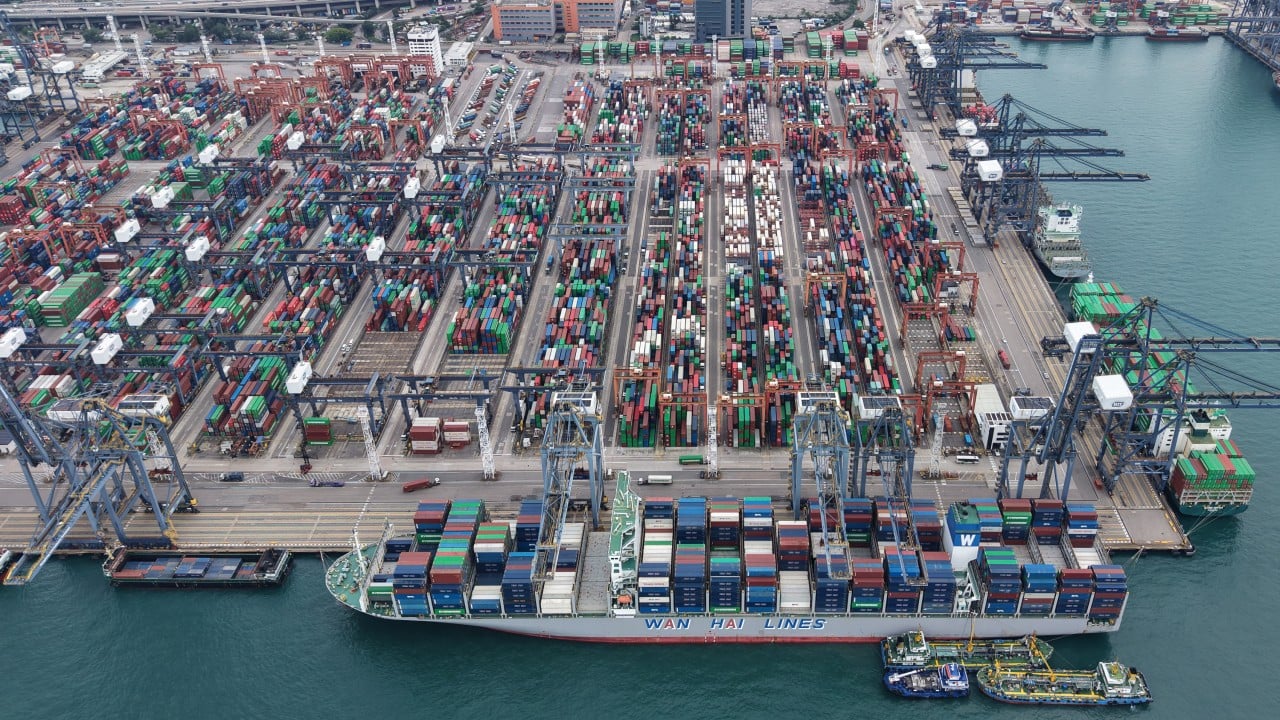
Maritime executives love a ribbon-cutting ceremony. They love signing non-binding Memorandums of Understanding (MoUs) in wood-paneled conference rooms, shaking hands for the press, and declaring that they have just solved the climate crisis on the high seas.
Take the latest wave of self-congratulatory press releases surrounding Hong Kong's green shipping collaboration with Greek maritime hubs like Piraeus. The mainstream trade press eats this up. They frame it as a bold alliance between a premier Asian transshipment hub and the gateway to Southern Europe. They call it a blueprint for decarbonizing global trade.
They are wrong. And if you are making capital allocation decisions based on these bilateral announcements, you are walking into a financial trap.
Green shipping corridors—specifically routes connecting East Asia to the Mediterranean—are currently long on diplomatic optics and dangerously short on thermodynamic and economic reality. While bureaucrats celebrate bilateral pledges, the actual physics of marine fuels, the brutal economics of port infrastructure, and the geopolitical fractures splitting global supply chains tell a very different story.
The Anatomy of a Maritime Illusion
To understand why the Hong Kong-Greece green corridor narrative falls apart under scrutiny, you have to look at what a "green shipping corridor" actually is versus what the public thinks it is.
In theory, a green corridor is a specific maritime route between two or more major port hubs where zero-emission or near-zero-emission vessels are deployed, supported by dedicated bunkering infrastructure and regulatory incentives. In practice, right now, it is mostly a paperwork exercise.
I have sat in strategy rooms where shipping lines burned millions of dollars modeling "green" route compliance, only to realize that the fuel required to run those routes didn't exist at commercial scale in either port. The Hong Kong-Greece axis suffers from this exact fatal flaw.
You cannot decarbonize a 7,000-nautical-mile voyage through the Indian Ocean, the Red Sea, and the Suez Canal with a press release. You need molecules. Specifically, you need green methanol, green ammonia, or sustainable biofuels.
The Molecule Deficit
Let’s look at the hard chemistry and supply chain math that PR departments conveniently omit:
- Green Methanol: Produced from green hydrogen and captured carbon dioxide. It is currently the darling of container lines like Maersk and COSCO. The problem? Global production capacity is a fraction of a percent of what the maritime industry consumes annually. Furthermore, methanol has roughly half the volumetric energy density of heavy fuel oil (HFO). To go the same distance between Hong Kong and Piraeus, a ship needs more than double the fuel tank volume, eating directly into revenue-generating cargo space.
- Green Ammonia: Zero carbon at the point of combustion, making it attractive on paper. In reality, it is acutely toxic, corrosive, and requires massive safety buffer zones on vessels and in ports. Bunkering ammonia in a densely populated port environment like Hong Kong's Kwai Tsing terminals or Piraeus is an insurance and regulatory nightmare that no port authority has fully solved for commercial container fleets.
- Biofuels (FAME and HVO): The easiest drop-in solution, requiring minimal engine retrofits. Yet global feedstock supplies—used cooking oil, animal fats, agricultural waste—are strictly finite. Aviation is already fighting shipping tooth and nail for every drop of sustainable feedstock to make Sustainable Aviation Fuel (SAF).
When Hong Kong and Greek maritime stakeholders announce a "green collaboration," they are largely agreeing to study how to source fuels that the rest of the world is simultaneously bidding up to astronomical prices.
Why Piraeus and Hong Kong Are an Awkward Fit for Green Leadership
The conventional wisdom says pairing Hong Kong and Greece makes total sense. Greece controls roughly 20% of the world’s deadweight tonnage—the largest shipowning nation on earth. Hong Kong is a historic financial and maritime services powerhouse sitting at the mouth of the Pearl River Delta.
That logic ignores how the shipping industry actually operates.
Shipowners Don't Buy the Fuel
This is the fundamental misunderstanding that trips up almost every outside analyst. Greek shipowners are largely tonnage providers. They own the steel. They finance the ships, crew them, and maintain them. Then, they charter those vessels out on multi-year contracts to liner operators (like MSC, CMA CGM, or COSCO) or commodity traders.
Under standard time-charter agreements, the charterer pays for the bunker fuel, not the shipowner.
A Greek shipowner has zero financial incentive to order a dual-fuel methanol or ammonia vessel costing $30 million to $50 million more than a conventional ship unless a charterer signs a long-term contract guaranteeing a premium rate to cover that capital expenditure. Meanwhile, Hong Kong’s port throughput has been steadily eroded for over a decade by neighboring mainland ports like Shenzhen, Guangzhou, and Ningbo-Zhoushan. Hong Kong is fighting to maintain its relevance as a transshipment hub, while Piraeus is majority-owned by COSCO Shipping—a Chinese state-owned enterprise that aligns first and foremost with Beijing’s broader maritime strategy, not Hong Kong's localized port ambitions.
Connecting these two hubs under a "green" banner doesn't magically solve the split-incentive problem between shipowners and charterers. It just puts a fresh coat of green paint over existing geopolitical and commercial realities.
The Questions Maritime Investors Should Actually Be Asking
If you search online for green shipping corridors, you see the same surface-level questions pop up repeatedly. Let's dismantle the flawed premises behind them.
"How will the Hong Kong-Greece corridor lower shipping costs?"
It won't. Anyone telling you that green shipping will be cheaper in the near-to-medium term is lying to you. Green fuels currently cost anywhere from two to four times more than conventional Very Low Sulfur Fuel Oil (VLSFO).
The only way green corridors become economically viable is through regulatory punishment—specifically, carbon pricing mechanisms like the European Union Emissions Trading System (EU ETS) and the FuelEU Maritime regulation. Piraeus, sitting inside the EU, is directly subject to these rules. Voyages between a non-EU port (Hong Kong) and an EU port (Piraeus) require shipping companies to surrender carbon allowances for 50% of the emissions generated on that leg.
The corridor isn't a cost-saving innovation. It is a defensive compliance maneuver designed to minimize EU carbon tax bleeding.
"Will green corridors eliminate carbon emissions from global trade?"
No. At best, bilateral corridors create isolated pockets of compliance while shifting dirty tonnage elsewhere.
Imagine a scenario where a major liner alliance dedicates ten brand-new, methanol-powered mega-ships to a strict Hong Kong–Piraeus green corridor. On paper, emissions on that specific trade lane plummet. Celebration ensues. Meanwhile, the ten conventional, heavy-fuel-burning ships that used to run that route aren't scrapped. They are cascaded down to intra-Asia routes, West African trades, or South American corridors where carbon regulations are weak or nonexistent.
Global emissions don't drop by a single ton. They just get redistributed to less-regulated waters. In the industry, we call this carbon leakage, and bilateral corridors do nothing to stop it.
"Is Hong Kong still the best Asian partner for European green shipping?"
If your goal is pure physical fuel availability and scale, Singapore and Shanghai are eating Hong Kong's lunch.
Singapore is the undisputed king of global bunkering. When Singapore’s Maritime and Port Authority (MPA) commits to a green corridor—as it has with Rotterdam and Los Angeles—it backs it up with massive physical bunkering trials, standardized safety protocols, and sheer volume. Shanghai, meanwhile, sits directly adjacent to massive industrial manufacturing bases and state-backed green hydrogen and methanol production projects in inner China.
Hong Kong’s value proposition isn't physical bunkering scale; it is maritime law, ship finance, insurance, and arbitration. Treating Hong Kong like a physical green fuel powerhouse misunderstands its actual competitive advantage.
What Actually Works (And What You Should Do Instead)
Stop chasing shiny bilateral corridor announcements. If you are a cargo owner, a shipowner, or an investor trying to navigate the maritime energy transition without losing your shirt, focus on the levers that actually move the needle on fuel burn and carbon exposure.
1. Obsess Over Hydrodynamics, Not Exotics Fuels
Before spending a dime on alternative fuel premiums, look at hull efficiency. Biofouling—the accumulation of barnacles, algae, and slime on a ship's hull—can increase fuel consumption by 15% to 25%. Investing in high-grade silicone foul-release coatings, ultrasonic antifouling systems, and regular robotic hull cleaning yields an immediate, guaranteed return on investment. Every ton of fuel saved through lower hydrodynamic drag is a ton of carbon you don't have to pay for under the EU ETS.
2. Deploy Wind-Assisted Propulsion Now
It sounds absurdly low-tech, which is why executives obsessed with futuristic fuel cells ignore it. It also works. Modern rigid wing sails, Flettner rotors, and suction wings bolted onto bulk carriers and tankers are delivering verified fuel savings of 5% to 15% on favorable trade lanes. Unlike green ammonia, wind requires zero port bunkering infrastructure, has zero fuel price volatility, and won't poison a crew if a pipe leaks.
3. Use "Book and Claim" Systems Instead of Rigid Corridors
Forcing green fuel onto a specific geographic point-to-point route like Hong Kong to Greece is logistically rigid and wildly inefficient. If green methanol is cheap and abundant in Rotterdam or Shanghai, burn it there.
The industry needs to standardize Book and Claim accounting—the same mechanism used in renewable electricity certificates. A ship burns green fuel wherever it makes the most logistical and economic sense, and the environmental attribute (the carbon reduction) is decoupled and sold to a cargo owner shipping goods from Hong Kong to Piraeus. It achieves the exact same atmospheric carbon reduction without forcing ships to make uneconomical bunkering detours.
4. Enforce Just-in-Time (JIT) Arrival Protocols
Right now, the global shipping fleet operates on a stupid, archaic practice known as "hurry up and wait." Vessels burn massive amounts of fuel steaming at 18 knots across the ocean, only to drop anchor outside Piraeus or Hong Kong for four days waiting for a berth slot to open up.
Simply slowing down by two or three knots—using real-time port congestion data to arrive precisely when the cranes are ready—can slash fuel consumption on a voyage by 15% to 20% due to the cubic law of marine propulsion (power required scales roughly with the cube of the vessel's speed). No new engines required. Just better data sharing between ports and ships.
The Honest Downside of Pragmatism
Taking this pragmatic, efficiency-first approach comes with one major drawback: it doesn't get you invited to speak on panels at climate conferences.
Efficiency measures like hull coatings, slow steaming, and Book and Claim accounting are incremental. They don't allow a CEO to claim their supply chain is "100% Net Zero" by next Tuesday. And under tightening regulatory frameworks like FuelEU Maritime, efficiency alone won't save you forever; by 2035 and 2040, the greenhouse gas intensity limits will force the adoption of zero-carbon molecules regardless of how slick your hull paint is.
You still have to prepare for the transition to alternative fuels.
Stop Confusing Press Releases With Progress
The collaboration between Hong Kong and Greek maritime interests isn't inherently bad. Dialogue between major maritime clusters is fine. Standardizing safety rules and sharing data is harmless.
The danger lies in mistaking diplomatic handshakes for physical infrastructure. Until green hydrogen production scales by orders of magnitude, until port authorities solve the brutal safety realities of toxic fuel bunkering, and until charterers willingly sign ten-year contracts paying double for green fuel, corridors between East Asia and the Mediterranean will remain boutique experiments.
Quit betting your strategy on green corridor press releases. Cut your fuel burn today, fix your hull drag, slow your ships down, and let your competitors waste their capital chasing fuel molecules that don't exist yet.