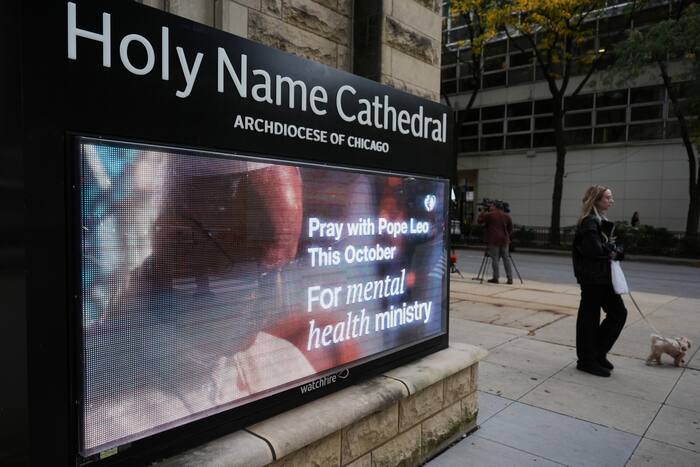
Candlelight. Rosaries. TV cameras outside a South Side or West Side parish.
A hometown rally feels good. It makes people feel useful. It gives cable news a warm visual before cutting to commercial.
Yet when Chicago Catholics gather to pray for a hometown son diagnosed with lung cancer, the standard coverage treats a complex medical and institutional crisis like a Hallmark movie. The lazy consensus says: community rallies, faith surges, hope prevails.
That story is comforting. It is also lazy.
Prayer vigils do not shrink tumors. Hometown pride does not alter epidermal growth factor receptor mutations or program death-ligand 1 expression. Worse, turning a serious oncology diagnosis into an instant civic pep rally often distracts from the actual mechanics of cancer care, institutional governance, and what happens inside a hospital room once the cameras pack up.
The Lazy Consensus Around Hometown Rallies
Read the typical coverage of a public figure's diagnosis and you will see the same template repeated word for word. Parishioners light candles. Local leaders offer condolences. Reporters frame the gathering as proof that an entire city stands behind one man.
Standing behind someone is not the same as understanding what they are up against.
In communications and public health work, I have watched institutions burn credibility when they mistake emotional solidarity for strategic clarity. When a high-profile leader faces a life-threatening illness, the public instinct is to treat the moment like a sports playoff: rally the crowd, chant the name, and trust that momentum carries the day.
Oncology does not work like a fourth-quarter comeback.
Lung cancer is not a single disease with a single script. Clinicians divide it broadly into non-small cell lung cancer (NSCLC) and small cell lung cancer (SCLC), and within NSCLC alone sit distinct histologic subtypes such as adenocarcinoma and squamous cell carcinoma, alongside specific biomarker profiles like EGFR, ALK, and KRAS. Staging—from localized Stage I or II disease to locally advanced Stage III or metastatic Stage IV—governs everything from surgical eligibility to targeted therapy, immunotherapy, chemotherapy, and radiation.
A rally outside a church in Chicago cannot see a pathology slide. It cannot read a staging scan. It cannot weigh performance status, comorbidities, or treatment toxicity.
What People Actually Mean When They Ask About Survival and Recovery
When a public figure receives a lung cancer diagnosis, search queries spike around a predictable set of questions: Can lung cancer be cured? How long can someone live with it? Does prayer or community support change outcomes?
Let's strip away the sentiment and answer them straight.
- Is lung cancer curable? Yes, in certain early-stage cases—most commonly when caught at Stage I or II and treated with curative intent such as surgical resection or stereotactic body radiation therapy. Once disease reaches Stage IV (metastatic), treatment usually shifts toward life extension, symptom control, and long-term disease management rather than a guaranteed permanent cure, though targeted therapies and immunotherapies have pushed survival far beyond older expectations for select biomarker-positive patients.
- What determines prognosis? Stage at diagnosis, tumor histology, actionable genetic alterations or biomarker expression, overall physical fitness (often measured by oncology teams using Eastern Cooperative Oncology Group performance status), and how the tumor responds to initial therapy. Public affection has zero weight on that chart.
- Does community and spiritual support help? Emotionally and psychologically, yes—for many patients and families, faith communities and social networks reduce isolation, help coordinate practical logistics, and provide meaning during grueling treatment cycles. Biologically, clinical trials have long struggled to prove that intercessory prayer directly erases malignant cells. Conflating emotional comfort with medical efficacy is a trap that hurts patients when expectations detach from reality.
Empathy without precision is just noise with good intentions.
Imagine a Scenario Where Sentiment Replaces Scrutiny
Imagine a scenario where a beloved hometown figure is diagnosed with advanced lung cancer, and their inner circle treats public applause and prayer vigils as proof that everything is under control. Statements stay vague. Medical updates get filtered through PR language about "strength" and "the power of prayer." Meanwhile, institutional decision-making stalls because nobody wants to ask hard questions about continuity of leadership, treatment burden, or realistic timelines.
That scenario plays out more often than people admit.
High-ranking figures—whether in politics, business, or religious institutions—face a distinct pressure: admitting vulnerability looks like weakness to loyalists, while sharing clinical specifics invites speculation. So spokespeople lean on universal language of faith, resilience, and community support.
It works for a day or two. Then reality catches up.
Treatment side effects—fatigue, pneumonitis, cytopenias, infection risk, travel limits—do not care about a hometown's pride. A person who can deliver an inspiring address one week may need hospital care or dose adjustments the next. If the surrounding institution has built its narrative purely on triumph and prayers, every medical setback feels like a betrayal instead of a normal clinical bump in a hard road.
Where the Real Friction Lives in Chicago and Beyond
Chicago has deep Catholic roots and dense parish life, which is why a local connection to a prominent figure naturally draws attention there. When someone from the city rises to prominence and then faces a severe health crisis, locals feel ownership. They remember the neighborhoods, the schools, the parishes, the civic identity.
That connection is real. Ignoring it would be tone-deaf.
Still, there is a big difference between honoring a hometown bond and pretending a prayer service solves a medical or organizational problem.
| Dimension | Prayer Rally & Public Sentiment | Clinical & Institutional Reality |
|---|---|---|
| Primary function | Shared grief, solidarity, spiritual comfort | Diagnosis, staging, biomarker testing, therapy planning |
| Time horizon | Immediate emotional release; often fades after news cycles shift | Months or years of scans, treatments, side effects, and adaptations |
| Key risk | False certainty; confusing warmth with medical progress | Delayed clarity, unmanaged fatigue/toxicity, leadership blind spots |
| What it proves | People care and want to belong to a moment | Requires data, clinical discipline, and honest communication |
In public affairs and organizational risk management, I have seen leaders and institutions pay a steep price when they confuse warmth with readiness. A crowd chanting outside a sanctuary feels powerful. Inside a clinic, power looks like accurate pathology, timely multidisciplinary tumor board review, clear goals of care, and candid conversations about what treatment can and cannot achieve.
Leading oncology bodies such as the American Society of Clinical Oncology (ASCO) and the National Comprehensive Cancer Network (NCCN) emphasize evidence-based staging, molecular testing, and supportive care integrated early—not wishful thinking. That is the heavy lifting that actually shapes outcomes.
The Downside of Taking the Contrarian View
Being blunt about sentimental rituals comes with real costs, and pretending otherwise would be dishonest.
First, it can sound cold. When people are hurting or scared for someone they admire, a clinical or skeptical tone can feel like throwing ice water on a moment of genuine care. People pray not just to change an outcome they cannot control, but to bear fear together. Trampling on that impulse just to score analytical points is cheap.
Second, over-correcting into pure cynicism misses something legitimate. Social cohesion and spiritual rituals help communities process shock. A parish gathering gives neighbors a place to show up for one another instead of staring at screens alone.
The trick is drawing a sharp line between comfort and cure. Comfort matters. Cure requires medicine.
What to Do Instead of Just Watching the Cameras
If you care about what a diagnosis like this actually means—for the patient, for the institution, and for how the public understands serious illness—skip the shallow commentary and take concrete steps.
- Read past the emotional framing. When a public figure is diagnosed with lung cancer, look for concrete clinical details if shared—type, stage, treatment approach—rather than relying on adjectives like "brave" or "optimistic" to guess what comes next.
- Learn the basics of modern oncology. Understanding why doctors ask about staging, biomarkers, targeted therapies, immunotherapies, and palliative care makes you a sharper reader and a better advocate if someone in your own family gets a scary scan.
- Support real-world needs, not just headlines. If you want to help people facing cancer in your own community, show up for the unglamorous work: rides to appointments, meals that do not require cooking, childcare, or donations to organizations that fund research and patient navigation.
- Demand honest institutional transparency. When a leader faces a serious illness, respect their privacy—but push institutions to be straight about capacity, contingency plans, and realistic expectations rather than hiding behind pious slogans.
Light the candle if it brings you peace. Then turn the light onto the facts.