The air in Bakhmut does not smell like pine needles or incense. It smells of pulverized concrete, wet wool, and the metallic tang of old blood. For months, the earth here has been chewed by artillery until the soil itself seems exhausted, yet the noise never stops. It is a rhythmic, punishing symphony of violence.
Then came the promise.
Vladimir Putin announced a thirty-six-hour ceasefire to mark the Orthodox Christmas. A gesture of spiritual grace, the Kremlin suggested. A brief window for the pious to find a moment of peace amidst the ruins. To the world, it sounded like a pause button. To the soldiers in the mud, it sounded like a lie.
Trust is the first casualty of any war, but in Ukraine, it was buried long ago under the rubble of Mariupol and the mass graves of Bucha. When one side offers a hand in prayer while the other hand grips a trigger, the silence is more terrifying than the shelling. It is a hollow silence.
Consider a soldier named Mykola—a composite of the men holding the line in the Donbas. He has spent three nights without sleep, his boots fused to his feet by frozen slush. When the news of the ceasefire reached his dugout, he didn't lower his rifle. He cleaned it. He knew that a unilateral truce is not a peace treaty; it is a tactical choice.
The Geometry of Deception
The logistics of a "unilateral ceasefire" are fundamentally broken. For a pause in hostilities to be real, it requires coordination, observation, and mutual consent. Without those pillars, a ceasefire is simply a rebranding of the status quo.
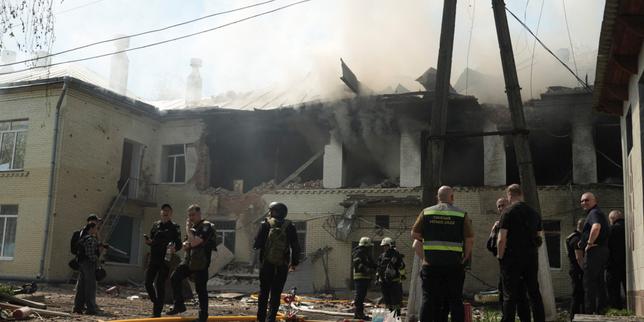
While the Russian Ministry of Defense insisted its troops were observing the halt starting at noon on Friday, the reality on the ground told a different story. In Kramatorsk, the explosions didn't wait for the bells of the liturgy. They arrived with the usual whistling indifference. In Kherson, the shelling continued to rake across residential neighborhoods, turning the holy day into just another Saturday of survival.
Ukraine’s leadership, including President Volodymyr Zelenskyy, saw the move for exactly what it was: a cynical ploy to slow the Ukrainian momentum. The logic is simple. If you are losing ground, you ask for a timeout. You use those thirty-six hours to move ammunition, rotate exhausted units, and fortify positions that were about to crumble. It isn't about God. It's about geography.
The Russian military had been battered for weeks. They needed a breath. By framing that breath as a religious necessity, the Kremlin attempted to seize the moral high ground while simultaneously preparing for the next assault. It is a classic maneuver from the old Soviet playbook, updated for a modern audience that craves the optics of de-escalation.
The Cost of a Broken Promise
When a ceasefire is violated before the ink on the announcement is even dry, the psychological toll is immense. For the civilians huddled in basements, a promised pause is a cruel form of torture. It offers a glimmer of hope—a chance to run for water, to check on a neighbor, to perhaps stand in the sunlight for ten minutes—only to have that hope shattered by the next incoming round.
This is not merely about "violating rules." There are no rules in a war of total attrition, only consequences. The consequence of this failed truce is the absolute incineration of future diplomatic credibility.
If you cannot trust your enemy to stop shooting for a single day of prayer, you cannot trust them to negotiate a corridor for grain, the safety of a nuclear power plant, or the terms of an eventual end to the slaughter. Every broken ceasefire adds another layer of scar tissue to the collective Ukrainian psyche. It reinforces the belief that the only way to end the war is not through talk, but through total expulsion of the invading force.
The Russian Orthodox Church, led by Patriarch Kirill, supported the call for the truce. Yet, this is the same institution that has previously blessed the "special military operation," framing it as a holy struggle. The hypocrisy is not lost on the people in the trenches. They see the gold-leafed icons and the heavy vestments, and then they look at the blackened craters in their backyards. The disconnect is total.
The Invisible Stakes
Beyond the immediate tactical gains, there is a broader battle for the narrative. Moscow’s move was designed for an audience far away from the front lines. It was a message to the "Global South" and to the wavering voices in the West: Look, we tried to be peaceful. We offered a hand, and the Ukrainians spat on it.
It is a sophisticated form of gaslighting. By announcing the truce unilaterally, Russia set a trap. If Ukraine continued to fire—which they had to, because the Russian positions remained occupied and threatening—Russia could label them as the aggressors, the ones who "violate" the sanctity of Christmas.
But the Ukrainian response was grounded in a harsh, lived reality. You do not stop defending your home because the person who broke in and set fire to your living room says he wants to take a nap.
Consider the mechanics of the shelling that occurred during those thirty-six hours. These were not "accidental" discharges. Artillery requires coordinates, loading, and a command to fire. The strikes on the fire station in Kherson, which killed a rescue worker, were deliberate acts of war carried out during a window that was supposed to be sacred.
The tragedy is that the world begins to go numb to these contradictions. We see a headline about a violated ceasefire and we shrug. We have seen it before. We saw it in Syria. We saw it in Chechnya. The pattern is the point. The goal isn't necessarily to trick the enemy into stopping; it is to exhaust the observer until the truth no longer seems to matter.
The Ghost of 1914
People often point to the Christmas Truce of World War I as a symbol of human decency overcoming the machinery of death. In 1914, soldiers climbed out of their trenches to sing carols and kick a soccer ball across No Man’s Land. It was a spontaneous eruption of shared humanity.
Bakhmut is not 1914.
There were no carols. There was no soccer. There was only the sound of drones buzzing overhead, cold eyes peering through thermal optics, looking for any sign of movement. The technology of modern warfare has stripped away the intimacy of the battlefield. It is harder to see the humanity of a man when you are viewing him as a heat signature from three kilometers away.
The "truce" ended at midnight on Saturday. Not that anyone noticed a change in the volume of the explosions. The transition from the "ceasefire" back to "official" hostilities was seamless because the gap between the two never actually existed.
As the sun rose on the Sunday after the Orthodox Christmas, the smoke over eastern Ukraine hadn't cleared. It had only thickened. The families who tried to attend services did so under the shadow of the next siren. The soldiers who were told they might get a day of rest spent it digging deeper into the frozen earth.
Peace is not the absence of noise. It is the presence of security. On this Christmas, there was neither. The Kremlin’s "gift" was nothing more than a hollow box, wrapped in the language of faith but filled with the same lead and fire that has been falling for nearly a year.
The real story isn't that the ceasefire failed. The story is that anyone, anywhere, expected it to be real. In the end, the only thing that was paused was the world’s breath, waiting for a miracle that the men with the guns never intended to deliver.
The mud is freezing now. The ground is getting harder. In the Donbas, that doesn't mean the war is slowing down. It just means the tanks can move faster.
The silence is over, but the echo of the lie remains.