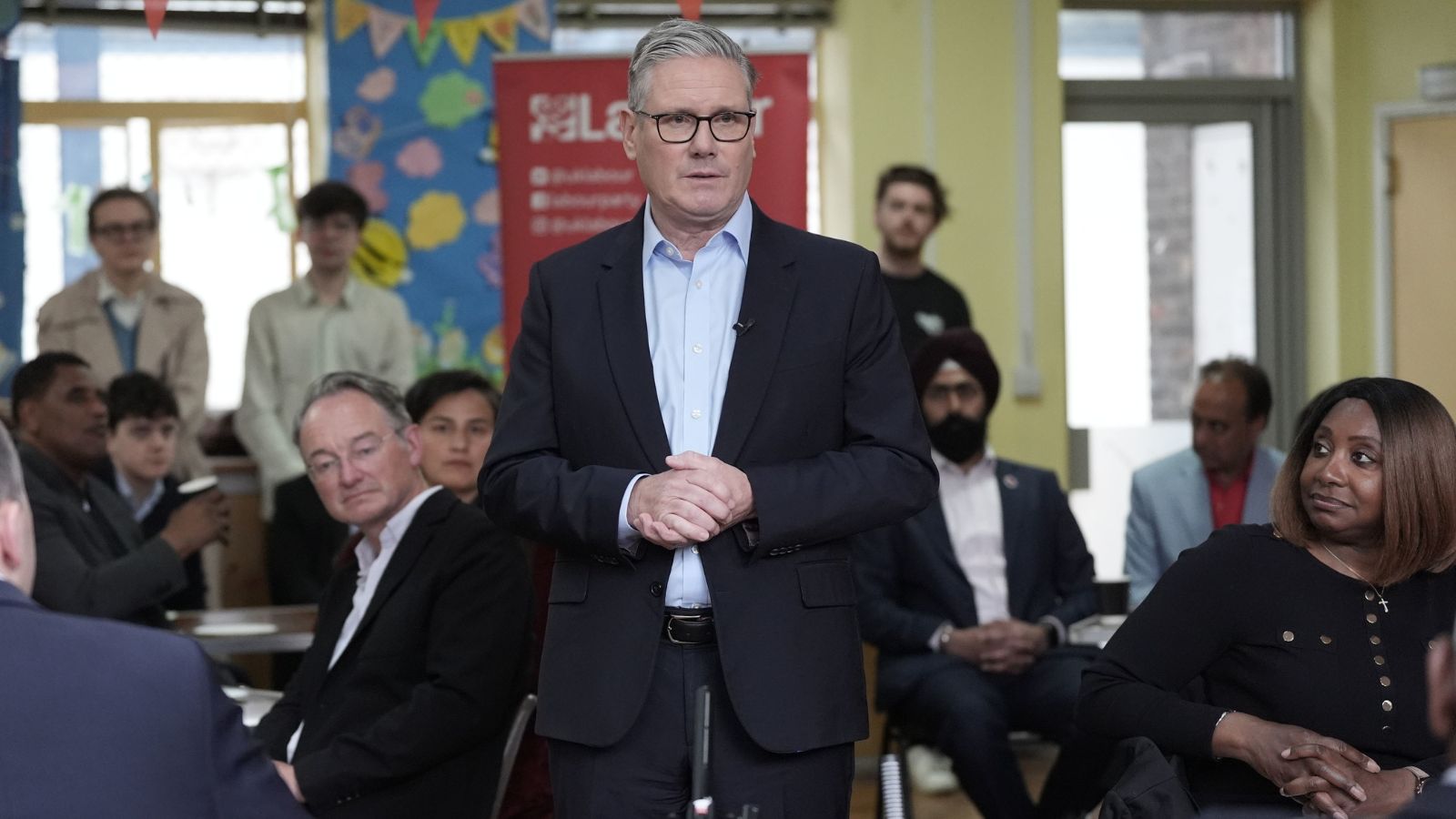
Keir Starmer is currently presiding over a government that is winning the arguments in Whitehall but losing the country in the streets. Following a catastrophic set of local election results on May 7, 2026, the Prime Minister finds himself in a pincer movement that has effectively shattered the post-2024 political consensus. To the right, Nigel Farage’s Reform UK has transitioned from a populist pressure group into a professional electoral machine, seizing control of councils like Newcastle-under-Lyme and decimating Labour’s northern heartlands. To the left, a surge in Green Party support has stripped Labour of its urban progressive base, culminating in a historic Green mayoral win in Hackney.
The math of this defeat is not merely "tough," as Starmer characterized it in a Saturday morning damage-control piece. It is existential. Labour has lost more than 1,400 councillors. The party’s century-long dominance in Wales has evaporated, with Plaid Cymru becoming the largest party in the Senedd. In Scotland, the recovery has stalled. For an incumbent Prime Minister less than two years into his term, these numbers represent a total collapse of the electoral coalition that brought him to power.
The Mandelson Shadow and the Competence Trap
The immediate catalyst for this collapse is often cited as the "Mandelson Scandal"—the fallout from Lord Peter Mandelson’s appointment as US Ambassador and subsequent investigations into historic ties with Jeffrey Epstein. While the Metropolitan Police investigation launched in February 2026 provided the headlines, the deeper rot is a perceived lack of moral and strategic direction.
Starmer’s governing philosophy has been built on the premise of "national renewal" through technocratic competence. However, competence is a fragile shield when the cost of living remains stubbornly high and the government appears mired in the very "Westminster drama" it promised to end. The resignations of key inner-circle figures like Morgan McSweeney and Tim Allan earlier this year left a vacuum at the heart of Downing Street that has yet to be filled by a coherent narrative.
The public now sees a Prime Minister who is adept at navigating international summits with Donald Trump but incapable of explaining why their energy bills remain unmanageable or why the NHS backlog continues to grow despite record investment. This "competence trap" has allowed Reform UK to frame Labour as a party of the global elite, indifferent to the concerns of the provincial working class.
The Rise of Eco-Populism
On the opposite flank, Zack Polanski’s Green Party has successfully weaponized progressive disillusionment. In London and the university towns, the Greens are no longer a fringe protest vote. They have become the natural home for voters who feel Starmer has moved too far to the center on climate policy, workers' rights, and civil liberties.
The victory in Hackney is a bellwether. It suggests that in safe Labour seats, the threat is no longer a Conservative comeback under Kemi Badenoch, but a progressive insurgency that views the Starmer government as "Tory-lite." By attempting to occupy a broad, vague center ground, Starmer has left both his left and right flanks wide open.
The Shadow Cabinet in the Wings
Inside the parliamentary party, the silence of the big beasts is deafening. While Health Secretary Wes Streeting and Deputy Prime Minister Angela Rayner have offered public support, their loyalty is viewed by many backbenchers as transactional. Streeting, in particular, has been accused of running a "stealth campaign," releasing his own communications to distance himself from the Mandelson affair.
However, the most significant threat to Starmer’s leadership doesn't sit in the House of Commons. Andy Burnham, the Mayor of Greater Manchester, has seen his stock soar as the national party’s has plummeted. A recent Compass poll of Labour members found that 45% want Starmer to step down, and of those, nearly three-quarters view Burnham as the ideal successor.
Burnham’s "King over the Water" status is a unique problem for Starmer. Unlike a cabinet rival, Burnham can criticize the government from a position of regional executive power, untainted by the compromises of Westminster. If a vacancy were to arise, the pressure to find a way for Burnham to return to Parliament would be immense.
The Survival Strategy
Starmer has insisted he will serve out his full five-year mandate, warning that another change in Prime Minister would "plunge the country into chaos." This is a direct appeal to the electorate’s fatigue with the revolving door of leadership seen during the final years of Conservative rule.
But stability is not a policy. To survive the summer, the Prime Minister must do more than simply endure. He needs a radical reset that addresses the structural reasons for Labour's decline. This involves:
- A decisive break from the old guard: The Mandelson era must be definitively closed, not through managed exits, but through a transparent overhaul of the party's advisory structure.
- A concrete economic offer: The "broad political movement" Starmer describes must be underpinned by tangible improvements in household finances. Abstract talk of "growth" does not win local elections in Sunderland or Wigan.
- Engagement with the periphery: The loss of Wales and the stagnation in Scotland suggest a failure of the Unionist narrative. Labour cannot govern the UK if it only speaks for the M25 corridor.
The results of May 2026 have signaled the end of the two-party system as we knew it. The UK is now a multi-polar political landscape where Reform, the Greens, and the Liberal Democrats can all realistically challenge the traditional giants. Keir Starmer is currently the leader of a minority interest that happens to hold a majority in Parliament. Unless he can bridge the gap between Whitehall’s spreadsheets and the reality of the British high street, that majority will remain a hollow crown.
The clock is no longer ticking in years. It is ticking in months.