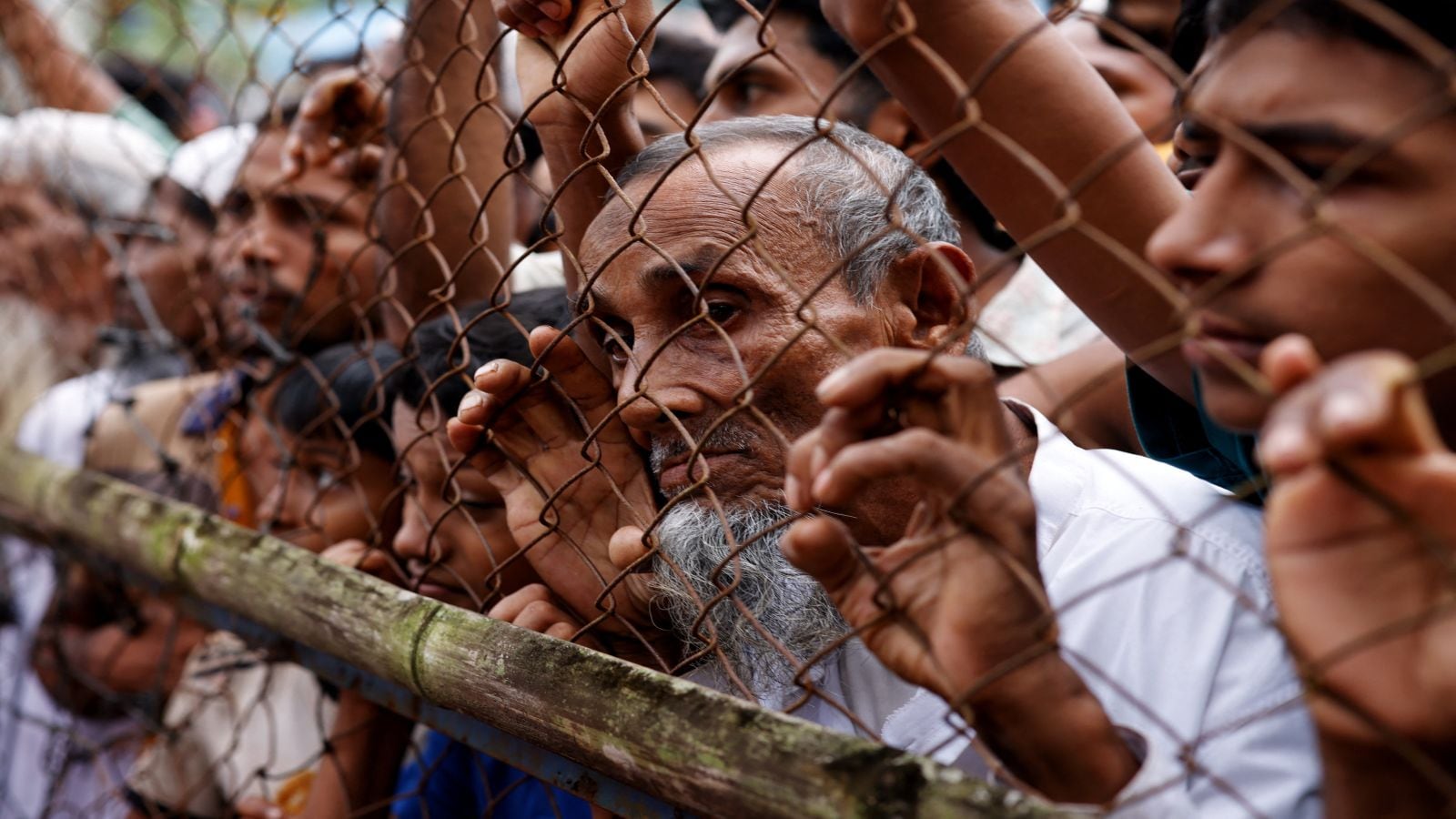
On November 19, 2026, the world's highest court finally said the word survivors had waited nine years to hear. Genocide.
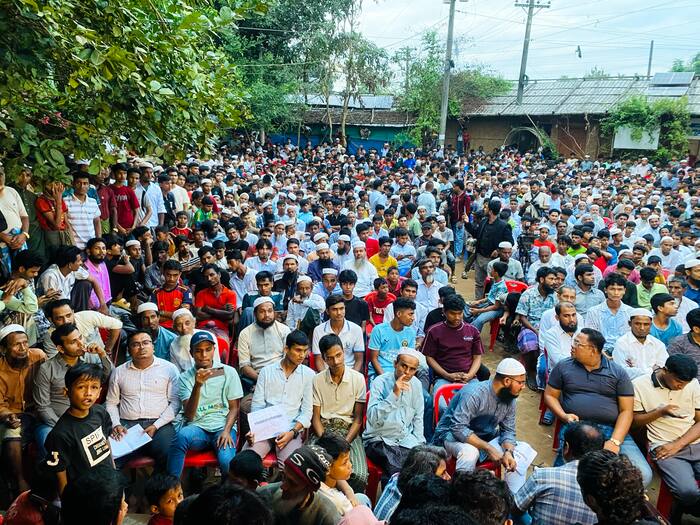
For the first time in its history, the International Court of Justice (ICJ) held a sovereign state legally responsible for committing genocide. Judges in The Hague ruled that Myanmar's military acted with the specific intent to destroy the Rohingya Muslim minority during its brutal 2017 clearance operations. Across the sprawling bamboo-and-tarpaulin camps of Cox's Bazar in Bangladesh, people wept, hugged, and prayed.
Yet once the tears dried, a cold reality settled back over the camps. A legal victory in Europe doesn't unlock a border gate in Southeast Asia. Over a million refugees are still stuck in limbo, and the ground they want to walk home to isn't even controlled by the government that just lost in court.
What the ICJ Actually Ruled and Why It Breaks Legal Ground
To understand why this verdict matters—and where its power stops—you have to look at how unusually high the legal bar is at the ICJ.
In November 2019, The Gambia filed the case on behalf of the Organisation of Islamic Cooperation. Critics called it a long shot. The Gambia is a tiny West African nation thousands of miles away with no direct stake in Rakhine State. Yet in 2022, the court confirmed The Gambia had legal standing because preventing genocide is an obligation every nation owes to the entire international community.
Seven years after the initial filing, the court delivered its final, binding judgment. Here is what the judges specifically established:
- Prohibited acts occurred on a massive scale. The court found that Myanmar's security forces committed mass killings (affirming estimates of roughly 10,000 deaths in 2017), inflicted severe bodily and mental harm, and deliberately imposed measures meant to prevent Rohingya births.
- Genocidal intent was the only reasonable conclusion. Proving intent is where most genocide cases die. Myanmar argued it was merely conducting counter-insurgency operations against militants. The court rejected that excuse, pointing to decades of discriminatory laws, the systematic burning of villages, and violence targeted indiscriminately at infants and women.
- Restitution is legally mandatory. By a 10-to-5 vote, the judges ordered Myanmar to adopt concrete measures of restitution and reparations for survivors.
This ruling destroys the official narrative Myanmar's generals have pushed for decades—that the Rohingya are illegal "Bengali" immigrants who burned down their own homes. The ICJ explicitly recognized the Rohingya as a distinct ethnic group protected under the Genocide Convention. Nobody in diplomacy can politely sidestep that anymore.
The Catch in Rakhine State Nobody Wants to Confront
Here is the problem with international law. Courts issue rulings; armies hold territory.
If you look at a map of western Myanmar today, the military junta in Naypyidaw isn't the sole power blocking the Rohingya from going home. Since late 2023, an ethnic Rakhine rebel force called the Arakan Army (AA) has swept across Rakhine State, capturing vast stretches of territory along the Bangladeshi border and besieging major hubs like Sittwe.
This creates an impossible diplomatic knot.
- The ICJ order binds the state of Myanmar, not non-state armed groups. Even if the military junta suddenly decided to comply with the Hague ruling tomorrow—which it won't—it lacks physical control over much of the land Rohingya refugees actually came from.
- Relations between the Arakan Army and the Rohingya are deeply strained. While AA leaders publicly project an image of inclusive governance to win international legitimacy, human rights monitors and Rohingya activists have documented forced conscription, displacement, and deadly clashes involving Rohingya communities caught in the crossfire.
- Airstrikes haven't stopped. Even as lawyers prepared for the November 2026 verdict, Myanmar's military continued bombing civilian areas in Rakhine State, including a September 2026 market strike in Kyauktaw that killed at least 49 people.
You can't repatriate a million traumatized civilians into an active war zone where neither side guarantees their citizenship or physical safety.
Life in Cox's Bazar Is Quietly Deteriorating
While diplomats debate enforcement mechanisms in Geneva and New York, conditions inside Bangladesh are sliding backward.
Bangladesh deserves enormous credit for opening its borders in 2017 when hundreds of thousands fled across the Naf River. Nearly a decade later, however, host-country fatigue is real, and international donor attention has fractured across competing global crises.
Food rations in Cox's Bazar have repeatedly been cut and restored only partially over the past few years, leaving families chronically malnourished. Formal education remains severely restricted, effectively trapping an entire generation of Rohingya youth in temporary shelters without legal work rights or freedom of movement. Armed gangs and militant recruiters exploit that hopelessness daily inside the camps.
Meanwhile, regional neighbors are sending mixed—and honestly alarming—signals. Just days after the ICJ genocide ruling, Malaysian Prime Minister Anwar Ibrahim announced plans to repatriate over 6,800 Myanmar nationals in December 2026 via navy vessels and flights paid for by Myanmar's military, adding to more than 10,000 already sent back earlier in the year. Rights groups warned that returnees risk immediate detention or forced military conscription upon arrival. At the same time, Rohingya families in Jammu, India have faced evictions and mounting pressure from local authorities.
A landmark victory in The Hague hasn't stopped neighboring governments from treating Rohingya refugees as an unwanted burden.
Legal Recognition vs. Real-World Enforcement
People often confuse the International Court of Justice with the International Criminal Court (ICC). They sit in the same Dutch city, yet they do completely different jobs.
The ICJ settles disputes between states. It doesn't put generals in handcuffs. Instead, its judgments rely on political pressure and the United Nations Security Council under Article 94 of the UN Charter. And anyone who has watched the Security Council over the past five years knows how easily permanent members can veto concrete enforcement against Naypyidaw.
Still, writing off the ICJ ruling as "just paper" misses how international pressure actually grinds forward.
Where the Ruling Creates Immediate Leverage
- Third-party state obligations. Under the Genocide Convention, every signatory country now has a binding legal duty not to aid or assist the ongoing consequences of Myanmar's genocide. That gives activists and lawmakers ammunition to block arms sales, aviation fuel shipments, and financial lifelines to the junta. Following the verdict, the UK formally acknowledged the genocide and rolled out fresh sanctions targeting Myanmar's military.
- Fuel for criminal prosecutions. Separate from the ICJ, the International Criminal Court is investigating individual commanders for crimes against humanity tied to the forced deportation of Rohingya into Bangladesh. Universal jurisdiction cases in countries like Argentina are also moving forward. The ICJ's factual findings—backed by years of evidence gathered by the UN's Independent Investigative Mechanism for Myanmar (IIMM)—give prosecutors an authoritative baseline they no longer have to prove from scratch.
- Citizenship as a non-negotiable condition. Any future political settlement in Myanmar, whether negotiated with the junta, the National Unity Government, or the Arakan Army, now carries a legal baseline. Repatriation without repealing Myanmar's discriminatory 1982 Citizenship Law would directly violate the court's restitution order.
What Needs to Happen Next to Turn a Verdict Into a Return Ticket
A courtroom victory only matters if governments treat it as a starting gun rather than a finish line. If you're following this crisis, supporting refugee aid, or advocating for accountability, focus pressure on four concrete bottlenecks rather than vague diplomatic statements:
- Tie all engagement with Rakhine actors to minority protections. International donors and regional mediators talking to the Arakan Army and Myanmar's opposition groups must make full citizenship, freedom of movement, and land restitution for the Rohingya a hard precondition for political recognition.
- Halt forced returns across Southeast Asia. Push regional governments—especially Malaysia, Thailand, and India—to honor the principle of non-refoulement. Sending refugees back while airstrikes continue and the ICJ's restitution order remains unfulfilled directly contradicts international law.
- Cut aviation fuel and foreign currency flows. Sanctions on individual generals rarely change battlefield behavior. Targeted sanctions on state-owned enterprises, military conglomerates, and jet fuel suppliers actually restrict the junta's ability to bomb Rakhine towns.
- Fund education and livelihoods inside Bangladesh now. Safe return isn't happening next month. Donor nations must close the humanitarian funding gap in Cox's Bazar so Rohingya children can earn accredited schooling and adults can work legally while diplomatic pressure slowly forces open the door home.
The ICJ finally gave the Rohingya the truth on the permanent historical record. Now comes the harder fight—making sure that record buys them a safe path back to their own soil.
For a visual breakdown of the verdict and its immediate aftermath, watch Myanmar committed genocide against Rohingyas: International Court of Justice to see how the court's historic decision unfolded in The Hague.