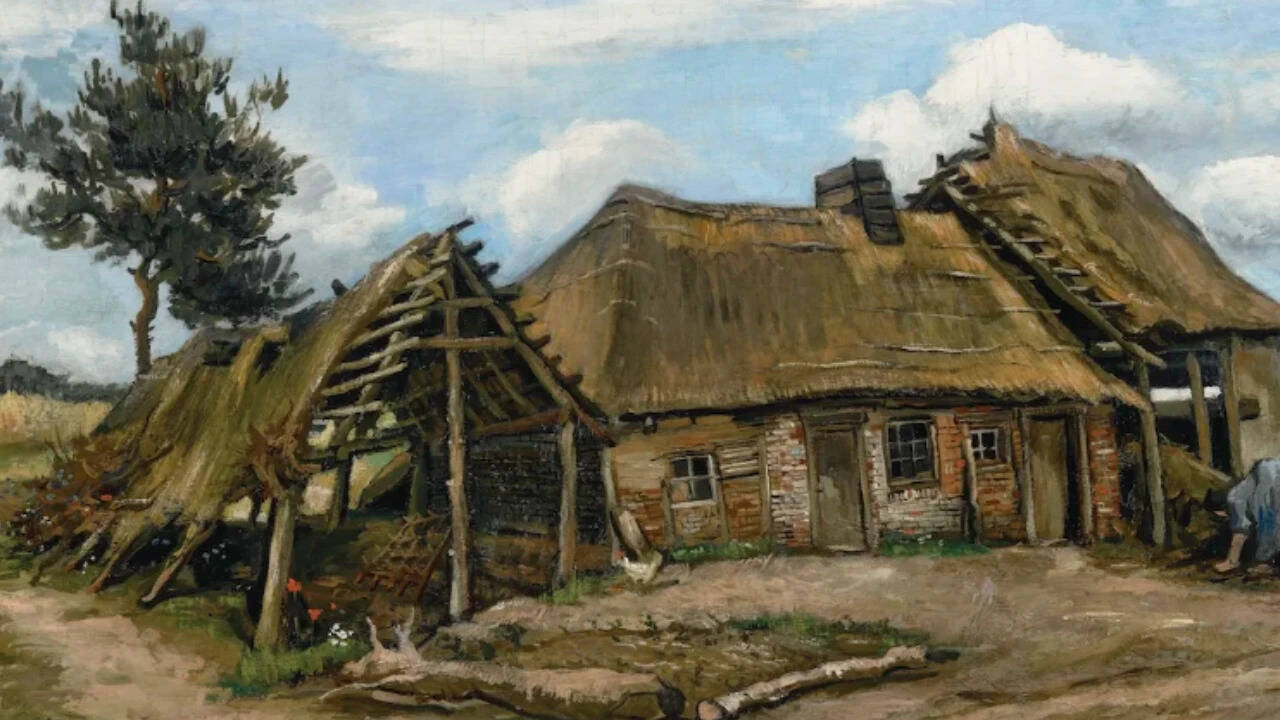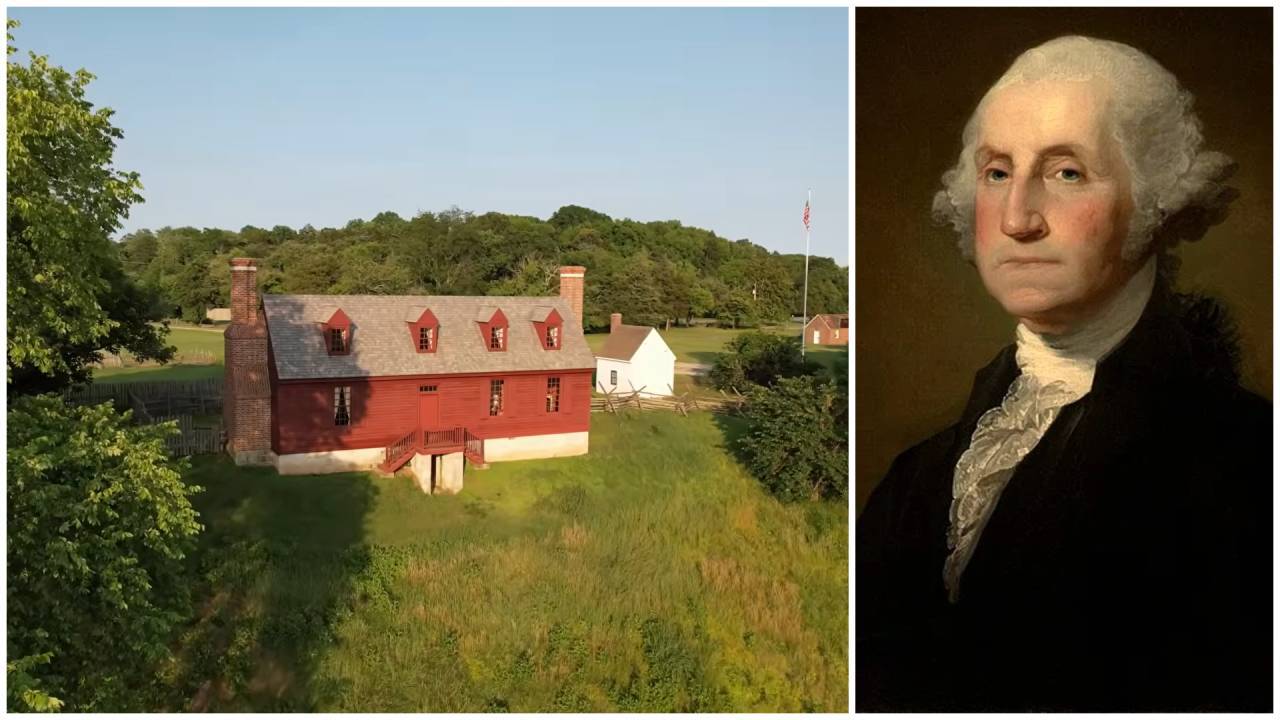
Preserving a historic site against commercial development is rarely a contest between good and evil; it is a collision between two incompatible valuation systems. When George Washington’s childhood home at Ferry Farm in Stafford County, Virginia, faced the prospect of big-box retail development in the mid-1990s and locals rallied to raise roughly $2.2 million to save it, surface-level reporting framed the episode as a sentimental rescue. Viewed through a strategy and land-economics lens, the near-conversion of Ferry Farm into a Walmart reveals a structural flaw in how society prices non-market heritage assets against immediate commercial cash flows.
To understand how a founding father’s boyhood residence comes within reach of a retail anchor, you have to trace the mechanics of suburban corridor growth, highest-and-best-use land valuation, and civic fundraising bottlenecks. This analysis breaks down the economic forces that nearly turned Ferry Farm into a shopping center, maps the competing incentives of landowners, retailers, and preservationists, and outlines an operational playbook for defending high-value historic parcels before bulldozers arrive.
Deconstructing the Competitor Narrative and Its Analytical Blind Spots
Conventional coverage of the Ferry Farm standoff relies on a David-versus-Goliath storyline: a sprawling retail giant eyes a piece of American history, community members pass the hat, and a $2.2 million campaign spares the site. That framing is emotionally legible, yet analytically incomplete. It treats the retail proposal as an arbitrary threat rather than the predictable output of zoning, traffic corridors, and land-use math.
A more rigorous reading separates known historical mechanics from educated hypotheses about counterfactual outcomes:
- Known mechanics: Suburban expansion along major transportation arteries increases the commercial appeal of contiguous, level, or well-positioned parcels near growing populations. Big-box retailers evaluate sites based on trade-area demographics, visibility, access, and total development cost, while preservationists must assemble capital, negotiate with willing sellers or exercise legal tools, and fund ongoing stewardship rather than a one-time land purchase.
- Educated hypotheses: Had a retail store been built on the parcel, the site would have generated predictable commercial tax revenue and consumer convenience while permanently severing subterranean archaeological context and altering the surrounding cultural landscape. Conversely, community-led acquisition preserved non-excludable historical and educational value that private markets systematically underprice.
The competitor’s narrative misses three causal links that explain why the crisis happened in the first place:
- Land assembly precedes heritage intervention. Commercial developers scan for viable footprints long before preservation groups mobilize full-scale capital campaigns.
- Upfront acquisition is only half the balance sheet. Raising millions to buy land solves site control, not long-term archaeology, maintenance, or endowment sustainability.
- Public sentiment does not equal liquid capital. Sympathy for George Washington’s youth does not automatically convert into committed dollars on a developer’s closing timeline.
The Cost Function of Heritage Versus Big-Box Retail
Every parcel of land sits inside a competition among alternative uses. In real estate economics, highest and best use refers to the legally permissible, physically possible, financially feasible, and maximally productive use of a property. When a historic property sits in a growing exurban or suburban market, its market value reflects commercial potential far more than historical significance.
The Retail Development Equation
A big-box retailer evaluates a site through a cold, repeatable underwriting model. Key variables include:
- Trade-area catchment: Population density, household income, and commuting patterns within driving distance.
- Site geometry and access: Road frontage, ingress and egress for delivery trucks, parking capacity, and grading costs.
- Timeline certainty: Permitting speed, utility availability, and entitlement risk.
From a developer’s perspective, a historic label on a piece of land is not a revenue driver unless zoning overlays, easements, or public incentives restrict development. Absent binding legal constraints, a property owner facing rising property taxes or seeking liquidity naturally gravitates toward the highest bidder.
The Preservation Cost Function
Preservation operates on a different cost function. Unlike a retail store that begins generating operating cash flow once doors open, a historic site functions primarily as a public-good or mission-driven asset. Its cost structure has three distinct layers:
- Acquisition cost: The purchase price required to match or beat competing commercial offers or persuade a seller to accept preservation terms.
- Remediation and archaeological cost: Stabilizing structures, clearing prior intrusions, and conducting disciplined excavation rather than mass grading.
- Perpetual stewardship cost: Grounds care, security, insurance, staffing, and visitor infrastructure that continue long after the initial headline fundraising total is announced.
The second limitation of headline fundraising numbers like $2.2 million is that a lump-sum campaign figure often masks post-acquisition obligations. Buying the dirt stops immediate commercial conversion, yet keeping a historic property intact requires ongoing capital discipline so the asset does not decay through neglect.
Why Historic Sites Face Asymmetric Market Pressure
People frequently ask why a place tied to George Washington could ever be threatened by a retail store, or how a local campaign could compete with a national corporation. Both questions point to structural asymmetries rather than individual villainy.
Why Commercial Land Use Outbids Sentiment
Markets price excludable, monetizable outputs efficiently and struggle to price non-use and existence values. A retail store produces measurable sales per square foot, lease payments, and local sales or property taxes. Historical authenticity—the chance for future citizens to walk the ground where a young George Washington grew up and where archaeologists can recover material evidence of eighteenth-century life—does not automatically generate market cash flow for the current titleholder.
When a private owner holds land without conservation restrictions, asking the owner to accept less money for historical reasons transfers the cost of public heritage onto a single private balance sheet. Unless the public or philanthropy compensates for that gap or legal mechanisms bind the land, market pressure favors commercial conversion.
Why Local Coalitions Struggle Against Fast Timelines
Big-box expansion moves on corporate real estate schedules. Local preservation efforts, by contrast, depend on coalition building, donor cultivation, grant cycles, and public awareness. That timing mismatch creates a recurring vulnerability:
- Information lag: Neighbors and historians often learn a parcel is targeted for commercial development only after preliminary site plans or rezoning discussions surface.
- Capital fragmentation: Donors may care deeply about history without having an immediate vehicle to pool seven-figure commitments.
- Scope creep: Saving a core parcel can leave adjacent buffer land exposed to future commercial encroachment if holistic land planning is absent.
The Four Pillars of High-Stakes Land Defense
Preventing another near-miss at a high-value cultural site requires treating heritage protection like a capital and risk-management operation rather than a last-minute rescue. Four pillars determine whether a preservation effort succeeds or stalls.
1. Early Parcel Intelligence and Title Mapping
Waiting for a public hearing is too late. Effective preservation teams monitor zoning maps, comprehensive plans, utility extensions, and ownership transfers years ahead of active development. Knowing who owns surrounding parcels, where sewer and road capacity are expanding, and which tracts lack conservation easements turns reactive scrambling into proactive positioning.
2. Pre-Committed Bridge Capital and Legal Encumbrances
A multi-million-dollar campaign moves faster when anchor donors, foundations, or land trusts establish rapid-response acquisition capacity before a crisis hits. Tools such as conservation easements—legally binding agreements that restrict commercial or residential development while keeping land in private or nonprofit ownership—can separate development rights from underlying land value before speculative pricing spirals upward.
3. Credible Economic Framing for Local Decision-Makers
Local officials weigh competing priorities: school capacity, road congestion, tax base growth, and community character. Framing preservation strictly as nostalgia often loses ground to jobs and tax projections. Stronger arguments quantify long-term heritage tourism draw, complementary commercial activity in nearby historic districts, and the avoidance of infrastructure strain along already congested corridors.
4. Post-Acquisition Operating Plans
Every dollar raised to buy a historic property should be paired with a clear plan for who holds title, who funds ongoing operations, and how public access or research will be governed. A parcel saved from retail only to sit unmanaged with overgrown brush or unmonitored erosion fails the broader mission of stewardship.
Operational Playbook for Defending Threatened Heritage Land
When a historic or culturally significant site faces imminent commercial pressure, practitioners can execute a five-step sequence to maximize leverage without overpromising outcomes:
- Audit title, zoning, and physical boundaries immediately. Verify exact acreage, existing easements, current zoning allowances, and any pending rezoning or site-plan applications.
- Establish a valuation reality check. Obtain an independent appraisal grounded in actual market comparables so fundraising targets reflect real negotiation math rather than wishful thinking.
- Assemble a core coalition with distinct roles. Pair local residents and historians with real estate attorneys, fundraising leads, and regional conservation or heritage organizations so no single volunteer group carries every burden.
- Structure staged financing and negotiation terms. Combine philanthropic pledges, public grants where eligible, and structured option or purchase agreements that buy time while capital is locked in.
- Lock in long-term protection upon closing. Record protective covenants or easements and publish a baseline maintenance and stewardship budget so the victory holds over decades rather than years.
Risks, Trade-Offs, and Strategic Limits
No preservation playbook is a silver bullet. Aggressive fundraising campaigns can divert donor dollars away from other worthy civic or charitable priorities, and using public funds to acquire private land reduces immediate commercial tax additions on that specific parcel. Furthermore, conservation restrictions can create friction with landowners who view full development rights as central to their financial planning.
Preservationists also face a harder truth: not every old building or historic tract can or should be saved at any price. Scarcity of philanthropic capital forces triage. Concentrating resources on sites with high historical significance, strong archaeological or architectural integrity, and viable long-term stewardship is far more effective than fighting scattered battles without capital backing.
The Strategic Play for Protecting High-Value Heritage
Treat historic preservation as preemptive capital allocation, not emergency triage. Do not wait for a big-box retailer or commercial developer to file plans before organizing money and legal protections; build pre-packaged acquisition funds, map vulnerable corridors early, and pair every land-saving campaign with a funded stewardship endowment so that once a site like Ferry Farm is pulled back from the brink of commercial development, it stays protected for good.