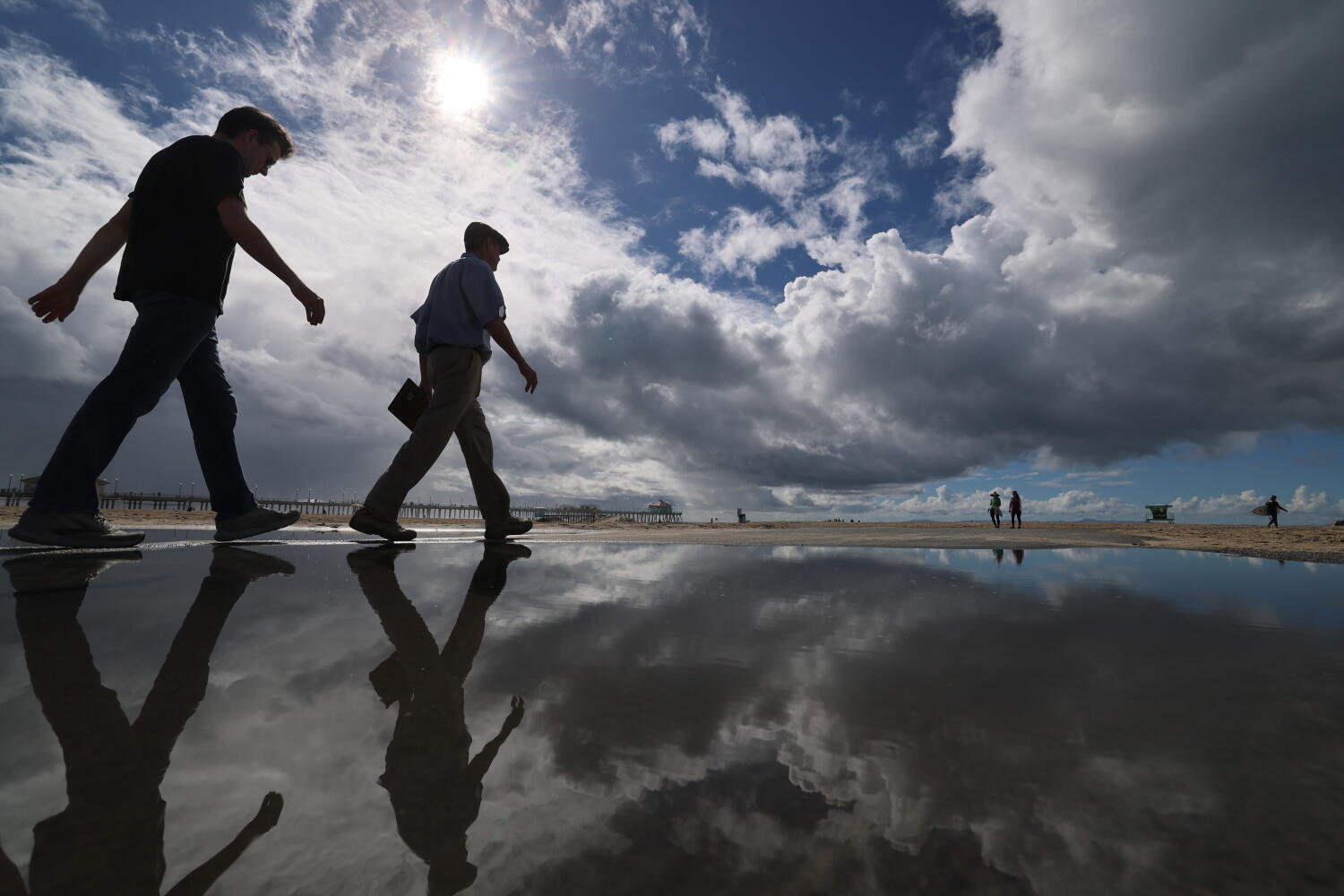
Rain in Southern California does not arrive like rain anywhere else.
In Seattle, water falls as a polite, persistent mist that the moss drinks happily. In London, it is a gray companion you carry an umbrella for out of sheer habit. In Los Angeles, rain is an intruder. It slams against concrete that has spent nine months baking in the sun, skidding across oil-slicked freeways and rushing down storm drains choked with eucalyptus leaves and fast-food wrappers. For a closer look into this area, we suggest: this related article.
And right now, sitting just off the Pacific coast, is a cold, spinning mass of atmosphere that has local officials reaching for their emergency broadcast systems. Los Angeles County has issued evacuation warnings as a major winter storm bears down on the region, bringing the dual threat of low-elevation snow and dangerous flash flooding.
Most people read a headline like that and check their weather app. They look for a little cloud icon, maybe a percentage chance of precipitation, and decide whether to grab a heavier jacket before heading out the door to Trader Joe's. For further context on this issue, comprehensive reporting is available at Reuters.
They miss the invisible geometry of disaster.
To understand why an evacuation warning in L.A. County is a terrifying, high-stakes gamble rather than a routine bureaucratic caution, you have to stop looking at the sky. You have to look at the dirt beneath your feet.
The Architecture of a Slide
Consider a hypothetical family—let’s call them the Moraleses—living in a modest, stucco ranch house tucked into the foothills of the San Gabriel Mountains, just below a burn scar from a wildfire two summers ago.
To the naked eye, the hillside behind their backyard looks fine. Green shoots of mustard grass have poked through the black crust. Birds nest in the charred skeletons of manzanita bushes. On a sunny Tuesday, it looks like recovery.
It is an illusion.
When a wildfire burns hot enough, it does not just destroy trees; it vaporizes the waxy organic compounds in the plants. That vapor sinks into the soil and cools, coating every grain of dirt in a microscopic, water-repellent shell. Meteorologists and geologists call this hydrophobic soil. You can think of it like pouring water onto a greased frying pan, or onto a thick layer of flour. Instead of soaking into the earth to nourish deep roots, the rain beads up on the surface.
Now, picture what happens when two inches of rain falls in an hour onto that greased frying pan.
There are no deep tree roots left to act like rebar holding the mountain together. There is no sponge-like forest floor to slow the water down. Gravity takes over instantly. The water sheets off the ridge, gathering speed, picking up ash, gravel, downed timber, and boulders the size of compact cars. Within minutes, a harmless mountain creek transforms into a debris flow—a churning, concrete-dense wall of mud and rock moving at thirty miles per hour.
That is why the sheriff’s deputies knock on doors in Topanga, Duarte, or La Cañada Flintridge before a single drop of rain has hit the windshield. When the mud starts moving, you do not have time to pack photo albums. You do not even have time to get to your car.
The Geography of Whiplash
What makes this approaching system particularly treacherous is its thermal split personality. Because this storm is pulling frigid air down from the Gulf of Alaska rather than tapping into a warm tropical plume, snow levels are dropping dramatically.
In a county famous for palm trees and surfboards, emergency crews are preparing for whiteout conditions across the Grapevine on Interstate 5, the mountain passes of the Angeles National Forest, and high-desert communities around Lancaster and Palmdale.
Imagine driving north out of downtown Los Angeles. At sea level, palm fronds are whipping in forty-mile-per-hour gusts as sheets of cold rain turn intersections into shallow lakes. Forty-five minutes later, as the highway climbs toward the Tejon Pass, that rain turns to sleet, then to heavy, blinding snow that coats the asphalt in black ice.
Every winter, this vertical geography traps hundreds of motorists who treat mountain weather like city weather. They leave Burbank in sneakers and a light hoodie, assuming the storm is just a wet inconvenience, only to find themselves stranded at four thousand feet without chains, blankets, or cell service as jackknifed semi-trucks block the interstate behind them.
Living in the Waiting Room
I have sat through enough of these storm watches in Southern California to know the specific, gnawing anxiety of the "warning" phase.
In the lexicon of emergency management, there is a strict, vital difference between an evacuation warning and an evacuation order. A warning means there is a significant threat to life and property, and you need to be ready to leave at a moment’s notice—or leave now if you need extra time, have livestock, or care for elderly relatives. An order means the danger is imminent, leave immediately, and do not expect rescue crews to come for you if you stay.
The warning is the hardest part.
It puts you in a psychological waiting room. You walk through your living room with a cardboard box, trying to perform triage on your entire life. Do I take the passports? Yes. The hard drive with the baby photos? Yes. What about the guitar my grandfather gave me? Does it fit in the trunk next to the dog crate?
You feel foolish while you are doing it. Outside, the sky might just be a bruised, dramatic purple. Maybe the wind hasn't even picked up yet. A voice in the back of your head whispers that you are overreacting, that the local news stations always hype the "Storm Watch" graphics to sell ad space, and that you’ll feel ridiculous driving back home tomorrow morning to unpack your life in bright sunshine.
Weather forecasting is an exercise in probabilities, and human beings are notoriously bad at respecting low-probability, high-consequence events. We remember the dozens of times the storm veered north toward Santa Barbara and left L.A. with a mild drizzle. We forget Montecito in January 2018, when a concentrated burst of rain over the Thomas Fire burn scar unleashed a wall of mud in the middle of the night, killing twenty-three people and erasing entire neighborhoods while residents slept.
The uncertainty is not a flaw in the warning system. It is the nature of coastal meteorology meeting jagged, fractured mountains. Forecasters can tell you a gun is loaded and pointed at the county; they cannot tell you with absolute precision which canyon wall will catch the heaviest band of rainfall at three in the morning.
The Concrete River
While the hills threaten to slide, the flatlands face a different kind of reckoning.
Los Angeles was engineered to get rid of water as fast as humanly possible. In the 1930s, after catastrophic floods repeatedly wiped out bridges, farms, and neighborhoods, the Army Corps of Engineers encased the Los Angeles River and its tributaries in miles of concrete. They built a massive, high-speed plumbing system designed to flush mountain runoff straight into the Pacific Ocean.
It works brilliantly—until it doesn't.
When intense rain falls across the basin, millions of gallons of water rush off roofs, driveways, and parking lots simultaneously, overwhelming neighborhood storm drains before the water can even reach the concrete channels. Underpasses fill like bathtubs. Low-lying intersections in the San Fernando Valley and South L.A. turn into murky ponds where stalled cars float like abandoned toys.
And then there are the unhoused communities living along the banks and inside the flood-control basins—thousands of people whose entire shelter consists of canvas tents and tarps pitched in the exact places the city designed to hold excess water. For them, a winter storm warning is not an inconvenience to watch on television. It is a direct threat of hypothermia and drowning, forcing outreach workers into a frantic race against the radar to move people into emergency shelters before the concrete channels roar to life with ten-foot walls of swift, freezing water.
How to Move Through the Storm
If you live anywhere near a canyon, a hillside, or a recent burn scar in Los Angeles County right now, the smartest decision you can make is to rob the storm of its leverage over you.
Do not wait for the rain to start to decide what you will do.
- Pack a "go bag" tonight. Put it by the front door. Include medications, charging cables, water, sturdy shoes, warm layers, pet food, and copies of critical documents.
- Park your car facing the street. If the power goes out and your garage door opener fails, or if you have to leave in a hurry while mud is creeping down the driveway, you do not want to spend ninety seconds trying to back out in the dark.
- Register for local alerts. Ensure your phone is set to receive Wireless Emergency Alerts, and sign up for Alert LA County so you do not sleep through a middle-of-the-night upgrade from a warning to an order.
- Stay off mountain roads. Unless you are actively evacuating, cancel any plans that take you over the passes or into the canyon roads. Watch for downed power lines—never assume a wire lying in a puddle is dead—and never drive around barricades or through standing water of unknown depth. Twelve inches of moving water is enough to float most passenger vehicles; two feet will sweep away an SUV.
The Sound in the Dark
Let’s return to our hypothetical family in the San Gabriel foothills.
If they heed the warning, they pack their sedan while the afternoon light is still gray and dry. They load the dog, grab the box of documents, lock the deadbolt, and drive ten miles south to stay with a cousin in Pasadena. They spend the night eating takeout on an air mattress, listening to the rain drum harmlessly against a flat-land roof. Maybe nothing happens to their house. Maybe they drive back up the hill two days later, sweep some wet leaves off the porch, and feel a faint, lingering sheepishness at having fled a storm that spared their street.
That sheepishness is the price of survival.
Because if the storm stalls over their ridge, and the hydrophobic dirt finally lets go, the first warning they would have heard in the dark isn't the shriek of a phone alert. It is a low, sub-audible rumble vibrating through the floorboards—the sound of the mountain remembering the fire, and coming down to collect its debt.