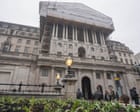
The financial press is wringing its hands again. Every time the Bank of England hints that interest rates will stay higher for longer, the standard commentary machine churns out the exact same narrative: Threadneedle Street is being too hawkish, tight monetary policy is strangling growth, and central bankers are panicking because they fought the inflation fire too late.
It is a comfortable, conventional story. It is also completely backwards.
The mainstream commentary assumes that cheap credit is the natural, healthy state of a modern economy and that high interest rates are an artificial tax imposed by overly cautious bureaucrats. But if you look at the mechanics of structural inflation, debt overhangs, and capital allocation across the UK over the past fifteen years, the reality is starkly different.
The Bank of England isn't holding rates high out of stubbornness. It is holding them high because zero-percent interest rate policy mutilated the UK's productivity engine. Lowering rates prematurely to rescue weak balance sheets doesn't protect the economy—it traps it in a zombie doom loop.
The Lazy Consensus on Inflation Persistence
The core thesis of the standard critique goes something like this: headline inflation drops, wage growth cools slightly, and therefore the central bank should immediately ease off the brakes to avoid an unnecessarily deep recession. Pundits argue that keeping rates restricted for an extended period creates a self-inflicted wound, driving up mortgage costs for households and squeezing corporate investment.
That argument relies on a fundamental misunderstanding of the difference between transient price shocks and structural wage-price inertia.
When energy prices spiked, it was an exogenous shock. But when cheap money has been injected into an economic system for over a decade, price pressures don't just clear out when gas prices normalize. They embed themselves into second-round effects: contract indexing, structural labor shortages, and corporate pricing power built on the assumption that capital remains cheap.
I have sat in boardrooms during cheap-money eras where capital allocation decisions weren't measured by real return on invested capital, but by how easily debt could be rolled over at near-zero real interest rates. When money is free, bad ideas get funded, uncompetitive companies stay afloat, and genuine innovation gets starved of capital because real yield doesn't matter.
If the Bank of England cuts rates too early simply to soothe the mortgage market, it will validate every inflationary expectation currently priced into long-term corporate supply contracts.
The Zombie Enterprise Trap
Let's address the elephant in the room that mainstream financial journalists refuse to talk about: corporate efficiency.
For over a decade, low interest rates acted as a massive life-support machine for unproductive firms. When borrowing costs were pegged near zero, any company capable of generating just enough revenue to service the interest on its debt could survive indefinitely. These "zombie firms" sucked up skilled labor, hogged commercial real estate, and drove up input costs for dynamic, high-growth businesses.
Zero-Interest Era (2009-2021)
[ Cheap Money ] ➔ [ Capital Floods Low-Yield Assets ] ➔ [ Zombie Firms Persist ] ➔ [ Stagnant Productivity ]

Higher-For-Longer Era (Present)
[ Real Cost of Capital ] ➔ [ Capital Demands Real Returns ] ➔ [ Market Discipline Returns ] ➔ [ Structural Reallocation ]
When commentators complain that higher rates risk breaking parts of the corporate sector, they are accidentally identifying the feature as a bug.
High interest rates perform an essential economic function: capital rationing. They force a higher hurdle rate on investments.
- Capital reallocation: High rates force capital out of speculative asset flips and weak businesses, reallocating resources to sectors that actually deliver real returns above the rate of inflation.
- Labor mobility: Zombie enterprises retain talent that should be deployed in higher-productivity sectors. Rate pressures release that labor back into the market.
- Debt sanity: It forces corporate treasurers to pay down debt rather than loading balance sheets with cheap leverage to fund share buybacks.
Imagine a scenario where a mid-sized logistics firm operates on a 2% margin, propped up entirely by 1.5% fixed-rate debt. Under the old regime, it survives and keeps 500 workers locked in low-wage positions. Under 5.25% rates, that business must either transform its technology stack to boost productivity or yield its market share to an efficient competitor. The short-term pain is obvious. The long-term economic necessity is absolute.
The Inflationary Illusion of the "Mortgage Crisis"
Every broadcast studio in London loves to highlight the family whose fixed-rate mortgage is jumping by £400 a month. It is a genuine human pressure point, but as an economic policy metric, it leads to terrible decisions.
The narrative suggests that central banks should lower rates to shield homeowners from rising debt service costs. But what created the housing affordability crisis in the first place? It was fifteen years of quantitative easing and emergency-level interest rates that ballooned house prices to historic multiples of average incomes.
Legacy Mortgage Model (Low Rates)
Target: Low Monthly Payments | Result: Sky-High Asset Prices | Risk: High Structural Vulnerability

Disciplined Monetary Model (Higher Rates)
Target: Stable Asset Prices   | Result: Realistic Valuations  | Risk: Short-Term Refinancing Friction
Lowering rates to lower mortgage payments is a temporary fix that fuels long-term asset price inflation. It inflates the size of the principal debt that the next generation has to take on, making the housing market even more fragile to future shocks.
The brutal truth is that asset prices—including residential property—need to adjust down relative to incomes. High interest rates are the primary mechanism for forcing that repricing. Trying to stop that process to protect short-term paper wealth simply shifts the burden onto younger workers through persistent currency degradation and structural inflation.
The Flawed Questions Everyone Is Asking
People often look for simple answers in economic debates, but most are operating on flawed premises.
"Isn't the Bank of England driving the UK straight into a recession?"
This question assumes a recession is an external disaster to be avoided at all costs, rather than a natural, clearing mechanism of the business cycle. A mild, controlled contraction that flushes out inefficient capital and resets inflation expectations is infinitely better than five years of stagflation. The real risk isn't a technical recession today; it's zero real growth for a decade because we refused to allow bad debt to clear.
"Should rates be cut as soon as inflation reaches the 2% target?"
No. Reaching 2% inflation for a single quarter means very little if core inflation and services inflation remain sticky. Cutting rates the moment headline CPI touches 2% invites a secondary wave of inflation, exactly as the US Federal Reserve experienced during the late 1970s under Arthur Burns. Rates must remain at a structurally restrictive level long enough to anchor real yields above inflation expectations.
"Won't high rates stop companies from investing in green infrastructure and technology?"
Only the bad projects. Genuine green innovation and high-productivity technology have high internal rates of return (IRR) that easily clear a 5% or 6% hurdle rate. Projects that only make financial sense when borrowing costs are at zero are usually inefficient financial engineering disguised as sustainable investment.
The Hard Reality of the New Regime
Adopting a "higher for longer" perspective comes with real trade-offs and structural pain that cannot be ignored.
THE REAL IMPACT: WINNERS VS. LOSERS

WINNERS
- Savers receiving real, positive yields on cash reserves.
- Disciplined corporate treasuries with low debt-to-EBITDA ratios.
- High-margin, cash-generative businesses that can self-fund growth.
- Long-term investors looking for fair asset entry valuations.

LOSERS
- Highly leveraged private equity funds relying on cheap debt stacks.
- Unprofitable tech startups dependent on perpetual cash burn.
- Real estate markets inflated by decade-long zero-rate policies.
- Over-indebted governments forced to face real market pricing on gilt auctions.
Government balance sheets face direct pressure. For years, politicians operated under the delusion that debt didn't matter because central banks would buy up government bonds and keep interest payments negligible. High rates bring fiscal reality back into the room. When debt service costs spike, politicians are forced to prioritize spending instead of funding endless pork-barrel promises with printed cash.
That fiscal discipline feels uncomfortable after a decade and a half of easy spending, but it is essential for long-term currency stability.
Money Needs a Real Cost
Money is the baseline unit of measure for all economic activity. When you price money at zero, you corrupt the measurement tool itself. You distort every risk model, every retirement projection, and every corporate capital decision across the entire market.
The Bank of England's primary duty is not to keep the stock market elevated, nor is it to ensure that private equity firms can pull off leveraged buyouts with minimal downside risk. Its job is to protect the purchasing power of the currency and maintain structural monetary stability.
The era of artificially free money was an anomaly that distorted the economy, drove wealth inequality by inflating financial assets, and gutted productivity growth. Staying with higher rates isn't a mistake—it is the return of market discipline.
Stop begging for central bank rate cuts. Start building businesses that can survive a real cost of capital.