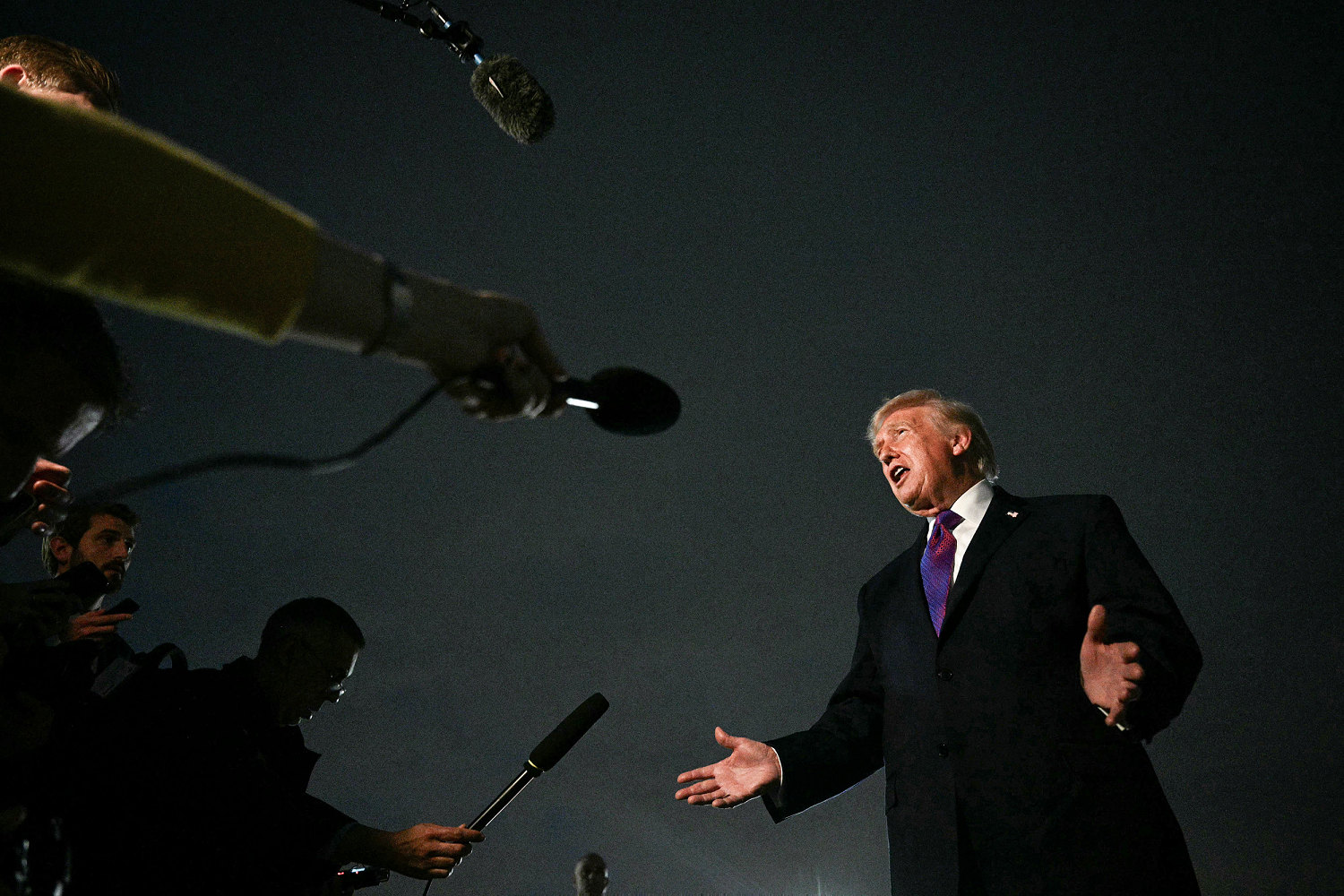
The media is obsessed with the "flip-flop." They see a politician cheer for $2.00 gas one year and brag about "making a lot of money" when it hits $4.00 the next, and they call it a contradiction. It isn't a contradiction. It’s a fundamental misunderstanding of how the global energy machine actually functions.
If you think cheap gas is a sign of a healthy economy, you are reading the wrong ledger.
Cheap gas is a symptom of a dying industry or a global collapse in demand. High gas prices, while painful at the pump, represent a massive transfer of wealth from foreign entities into the American treasury and the pockets of domestic producers. We have spent forty years terrified of "pain at the pump" while ignoring the fact that the United States is now the largest producer of crude oil on the planet.
When gas is cheap, the American energy sector bleeds. When it's expensive, we aren't just consumers; we are the house. And the house always wins.
The Myth of the "Consumer First" Economy
The standard narrative suggests that the President—whoever they may be—has a giant "gas price" dial on their desk. If they turn it left, the middle class rejoices. If they turn it right, they are greedy or incompetent.
This is a fairytale.
The price of Brent Crude or West Texas Intermediate (WTI) is a reflection of global geopolitical stability and production quotas set by cartels like OPEC+. But here is the nuance the "flip-flop" articles miss: The United States is no longer a helpless hostage to these fluctuations. Because of the shale revolution, we are a net exporter.
When prices rise, the capital expenditure in the Permian Basin explodes. Jobs aren't just "created"—they are cemented. Tax revenues in states like Texas, North Dakota, and New Mexico skyrocket, funding schools and infrastructure that would otherwise require income tax hikes.
We are told to mourn the extra $20 it costs to fill up an SUV. We are never told to celebrate the billions in trade surplus that high-margin oil exports bring to the national balance sheet.
Why $2.00 Gas is a Death Sentence
I have watched companies incinerate billions of dollars in valuation because they chased a low-price environment. In 2020, when oil briefly went negative, the "consumer" was happy. But the industry was a morgue.
Low prices freeze innovation. They stop the development of more efficient extraction techniques and, ironically, they kill the incentive for renewable transitions. If gas is practically free, why would anyone buy an EV or invest in nuclear?
Cheap energy is a sedative. It makes us lazy. High energy prices are a stimulant. They force efficiency. They drive the market to find the next bridge to the future. If you want to see the American economy stagnate, pray for $1.50 a gallon. It signals that global trade has stalled and that our own domestic rigs are being sold for scrap.
The "Make a Lot of Money" Reality Check
The critique of Trump—or any leader—celebrating high prices stems from the idea that the government should prioritize the individual's daily commute over the nation's strategic dominance.
Let's look at the math.
The U.S. produces roughly 13 million barrels of crude oil per day. When the price of oil jumps $20 a barrel, that is an additional $260 million of value being generated every single day within our borders. Over a year, that’s nearly $100 billion in additional economic activity.
Compare that to the "savings" of a consumer. The average driver uses about 500 gallons of gas a year. A $1.00 increase in gas costs that driver $500 annually. There are roughly 230 million drivers in the U.S. That’s a "cost" of $115 billion.
The pundits see a $15 billion net loss and scream "recession." They are wrong.
The $115 billion spent by consumers stays largely within the domestic ecosystem because we produce the fuel. It’s a circulation of currency. But the profits from exporting that oil to Europe and Asia? That is new money entering the system. It is a literal wealth transfer from the rest of the world to the United States.
When a leader says "we make a lot of money" from high prices, they aren't mocking the guy in the Ford F-150. They are stating a cold, hard macroeconomic fact: America is an energy superpower, and superpowers don't get rich selling their primary resource for pennies.
The Geopolitical Chessboard
The "lazy consensus" says that high gas prices empower dictators in the Middle East or Russia. This was true in 1973. It was true in 2005. It is a lie in 2026.
Every time the price of oil goes up, the American driller becomes more competitive. We have higher labor costs and higher environmental standards than the autocracies. We need a higher "break-even" price to keep the lights on.
When oil is at $40, Riyadh runs the world because they can pump for cheaper. When oil is at $90, West Texas becomes the most important patch of dirt on earth. High prices are the only thing that keeps the U.S. energy independent.
If you demand low gas prices, you are inadvertently demanding that we cede our energy sovereignty back to OPEC. You are voting for dependence. You are asking to be a customer rather than a shareholder.
The Efficiency Paradox
Consider the Jevons Paradox. It suggests that as technological progress increases the efficiency with which a resource is used, the rate of consumption of that resource actually rises because of increasing demand.
We see this in energy constantly. When gas is cheap, people buy bigger cars and move further from their jobs, creating a sprawling, fragile infrastructure. When gas is expensive, the market self-corrects. We see a surge in high-density housing, a shift toward remote work, and a massive uptick in localized supply chains.
High prices are the only "carbon tax" that actually works because they are enforced by the market, not a bureaucrat. They do more for the environment than a thousand "sustainability" summits ever could.
Stop Asking the Wrong Question
The media asks: "How can the President justify higher gas prices?"
The real question is: "Why are we still subsidizing a psychological addiction to cheap fuel that undermines our own industrial strength?"
We are told that the "cost of living" is the ultimate metric of a successful society. It isn't. The ultimate metric is "economic agency." A nation that produces its own energy and sells it to the world at a premium has agency. A nation that begs for cheap imports has a leash around its neck.
I have seen the internal reports of mid-stream energy firms. They don't fear high prices; they fear volatility. The "swing" is what kills. But a sustained, high-price environment is the greatest engine of American wealth since the dawn of the internet. It funds the R&D for the next generation of energy—whether that’s small modular reactors (SMRs) or advanced geothermal.
None of that happens when gas is the price of bottled water.
The Brutal Truth
The "pain" you feel at the gas station is the cost of living in an energy-independent superpower. You are paying a premium to ensure that the profits of the world’s most vital commodity stay in the American banking system rather than being laundered through offshore sovereign wealth funds.
If you want the "good old days" of $1.80 gas, go back to 2020 when the world was shut down, planes were grounded, and the economy was in a medically induced coma. If you want a thriving, aggressive, and dominant America, you have to get used to the price of the fuel that powers it.
Stop whining about the "flip-flop." Start looking at the balance sheet.
High gas prices aren't a failure of policy. They are the realization of American leverage.
Own the pump. Own the world.
Would you like me to analyze the specific impact of current WTI export margins on the U.S. trade deficit?