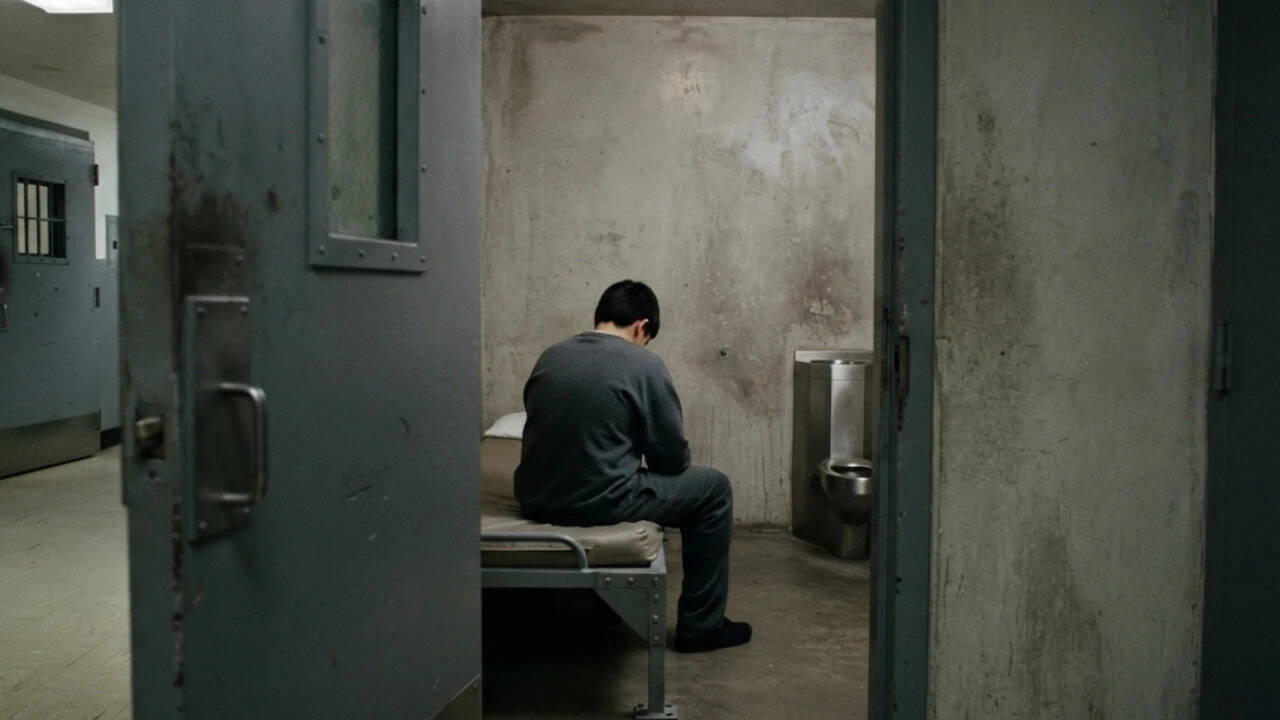
Silence has a weight to it when you are fifteen years old. It presses against your eardrums until the hum of a fluorescent bulb sounds like a freight train, and the blank drywall inches from your nose begins to warp and breathe.
You learn to count. You count the cinderblocks. You count the threads in the hem of your shirt. You count the seconds between footsteps in the hallway outside, hoping the heavy click of a latch means a human voice, a tray of lukewarm food, or simply the confirmation that you still exist in the physical world. Meanwhile, you can read similar stories here: What Most People Get Wrong About Seized China-to-Bangladesh Missile Chemical Shipments.
For a teenager placed in a therapeutic boarding school, that silence is often packaged and sold to desperate parents as safety. They call it "cool-down time." They call it "reflection." They call it "containment."
In a federal courtroom in Wyoming, a jury looked past the clinical vocabulary and saw it for what it actually was. They ordered a Wyoming boys' school to pay $6 million over the prolonged isolation of a student, delivering a financial shockwave that reverberates far beyond the windswept plains of the American West. To see the complete picture, we recommend the detailed analysis by NBC News.
The Architecture of Erasure
To understand why a jury would attach a seven-figure price tag to a quiet room, you have to understand the promise that brings families to the doors of residential treatment facilities in the first place.
Consider a composite scenario, drawn from the realities documented across youth residential care. Picture a mother sitting at her kitchen table at two in the morning. Her son is spiraling—perhaps through grief, untreated trauma, or severe neurodivergence. Local schools have suspended him. Outpatient therapists have shrugged. She finds a glossy brochure featuring snow-capped peaks, horses in open pastures, and smiling counselors promising structure, brotherhood, and healing. She empties her retirement account, signs the intake forms, and hands over her child, believing she is buying him a lifeline.
What she cannot see from the brochure is what happens behind the locked doors when a teenager refuses to comply.
When you strip away the therapeutic jargon, prolonged youth isolation operates on a simple, brutal mechanism. Human beings are wired for co-regulation; our nervous systems literally steady themselves through eye contact, vocal tone, and proximity to others. When an adolescent in distress is locked alone in a small, barren room for hours, days, or weeks at a time, the brain does not peacefully reflect on poor choices. It enters a state of acute survival panic.
Think of a child’s developing brain like wet concrete. Experiences do not just bounce off the surface; they leave permanent structural impressions. Neuroscientists and developmental psychologists have spent decades documenting how sensory deprivation and social isolation alter stress-response pathways, triggering paranoia, dissociation, and severe regression. In adult maximum-security prisons, prolonged solitary confinement is widely condemned by international human rights bodies as a form of psychological torture. Yet inside the troubled teen industry, under the guise of behavioral modification, minors have routinely been subjected to the exact same conditions without the legal protections afforded to convicted felons.
Six Million Dollars for the Invisible
Legal battles over institutional abuse rarely make headlines unless there is a broken bone, a viral video, or a fatality. Psychological harm is notoriously difficult to prove in court. There are no X-rays for a fractured sense of self. There is no cast for a nervous system stuck in permanent fight-or-flight.
That is precisely what makes the $6 million verdict in Wyoming so seismic.
A federal jury examined the treatment of a student who was subjected to extended isolation at a Wyoming facility for boys, weighing the institution's claims of necessary behavioral management against the devastating reality of what that confinement actually did to a developing mind. By awarding $6 million, the jury rejected the long-standing defense that extreme isolation is an acceptable clinical tool when dealing with difficult youth.
They put a concrete value on invisible wounds.
Why does a verdict like this matter if you do not have a child in a residential facility? Because the troubled teen industry is a multi-billion-dollar ecosystem operating largely in the shadows of state oversight. Facilities frequently set up shop in rural states like Wyoming, Utah, and Montana precisely because expansive geography, local economic dependence on facility jobs, and historically light regulatory frameworks create a protective buffer against scrutiny.
When a state fails to regulate what happens behind closed doors, the civil court system becomes the only remaining guardrail. A $6 million judgment does something that angry op-eds and legislative task forces rarely accomplish overnight: it terrifies insurance underwriters. Private residential programs cannot operate without liability coverage, and insurers do not care about glossy brochures or therapeutic philosophies. They care about actuarial risk. When solitary confinement becomes financially toxic, the industry is forced to change its practices—not out of sudden moral enlightenment, but out of sheer economic survival.
The Myth of the "Calm Down" Room
If you have ever stood in a doorway watching a teenager melt down, you know the impulse to create space. Anyone who has parented, taught, or mentored an adolescent in crisis understands the terrifying volatility of those moments. Doors slam. Words cut like glass. The urge to separate the child from the chaos is deeply human, and in brief, supervised moments, stepping away from an escalating conflict works.
The deception happens when a temporary safety measure mutates into an administrative convenience.
It takes immense staffing, training, and patience to sit with an enraged or terrified teenager and help them navigate their own storm. It requires skilled adults who can stay regulated while a kid screams, cries, or shuts down. That kind of care is expensive. It demands low staff-to-student ratios and high wages for qualified clinicians.
Locking a door, on the other hand, requires only one underpaid staff member with a clipboard and a key.
Over time, across poorly regulated facilities, isolation stops being a last resort for imminent physical danger and becomes the default punishment for everything from backtalk to refusing to finish a worksheet. A boy cries for his mother? Put him in isolation until he stops. A student questions a staff member's authority? Another day in the quiet room. The facility bills the parents or the state hundreds of dollars a day for "intensive therapy," while the child spends their days staring at painted cinderblock.
I remember talking to a former resident of a western boys' ranch years after he aged out of the system. He was a grown man with a steady job and a quiet, measured way of speaking, yet he still refused to sit with his back to a door in a restaurant. He described how, during his months in isolation, he began hallucinating the voices of his family members through the air vents just to keep from feeling entirely erased. The worst part, he told me, wasn't the boredom or the anger. It was the realization that the adults outside the door had completely forgotten he was a person. When they slid his tray under the slot, they wouldn't even look at his eyes.
Why the Geography of Isolation Matters
Wyoming is a state defined by vast, open horizons—a place where the sky seems to swallow the earth whole. There is a bitter irony in sending struggling boys to a landscape famous for its boundless freedom, only to lock them inside boxes smaller than a walk-in closet.
For decades, families from across the country have sent their sons to Wyoming programs, drawn by the rugged ethos of the West. Ranch-style therapy, wilderness excursions, and strict discipline hold a powerful cultural appeal, particularly for parents worried that their sons are losing their way in a screen-saturated, chaotic modern world.
Yet isolation thrives in isolated places. When a facility sits twenty miles down a gravel road from the nearest town, there are no casual observers. Neighbors do not hear shouting through apartment walls. Local reporters are spread thin covering massive counties. When a boy is placed in solitary confinement out there, the distance between him and the outside world feels absolute.
Federal and state oversight of youth residential facilities has historically resembled a patchwork quilt full of holes. While states strictly regulate daycare centers—dictating everything from square footage per toddler to the exact temperature of dishwater—adolescent residential treatment centers have often slipped through statutory cracks, classified ambiguously between educational institutions, behavioral health clinics, and private camps.
In recent years, survivor-led advocacy groups, investigative journalists, and federal inquiries have begun pulling back the curtain on these facilities. Reports from the U.S. Senate Finance Committee and disability rights organizations have documented widespread patterns of seclusion, physical restraint, and medical neglect across youth residential programs nationwide. Still, laws move slowly. Lobbyists push back against stricter mandates, arguing that rigid rules tie the hands of staff trying to manage volatile youth.
That is why the Wyoming jury’s decision cuts through the noise with such clarity. You do not need a degree in behavioral psychology to recognize cruelty when it is laid bare in a courtroom. Twelve ordinary citizens listened to the evidence, weighed the excuses, and decided that locking a child in isolation is not treatment. It is harm.
The Ripple Effect on Families and Facilities
When news of a $6 million verdict breaks, the immediate reaction from outside observers is often a mix of shock and relief—justice served, a bad actor punished, a victim vindicated. For parents currently navigating the terrifying maze of youth mental health care, however, the reaction is far more complicated.
It is terrifying to realize that the very places claiming to rescue your child might be quietly breaking them.
If you are a parent looking for help right now, the uncertainty can feel paralyzing. You know your child is drowning at home, yet you are suddenly forced to question whether the lifeboats are safe. Recognizing that confusion is essential, because the answer is not to abandon struggling teenagers to fend for themselves, nor is it to blindly trust any institution that promises a quick behavioral fix.
Real accountability forces a sharper set of questions. It pushes parents, school districts, and state agencies to demand transparency before signing a single intake form. What is the facility's exact policy on seclusion and restraint? How many hours in the past year did students spend in locked rooms? Are parents notified immediately every single time a child is isolated, or is it buried in a vague monthly progress note? Any program that balks at answering those questions with hard data is telling you everything you need to know.
More broadly, the verdict challenges a deeply ingrained cultural habit: the urge to make troubled kids disappear until they become easier to manage. Whether it is zero-tolerance suspension policies in public schools or indefinite isolation rooms in private facilities, we have spent too long treating adolescent distress as an inconvenience to be locked out of sight.
A teenager in crisis does not need four blank walls to teach them how to live in the world. They need connection, boundaries held with dignity, and adults who refuse to walk away when things get hard.
Beyond the Verdict
Money cannot hand a young man back the months of his adolescence spent staring at concrete. Six million dollars does not erase the hypervigilance that lingers long after the heavy door finally swings open, nor does it undo the quiet terror of learning that the people paid to protect you can make you vanish with the turn of a deadbolt.
What it does is draw a line in the dirt.
Somewhere in a residential facility tonight, a staff member is standing outside a locked door with a clipboard in hand, deciding whether to open it, pull up a chair, and talk to a scared kid—or walk down the hall and leave him in the dark. For the first time in a long time, the weight of that choice just got a whole lot heavier.


