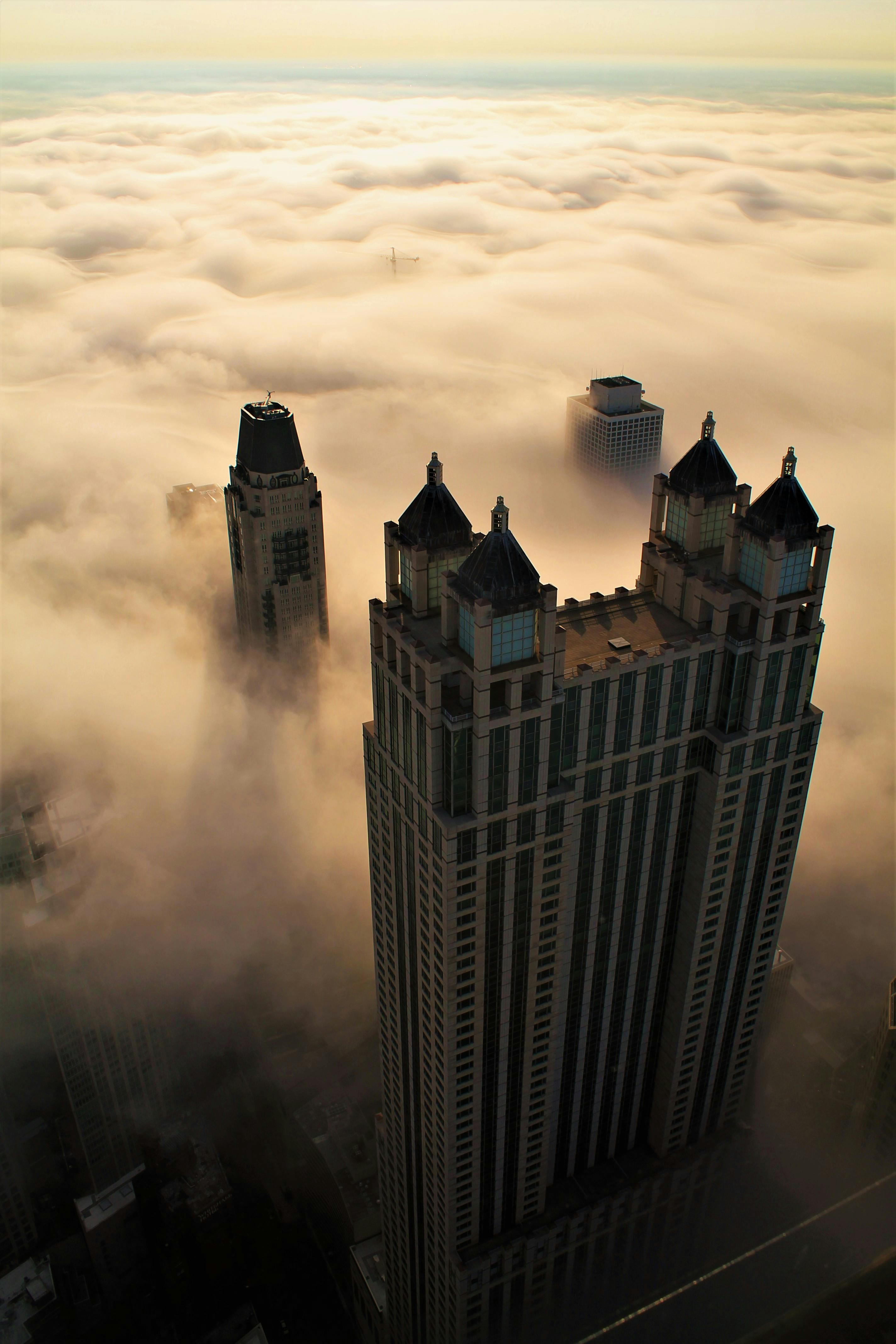
Five major luxury mountain hotels—One&Only Moonlight Basin in Big Sky, Waldorf Astoria Deer Valley in Utah, Grand Hyatt Deer Valley, Aman Rosa Alpina in the Italian Dolomites, and Rosewood Courchevel Le Jardin Alpin in the French Alps—represent the sharpest edge of a multi-billion-dollar shift in alpine hospitality.
Travel magazines sell these properties as idyllic winter escapes. They are not. They are the physical manifestations of an aggressive real estate consolidation strategy that is permanently altering who gets to ski, how much it costs to stay near a lift, and what happens to mountain towns when ultra-high-net-worth private equity replaces independent hoteliers.
For decades, alpine hospitality operated on a relatively simple, seasonal math. A family or regional operator built a lodge, made their money between December and April, and prayed for enough summer hikers to keep the lights on until the first snow fell in November. That model is dead. Construction costs at high altitude have skyrocketed, driven by scarce labor, strict environmental permitting, and the sheer logistical nightmare of hauling steel and concrete up winding mountain passes. To make the numbers work today, developers cannot rely on nightly room rates alone. They have to sell branded residences.
The Real Estate Engine Under the Hood
Walk into the lobby of almost any new luxury mountain hotel opening in 2025 or 2026, and you are standing inside a loss leader for condominium sales.
Hotel brands rarely own the dirt anymore. Instead, massive real estate investment trusts and private development firms—like Extell Development in Utah or Lone Mountain Land Company in Montana—buy up thousands of acres of contiguous mountain terrain. They partner with ultra-luxury operators like Aman, Rosewood, or One&Only to flag the property. The brand brings a global database of wealthy clients and an aura of exclusivity. In exchange, buyers willingly pay $3,000 to $5,000 per square foot for a private residence attached to the hotel, funding the entire construction project before a single skier ever checks in.
This financial engineering explains why the current wave of openings looks the way it does. You do not see mid-market, 80-room lodges being built at the base of major ski resorts anymore. The land is simply too expensive. If a developer is going to fight through five years of municipal zoning battles and water-rights litigation, they are going to build a flagship property that commands $2,500 a night for a standard king room.
Utah’s Billion-Dollar Expansion
Nowhere is this land grab more visible than in Park City, Utah, where the massive Deer Valley East Village expansion has effectively doubled the footprint of one of North America's most exclusive ski areas.
The Grand Hyatt Deer Valley, which recently anchored the initial phase of this new base area, is a textbook example of scale meeting high-altitude logistics. With nearly 400 rooms, residences, and massive conference facilities, it was built to solve a specific operational problem that has plagued ski towns for years: the shoulder-season slump. By constructing a property capable of hosting corporate retreats in October and wedding buyouts in June, the developers insulated themselves against a bad snow year.
Just up the mountain, the Waldorf Astoria Deer Valley targets a different slice of the exact same economic pie. Positioned directly at the base of the new terrain, it leans heavily into private club culture. The architecture is massive, dominated by native stone and timber, designed to blend into the Wasatch Range while quietly establishing a gated perimeter.
For the average skier, this expansion brings undeniable perks. More lifts mean shorter lines, and new base villages relieve the crushing traffic congestion that has choked Park City’s historic Main Street every Friday afternoon for twenty years. Yet there is a quiet trade-off. As these mega-developments absorb the remaining buildable acreage, the town’s workforce is pushed further down the canyon into Heber City and Kamas, turning a once-cohesive mountain community into a commuter hub where the people tuning your skis cannot afford to buy a cup of coffee near the lifts.
Montana and the Private Club Model
If Utah is about master-planned volume, Big Sky, Montana, is about curated isolation. The arrival of One&Only Moonlight Basin marks a watershed moment for the Northern Rockies.
Big Sky has spent the last decade transitioning from a rugged, slightly sleepy outpost into an ultra-exclusive enclave rivaling Aspen and Jackson Hole. Unlike older European resorts where the hotel sits in the center of a bustling pedestrian village, Moonlight Basin is built around the concept of the private mountain sanctuary. Designed by Olson Kundig, the property uses vast expanses of glass and blackened steel to frame Lone Peak, treating the wilderness itself as an amenity you rent by the night.
The operational reality of running a resort like this in southwest Montana is brutal. Temperatures regularly drop well below zero, supply chains stretch across hundreds of miles of two-lane highways, and finding experienced hospitality staff in a county with virtually zero affordable housing requires building dedicated employee dormitories from scratch. Developers factor these massive overhead costs directly into the nightly rate. When you book a room here, you are not just paying for thread count and a heated boot locker; you are subsidizing the entire municipal infrastructure required to keep a five-star resort functioning in the middle of a sub-alpine forest.
The European Counter-Narrative
Cross the Atlantic, and the mechanics of new mountain hotels shift entirely. You cannot easily carve a new base village out of the French Alps or the Italian Dolomites. Strict alpine preservation laws and centuries-old land ownership patterns prevent the kind of sprawling, ground-up mega-developments happening in the American West.
Instead, European luxury groups rely on aggressive adaptive reuse. They buy historic, family-run properties that have reached a generational succession crisis and gut them down to the load-bearing walls.
Look at Aman Rosa Alpina in San Cassiano, Italy. For three generations, the Pizzinini family ran the Rosa Alpina as one of the most beloved, understated luxury hotels in the Dolomites. They knew every regular guest by name, and the wine cellar was built bottle by bottle over decades. Recently, Aman stepped in to lead a complete architectural overhaul of the property, reducing the room count to create massive, minimalist suites and expanding the spa facilities.
It is an upgrade in hardware, without question. The new interiors bring the serene, Japanese-inflected design language Aman is famous for directly to the jagged limestone peaks of South Tyrol. Yet veteran alpine travelers recognize what gets lost in these transitions. When an independent institution is absorbed into a global luxury portfolio, the quirks vanish. The eccentric local art comes down, the menu becomes standardized to please an international clientele that expects the same burrata in St. Moritz as they get in Tokyo, and the nightly rate triples overnight.
A similar dynamic is playing out in France with the arrival of Rosewood Courchevel Le Jardin Alpin. Courchevel 1850 is already the epicenter of conspicuous consumption in European skiing, a place where fur coats are standard après-ski attire and helicopters ferry guests directly from Geneva Airport. Rosewood’s entry into the Jardin Alpin enclave is not about expanding the ski area; it is about capturing market share from entrenched rivals like Cheval Blanc and Les Airelles. By stripping an existing property down to its concrete frame and rebuilding it with ultra-bespoke interiors, Rosewood is betting that modern luxury travelers value fresh, contemporary design over the heavy, traditional Savoyard wood-paneling that defined Courchevel for fifty years.
The Climate Math Nobody Mentions
Beneath all the press releases about farm-to-table alpine dining and subterranean thermal spas lies an existential threat that every hotelier in the mountains is quietly trying to outrun. The snow line is moving up.
In the European Alps, resorts below 1,500 meters (roughly 4,900 feet) are facing an increasingly erratic winter season. Rain events in January are no longer anomalies; they are recurring operational hazards. In North America, warm atmospheric rivers in the Pacific Northwest and prolonged dry spells in the Rockies have forced resorts to invest tens of millions of dollars into high-efficiency snowmaking guns just to guarantee opening day.
This climatic reality dictates where smart hotel money goes today. High elevation is no longer just about better views; it is an insurance policy.
- High-Altitude Advantage: Properties sitting above 2,000 meters—like those in Courchevel 1850 or upper Deer Valley—retain cold temperatures longer, allowing snowmaking systems to operate efficiently even during warmer winters.
- Four-Season Pivots: Notice how every new mountain hotel markets its spa, culinary program, and summer hiking access just as heavily as its ski-in, ski-out convenience. If December is dry, the hotel still needs to command $1,800 a night. A world-class wellness center does not depend on snowfall.
- The End of the Mid-Tier: Lower-elevation, independent mountain motels cannot afford the capital expenditure required to pivot to year-round luxury wellness, nor can they survive two consecutive bad winters. They are the ones quietly going bankrupt or selling out to developers.
How to Book Without Getting Burned
If you are planning to stay at one of these newly opened or newly renovated mountain flagships, standard travel advice does not apply. Booking a brand-new hotel in its inaugural winter season is inherently risky, regardless of how prestigious the name on the front door is.
High-altitude construction delays are legendary. An early October blizzard can halt exterior stonework for three weeks, pushing a scheduled December opening into late January. Even when a hotel opens on time, the first sixty days are essentially a paid beta test. Heating systems in massive glass-and-steel structures take time to balance, kitchen staff are still learning how to bake at 8,000 feet where water boils at a lower temperature, and ski valets are figuring out traffic flow during the 8:30 AM rush.
Wait until the property has at least one full winter under its belt before paying peak holiday rates. If you insist on going during the inaugural season, avoid the week between Christmas and New Year’s entirely. Aim for mid-January or March, when occupancy dips slightly, service rhythms have stabilized, and management is far more willing to quietly upgrade your room to smooth over any lingering construction kinks.
Pay close attention to the fine print regarding resort fees and ski access. "Ski-in, ski-out" has become an elastic marketing term. At several sprawling new developments, that phrase actually means walking 200 yards across a heated plaza to catch a six-person transfer gondola that takes you to the base of the real chairlift. Look at a topographical trail map, not the hotel’s brochure, before you put down a non-refundable deposit.
The golden age of the sleepy, affordable ski lodge is over, replaced by an era of institutional capital, private aviation, and four-figure nightly minimums. Check the elevation of the base lodge before you book, verify that the lifts actually connect to the main mountain, and never assume a five-star brand guarantees snow on the ground.