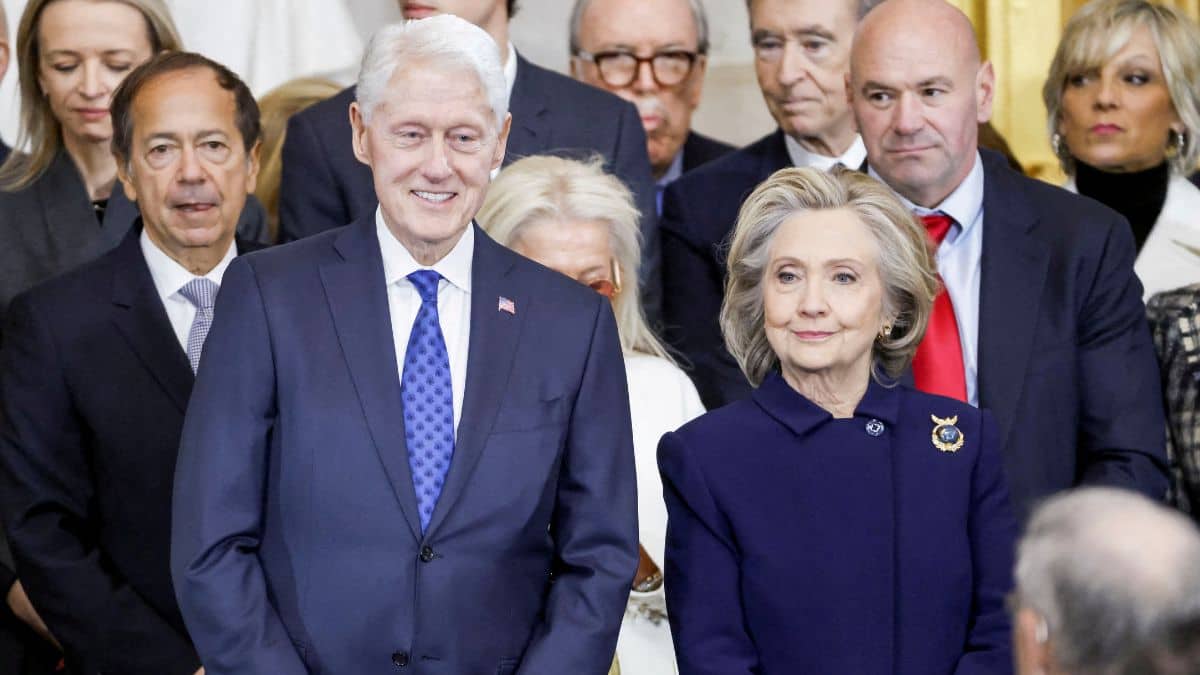
The formal notification arrived with the quiet thud of a political sledgehammer. After years of speculation and a mountain of redacted flight logs, a U.S. House panel has successfully moved to bring Hillary Clinton behind closed doors to testify regarding the Jeffrey Epstein investigation. This is not a public spectacle for the cameras. It is a calculated, high-stakes deposition designed to bypass the rehearsed soundbites of a standard congressional hearing. The committee is digging into a specific, narrow window of time and a series of administrative decisions that investigators believe might finally connect the dots between high-level diplomatic influence and Epstein’s international web.
To understand why this is happening now, one must look past the partisan shouting matches. This isn't about the 2016 election or old grievances. It is about a specific set of State Department protocols and private travel records that have remained under seal for over a decade. Investigators are focused on the intersection of private wealth and public office. They want to know if the former Secretary of State’s orbit provided a layer of "functional immunity" to a man who was already a registered sex offender. The panel has signaled that their interest lies in the logistical overlaps—shared staff, synchronized travel dates, and the flow of funds through non-profit entities that Epstein allegedly used to buy proximity to power.
The Architecture of Proximity
The term "friend of the family" has long been used as a shield in Washington. In the case of the Clintons and Jeffrey Epstein, that shield is being dismantled piece by piece. Congressional investigators are no longer satisfied with the blanket denial that the former president and secretary of state were merely peripheral acquaintances. The committee’s focus has shifted toward the logistical infrastructure of these relationships.
Jeffrey Epstein was not just a financier; he was a master of "credential laundering." He sought out the most powerful figures in the world to legitimize his presence in rooms where he never should have been allowed. By securing a place within the Clinton Global Initiative and other high-level circles, Epstein gained a form of social currency that is more valuable than gold in the halls of power. The House panel is investigating whether this social currency was converted into actual policy influence or, more dangerously, whether it was used to suppress earlier investigations into his activities.
The focus is on the "gatekeepers." Every high-level politician has a circle of advisors who vet every person entering their inner sanctum. For Epstein to have moved as freely as he did, multiple gatekeepers had to look the other way. The closed-door testimony aims to pin down who made those decisions and what, if any, warnings were ignored. It is a hunt for the paper trail of accountability.
Behind the Closed Door Strategy
The decision to hold this testimony in a non-public setting is a tactical move by the House panel. Public hearings are often little more than theater, where members of Congress compete for the best fifteen-second clip for the evening news. Closed-door depositions are different. They allow for hours of grueling, granular questioning where evasive maneuvers are harder to pull off.
In this environment, "I don't recall" is a dangerous answer. The committee has access to a trove of travel manifests and internal memos that can be used to refresh a witness’s memory in real-time. When a witness is confronted with a document they didn't know the committee possessed, the narrative shifts. This is where the real work of investigative journalism and legislative oversight happens—in the dry, repetitive verification of dates, locations, and names.
There is also the matter of national security. Some of the information being discussed involves diplomatic travel and the movements of Secret Service details. By keeping the session private, the committee can delve into these sensitive areas without risking the exposure of protected protocols. This also protects the investigation from the inevitable media circus, allowing the facts to lead the way rather than the headlines.
The Problem of Selective Memory and Redacted Logs
One of the greatest hurdles in the Epstein saga has been the fragmentation of truth. Pieces of the puzzle are scattered across multiple jurisdictions, from New York and Florida to the U.S. Virgin Islands and Paris. Epstein’s "Little Black Book" and the flight logs of the Lolita Express have been analyzed by every armchair detective on the internet, but the legal reality is much more complex.
Congressional investigators are dealing with a "shadow calendar." This is the discrepancy between what was officially logged and what actually occurred. Witnesses have previously testified that Epstein was adept at moving people off the record, using secondary airports and private transfers to avoid the eyes of traditional security. The panel is looking for evidence that the State Department’s own security apparatus was aware of these movements and chose to remain silent.
The Paper Trail of the Clinton Foundation
The financial link is perhaps the most scrutinized aspect of this probe. Epstein was a donor, but the committee is looking for more than just a check. They are investigating:
- Administrative Access: Did Epstein or his associates receive expedited visas or diplomatic favors?
- Resource Sharing: Were private jets used to transport government officials in a way that bypassed ethics reporting?
- Quid Pro Quo: Is there a correlation between Epstein’s donations and specific policy shifts or international appointments?
These aren't just questions of morality; they are questions of legality. If a public official accepts a benefit from a private citizen to perform a government act, it crosses the line into a criminal violation. Proving that, however, requires a level of detail that only a face-to-face deposition can provide.
The Counter-Argument and the Risk of Overreach
It is necessary to acknowledge the potential for this to be seen as a partisan exercise. Critics argue that the House panel is chasing ghosts to distract from current political crises. They point out that Epstein is dead, many of his primary co-conspirators are in prison, and the Clintons have not held office for years.
From a purely analytical standpoint, the risk of overreach is high. If the committee fails to produce a "smoking gun," the entire investigation could be dismissed as a political hit job. This puts immense pressure on the investigators to move beyond hearsay. They need hard data—emails, bank records, and signed statements—that prove a tangible breach of protocol.
However, the counter-argument ignores the fundamental duty of oversight. The Epstein case revealed a massive failure of the American legal and political system. It showed that with enough money and the right connections, a predator could operate in plain sight for decades. If the system is to be fixed, every point of failure must be examined, regardless of the political stature of those involved.
The Global Implications of the Testimony
This investigation doesn't stop at the U.S. border. Epstein’s network was international, involving royalty, heads of state, and global business leaders. The information uncovered in a U.S. House panel could have a domino effect on investigations in the United Kingdom, France, and beyond.
The "Epstein Effect" is a unique phenomenon where the exposure of one link in the chain threatens the entire structure. If Hillary Clinton’s testimony reveals even a minor breach of international protocol, it could force the hands of foreign governments who have been hesitant to investigate their own elites. We are looking at a potential global realignment of how private-public partnerships are monitored.
The sheer scale of the Epstein network suggests that he wasn't just a lone actor. He was a broker. He dealt in information, access, and leverage. The House panel is essentially trying to map the "dark web" of high society. They are looking for the common denominator in a series of seemingly unrelated events.
Breaking the Silence of the Inner Circle
For years, the people closest to the Clintons have maintained a wall of silence regarding Epstein. This wall is starting to show cracks. As more of Epstein’s associates are pressured by various legal entities, the risk of "flipping" increases.
The House panel is likely using the threat of perjury to extract the truth. In a closed-door session, the stakes are absolute. If a witness is caught in a lie, the consequences are immediate and severe. This is often the point where the "official version" of events begins to crumble and the more complicated, uncomfortable truth emerges.
We are seeing a shift in the way power is held accountable. The days of "too big to jail" or "too famous to investigate" are fading. Whether this specific testimony leads to a criminal indictment or simply a damning report, the precedent is being set. No one is above the reach of a determined investigative body, even if it takes years to get them in the room.
The Logistics of Accountability
The practical reality of this testimony involves a massive coordination of legal teams. The Clintons have the most sophisticated legal defense in the world. Every question asked by the panel will have been anticipated. Every answer will be measured.
The investigators, however, have the advantage of time and a massive library of prior testimony. They can cross-reference what is said today with what was said by Ghislaine Maxwell, Virginia Giuffre, and dozens of other witnesses over the last decade. It is a game of legal chess played at the highest level.
The outcome of this session will likely not be known for weeks or even months. The transcripts will be reviewed, the evidence will be weighed, and the committee will decide its next move. But the fact that the session is happening at all is a testament to the persistence of the investigators and the enduring nature of the Epstein scandal.
The truth about Jeffrey Epstein and his powerful friends is not a single revelation but a slow, painful process of extraction. This testimony is a critical part of that extraction. It is an attempt to close the book on a chapter of American history characterized by excess, exploitation, and a staggering lack of oversight. The public deserves to know how a man like Epstein was allowed to thrive in the shadow of the world’s most powerful people. The House panel is now the only body standing between that truth and total obscurity.
Find the inconsistencies. Follow the money. Ignore the noise. This is the only way the Epstein probe reaches a conclusion that actually matters for the future of the republic. Provide the committee with the evidence they need to verify the travel logs against the official itineraries.