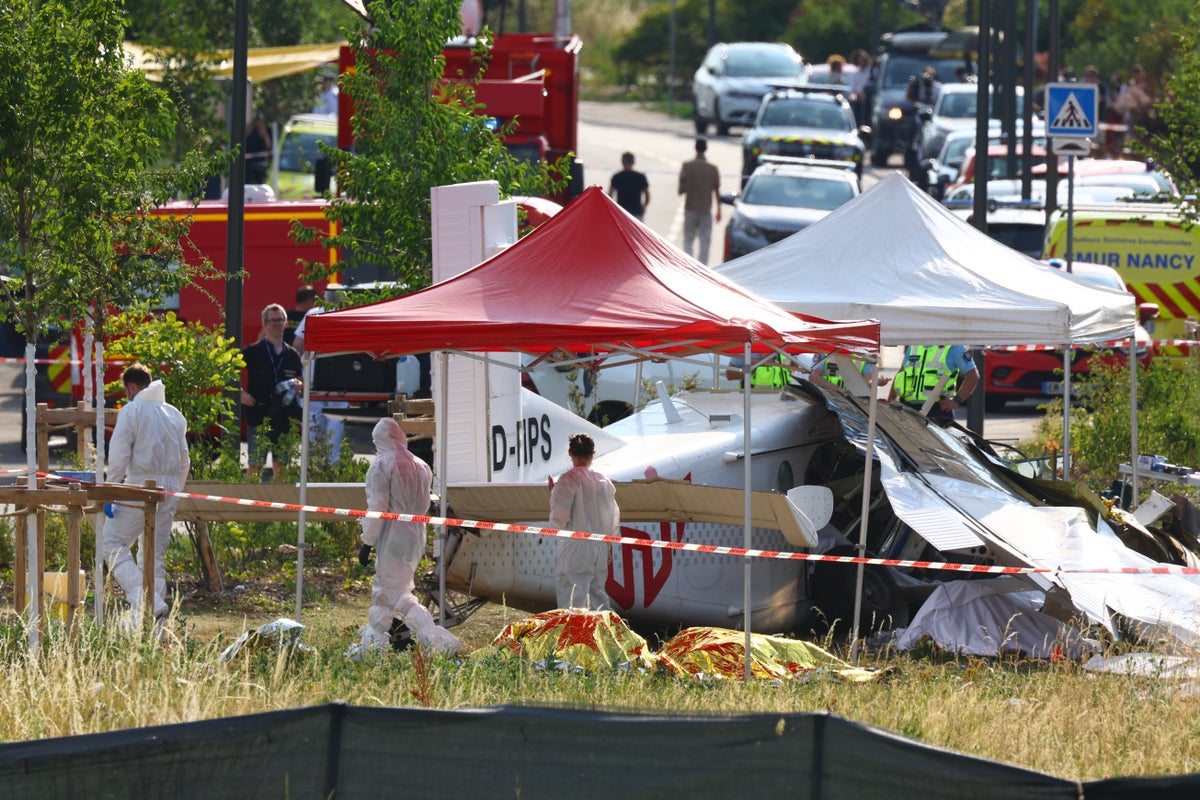
The tragic crash of a skydiving plane in France, witnessed by the horrified families of those on board, exposes a critical gap in aviation safety that regulators have ignored for decades. When a transport category aircraft suffers an accident, international investigative bodies launch massive, well-funded inquiries to dissect every microsecond of telemetry. Yet, when a utility aircraft carrying skydivers falls out of the sky, the incident is frequently dismissed as an isolated operational mishap. This double standard in aviation oversight leaves thousands of recreational jumpers flying in aging, modified aircraft under the supervision of loosely regulated commercial frameworks.
The reality of utility aviation is far grimmer than the pristine image projected by modern tourism. Skydiving operations occupy a unique regulatory gray zone. In many jurisdictions, once the passengers are technically classified as "sport jumpers" rather than commercial airline passengers, the stringent safety baselines governing commercial air travel begin to erode. This regulatory decoupling affects everything from pilot flight-hour requirements to the rigorousness of routine maintenance schedules.
The Operational Strain of Jump Flights
To understand why these aircraft fail, one must examine the brutal operational cycle of a typical skydiving plane. Unlike a commercial airliner that climbs to a high altitude and cruises for hours under stable aerodynamic conditions, a skydiving aircraft experiences extreme thermal and structural cycling.
The plane takes off at maximum power, climbs aggressively to drop altitude within fifteen to twenty minutes, unloads its weight instantly, and then executes a rapid, steep descent to the runway to pick up the next group. This cycle repeats up to a dozen times a day during peak season.
The rapid descents create severe thermal shock for piston and turboprop engines alike. Cylinders cool down too quickly, a phenomenon known as shock cooling, which induces micro-fractures in the engine block over time. Airframes experience repeated, rapid pressurization and depressurization cycles at lower altitudes, accelerating structural fatigue along critical wing spars and door hinges.
Standard maintenance protocols, often designed for aircraft flying traditional cross-country routes, fail to account for the compounding degradation caused by this relentless, high-intensity cycling.
The Pilot Experience Deficit
Aviation safety depends entirely on the person in the left seat. In the commercial airline sector, a captain typically possesses thousands of hours of flight experience under complex instrument flight rules. The skydiving industry, conversely, serves as a primary stepping stone for young commercial pilots trying to build their flight hours quickly.
These pilots are frequently young, ambitious, and inexperienced in handling severe, unexpected emergencies. They are paid by the flight or by the hour, creating an unspoken pressure to keep the aircraft moving.
When an engine fails or a structural component gives way at four thousand feet, a pilot has only seconds to react. An experienced pilot understands how to manage aerodynamic energy during a catastrophic failure. A novice pilot, overwhelmed by sudden aerodynamic instability and the chaos of an unravelling cabin, can easily enter a secondary stall or lose control of the control surfaces entirely.
The lack of mandatory simulator training for specific utility aircraft maneuvers compounds this vulnerability. Most skydiving pilots have never experienced a full aerodynamic stall or a sudden, massive weight shift in a simulator. They are forced to learn these life-or-death lessons in real time, with an aircraft full of people depending on their immediate actions.
Aircraft Modifications and Weight Shifts
Skydiving aircraft are rarely flown in their original factory configurations. They are modified. Passenger seats are ripped out, specialized handles are installed along the interior walls, and wide, roll-up plastic doors replace standard emergency exits.
These modifications fundamentally alter the aerodynamic profile and weight distribution of the aircraft.
Every time a group of divers moves toward the rear door to prepare for a jump, the center of gravity shifts drastically toward the tail. If the pilot is not prepared for this sudden shift, or if the aircraft is already operating near its performance limits due to high ambient temperatures, the plane can pitch up into an unrecoverable aerodynamic stall.
[Aerodynamic Stall Condition]
Weight Shifts Rearward -> Angle of Attack Increases Beyond Critical Limit -> Airflow Separates from Wing -> Sudden Loss of Lift
Investigators often discover that weight and balance calculations in these operations are treated as theoretical guidelines rather than hard operational limits. When an aircraft is packed to maximum capacity to maximize daily revenue, the margin for error disappears. A slight miscalculation in fuel weight, combined with a sudden shift in passenger positioning, turns a routine flight into a flying brick.
The Failure of Regional Enforcement
National aviation authorities are structurally unequipped to police every local airfield. While inspectors routinely audit major airlines at international hubs, smaller drop zones tucked away in rural regions receive minimal oversight.
Annual inspections are often superficial, focusing on logbook entries rather than comprehensive non-destructive testing of the airframe.
This lack of enforcement creates an environment where minor maintenance issues are deferred. A small oil leak, a fraying control cable, or an intermittent instrument reading is written off as a quirk of an old airplane. On a standard flight, these quirks might remain harmless. Under the extreme stress of a skydiving flight path, they become single points of failure.
The tragedy witnessed by families on the ground is not an unpredictable act of nature. It is the predictable outcome of an aviation sector that has been allowed to operate with far less scrutiny than the commercial airlines that share the same airspace. Until regulatory bodies mandate stricter airframe fatigue testing, enforce rigorous pilot training standards, and eliminate the loopholes that classify sport aviation as a low-risk activity, these completely preventable catastrophes will continue to happen in front of horrified onlookers.