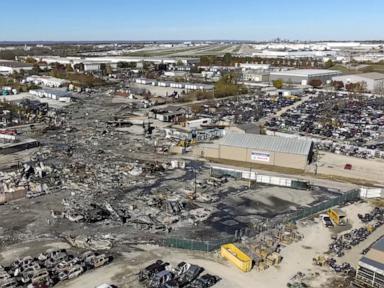
When a massive commercial jet engine separates from an aircraft wing mid-flight, the public immediately looks for a spectacular cause. People imagine catastrophic bird strikes, explosive uncontained failures, or unprecedented metal fatigue. The reality inside the aviation maintenance industry is far more mundane, bureaucratic, and deeply unsettling. Engines rarely detach because of an unpredictable act of God. They detach because structural components, hidden deep within the pylon assembly, are systematically excluded from routine inspection schedules under regulatory frameworks approved decades ago.
The recent revelation that United Parcel Service maintained an aircraft tracking program that never required the inspection of a critical component before it failed and caused an engine separation event exposes a structural blind spot spanning the entire air cargo industry. This is not an isolated oversight by a single carrier. It is the logical outcome of a maintenance philosophy that prioritizes statistical probability over physical verification, relying on a regulatory loophole that allows older cargo airframes to fly with minimal structural scrutiny. You might also find this related article interesting: Why Enforced Disappearances in Balochistan Are Hitting a Horrific New Low.
To understand how an entire engine can rip away from a wing without triggering a single maintenance red flag, one must look past the airline itself. The root cause lies within the complex, data-driven frameworks that govern modern aviation safety, where the absence of evidence is frequently misconstrued as the evidence of safety.
The Illusion of Total Oversight
Aviation safety relies heavily on a philosophy known as Reliability-Centered Maintenance, structured under a system called MSG-3. Developed by the Maintenance Steering Group, this methodology shifted the industry away from traditional hard-time limits toward a system based on observed reliability and targeted inspections. Under this framework, components are categorized based on the consequences of their failure. As discussed in detailed articles by The Washington Post, the results are worth noting.
If a part is deemed to have a low probability of failure, or if its failure is expected to be caught by secondary indicators, it is often classified as an on-condition item. This means mechanics only inspect the part if an adjacent component is removed, or if a visible defect manifests during a routine walkaround.
The component that failed on the UPS aircraft fell directly into one of these regulatory blind spots. Because the manufacturer and regulators did not mandate a specific, recurring interval for non-destructive testing—such as ultrasound or eddy-current inspections—the part remained untouched, unexamined, and invisible to the technicians working on the aircraft. It was allowed to age in place, accumulating microscopic stress fractures hidden beneath layers of grease, sealant, and structural casing.
Cargo carriers operate under a different operational reality than passenger airlines. They frequently purchase older passenger aircraft that have been retired from commercial service and convert them into freight haulers. These airframes have already endured thousands of flight cycles, experiencing the repetitive thermal expansions, vibrations, and aerodynamic stresses that define commercial flight.
When these planes transition to cargo operations, they fly less frequently but carry significantly heavier loads. They take off at maximum weights and land on grueling nocturnal schedules. The structural components connecting the massive turbofan engines to the wing box bear the brunt of these grueling flight profiles. Yet, the maintenance tracking programs governing them often fail to adapt to this intensified structural stress.
How Structural Blind Spots Are Built into the System
To appreciate the mechanical vulnerability, one must examine the engine pylon, the structural bridge connecting the powerplant to the wing spar. This assembly must handle immense aerodynamic lift, thrust forces pushing forward, and gravitational forces pulling downward. To manage these conflicting loads, engineers use a series of links, pins, and mid-spar fittings designed to transfer energy evenly across the airframe.
Within this assembly, specific fasteners and fuse pins are engineered to act as safety valves. In a severe crash landing, these pins are designed to shear cleanly, allowing the engine to break away from the wing without rupturing the fuel tanks housed inside the wing box. However, when these components suffer from undetected corrosion or fatigue during normal flight operations, the safety mechanism becomes a point of catastrophic failure.
The core breakdown occurs because maintenance programs treat these internal fittings as permanent structures rather than wear items. A typical airline mechanic operates strictly within the confines of the job cards assigned for a specific maintenance check. If the Federal Aviation Administration or the aircraft manufacturer does not issue an Airworthiness Directive mandating a specific inspection, the area remains buttoned up.
Consider the sheer scale of a heavy maintenance check, often referred to as a D-check. The aircraft is stripped down to its bare metal skin, systems are overhauled, and millions of data points are verified. Yet, even during these exhaustive overhauls, certain structural joints remain unbolted only if specific triggers are met. If the maintenance tracking system indicates that a fitting has no history of premature failure across the global fleet, the manual directs the technician to leave it alone.
This creates a dangerous circular logic. The industry does not inspect the part because it has no data showing the part fails. The industry has no data showing the part fails because nobody ever inspects it. This cycle continues unbroken until a component finally gives way at thirty thousand feet.
The Economic Realities of Freight vs Passenger Operations
Passenger airlines face intense public scrutiny, rapid fleet turnover, and stringent consumer protection pressures. Cargo operations exist largely out of sight, working in the dark hours of the early morning. This operational isolation directly influences the economics of aircraft maintenance.
Maintaining an aging fleet of converted freighters requires a delicate balance between safety margins and operating costs. Non-destructive testing requires specialized equipment, certified technicians, and significant aircraft downtime. Removing an engine and stripping down a pylon assembly simply to look for hidden cracks can cost hundreds of thousands of dollars per airframe.
Without a regulatory mandate forcing their hand, airline executives are disincentivized from performing voluntary structural inspections on hidden parts. The competitive nature of the global logistics market means that any carrier voluntarily increasing its maintenance burden risks losing ground to competitors who adhere strictly to the minimum legal baseline.
The FAA bears substantial responsibility for this environment. The agency frequently relies on data provided by the aircraft manufacturers to determine which parts require mandatory inspections. When an airframe has been in service for several decades, the original engineering assumptions regarding structural fatigue can diverge sharply from real-world conditions.
Manufacturers design components with a specific economic service life in mind. When cargo operators extend that service life through conversion programs, the baseline assumptions regarding how metals age under continuous stress begin to fall apart. Microscopic cracks, accelerated by environmental factors like moisture and atmospheric pollutants, can propagate rapidly through steel and titanium fittings.
Reworking the Threshold for Mandatory Inspections
The immediate reaction to an engine separation event is typically a flurry of emergency inspections targeting the specific part number that failed. Regulators issue a temporary directive, airlines check their fleets, and the industry moves on once the immediate danger has passed. This reactive posture ignores the systemic vulnerability built into the oversight process.
Preventing future structural failures requires an overhaul of how maintenance programs treat hidden, high-load components on converted cargo aircraft. The reliance on visual inspections must be replaced with mandatory, interval-based non-destructive testing for all primary load-path fittings, regardless of whether a failure has been previously recorded.
Aviation safety cannot rely on the assumption that a component is safe simply because it has not yet broken. The structural integrity of an aircraft must be verified through physical diagnostic methods capable of detecting subsurface flaws before they reach a critical crack length. Until the regulatory framework shifts from a reactive model to a predictive, verification-based model, hidden structural defects will continue to develop silently within the global fleet.
The responsibility extends beyond the regulators to the carriers themselves. Companies that operate massive fleets of aging aircraft must recognize that adhering strictly to minimum regulatory guidelines is no longer sufficient to guarantee structural safety over extended airframe lifespans. Investing in proactive structural testing is a necessary cost of doing business when operating machinery that has spent decades in the air.
The incident involving the UPS jet demonstrates that the current system allows critical structural components to operate completely outside the scope of active maintenance surveillance. When a part is allowed to fly indefinitely without structural verification, its eventual failure is not an accident. It is a mathematical certainty. The aviation industry must eliminate these uninspected dead zones within maintenance schedules before another aging airframe suffers a structural failure that cannot be recovered.