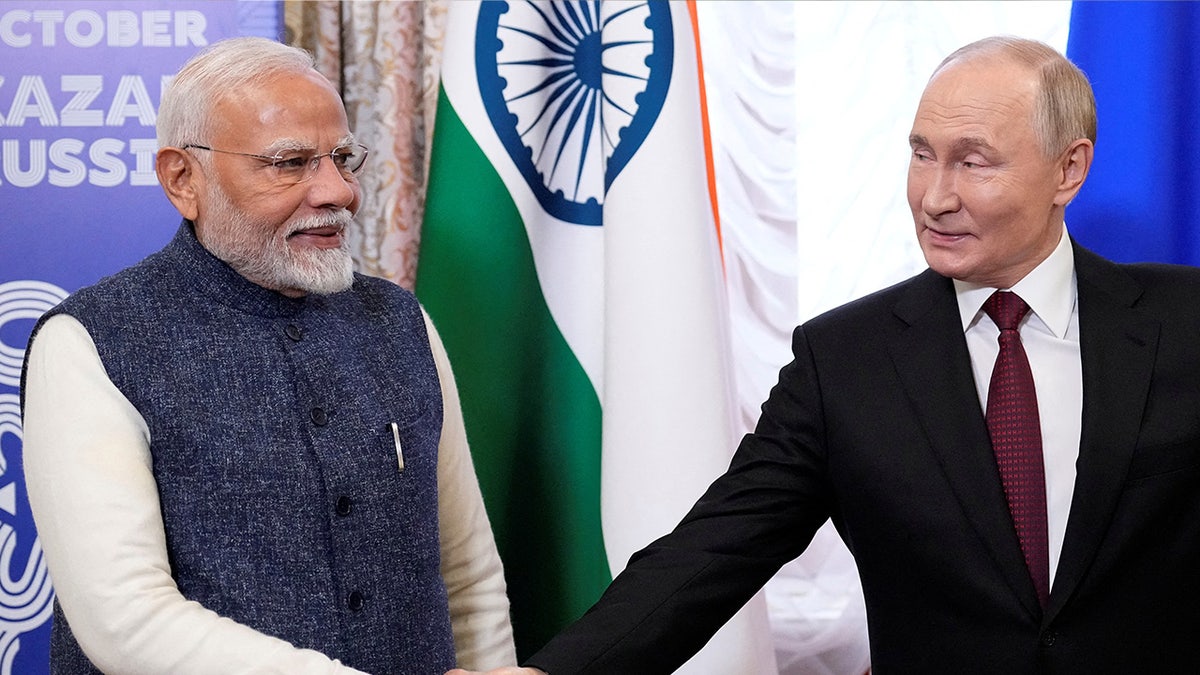
The push for a federal voter identification mandate in the United States has moved from the fringes of political discourse to the center of executive policy. Recently, United States Ambassador to India Sergio Gor signaled official support for adopting an Indian-style electoral model in America, arguing that the mechanics used to process 646 million voters abroad should serve as a blueprint for domestic reform. At the core of this movement is the Safeguard American Voter Eligibility (SAVE) America Act, legislation designed to require documentary proof of citizenship for voter registration and enforce strict photo identification at the polling station.
Supporters argue that the current American reliance on self-attestation for citizenship creates a vulnerability that foreign electoral systems have long ago closed. By contrasting the massive scale and high-security procedures of Indian elections—where biometric-linked identification is the standard—with the decentralized, state-led American approach, the current administration suggests that modernization is overdue. The logic is straightforward: if one of the world's most populous democracies can authenticate its electorate at such a scale, the United States should be capable of achieving a similar baseline of security.
However, the transition to a uniform, national standard is not merely a technical adjustment. It encounters the unique structural reality of the American electoral system. Unlike nations with a centralized, mandatory identity database, the United States lacks a single federal document that every citizen is legally required to carry. A mandate to show a specific type of photo identification effectively forces a reliance on state-issued driver’s licenses or passports, both of which require resources, time, and documentation to obtain.
Data suggests that millions of voting-age citizens currently lack the specific documentation required by proposals like the SAVE Act. Critics emphasize that a significant portion of the electorate—often elderly, low-income, or rural residents—does not possess a driver's license or a passport. For these individuals, a new federal requirement functions as a significant hurdle rather than a simple administrative update. When the cost of obtaining the necessary paperwork exceeds the ease of participation, the result is often a measurable decline in voter turnout among specific demographics.
The friction between security and accessibility defines the true scope of this debate. Proponents of the legislation maintain that the integrity of the ballot box is the highest priority, asserting that the potential for ineligible individuals to participate threatens public confidence in election outcomes. They view the current system as dangerously porous, arguing that modern democratic institutions must possess the ability to verify identity with total certainty.
Conversely, those skeptical of federal mandates point to the rarity of substantiated cases of non-citizen voting. They argue that the focus should be on enhancing existing local safeguards rather than imposing a blanket requirement that risks disenfranchising millions. The legal and constitutional tension is also significant; federalizing what has historically been a state-controlled administrative process would likely spark prolonged litigation regarding the limits of congressional authority over state elections.
If this policy were to become law, states would be forced to reconcile their internal bureaucratic procedures with a new federal standard. The transition would require building infrastructure to verify citizenship status against federal databases in real-time, a massive undertaking that would test the capacity of state election boards. It is a change that would move the country away from the traditional, localized model of American governance and toward a more standardized, centralized administration.
The debate remains stalled between these two irreconcilable visions of election management. One side sees an essential upgrade to protect the sanctity of the vote, while the other sees a restrictive barrier that fundamentally alters the character of the electorate. The outcome will depend on whether policymakers can develop a mechanism that satisfies the demand for verifiable security without creating an insurmountable barrier to participation.
Trump Wants India-Style Voter ID In U.S. | U.S. Ambassador Sergio Gor Speaks
This video provides direct context for U.S. Ambassador Sergio Gor’s recent remarks, which ignited the current debate by comparing American electoral procedures to those used in India.