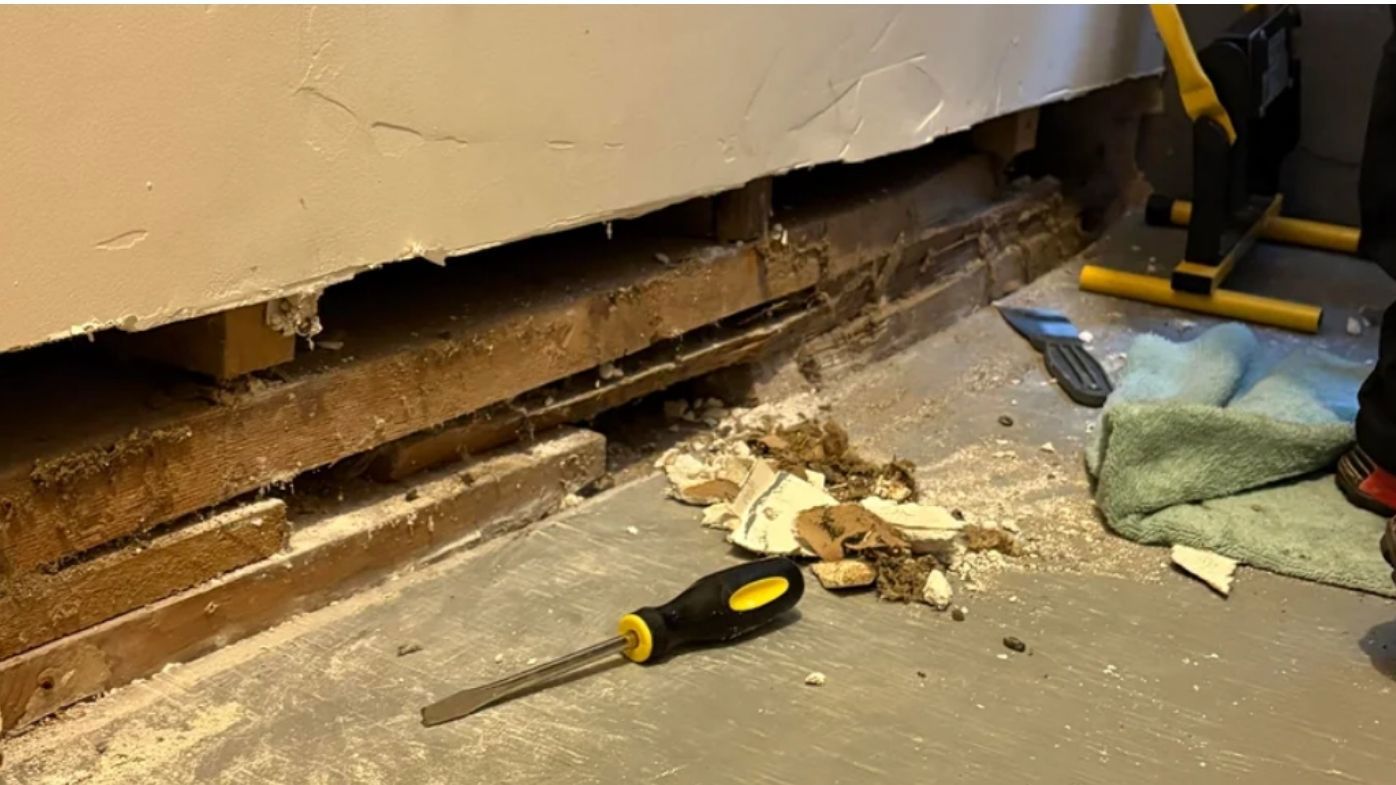
The scent usually starts as a faint, metallic tang. Within weeks, it matures into a heavy, sulfurous rot that clings to clothing and defies even the most aggressive industrial air purifiers. Homeowners across the country are tearing out drywall and scrubbing concrete floors in a desperate bid to find a "dead mouse" that doesn't exist. They are fighting a ghost. The actual culprit is rarely a plumbing leak or a rodent carcass. Instead, the stench is the byproduct of a complex chemical failure involving moisture, alkaline concrete, and modern building materials that were never meant to mingle.
When a basement begins to smell like a chemistry lab or a swamp, the standard response is to check for mold. This is a logical first step, but it often leads to a dead end. Standard mold remediation frequently fails to stop the odor because the smell isn't always biological. We are seeing a massive uptick in alkaline hydrolysis, a process where the high pH of concrete reacts with the adhesives, primers, and vapor barriers used in finished basements. This reaction creates a "sour" off-gassing that can permeate the entire structure of a home. Don't forget to check out our earlier post on this related article.
The Concrete Catalyst
To understand why a basement reeks, you have to understand the slab. Concrete is not a static material. It is a porous, breathing sponge that remains chemically active for decades. Most modern basements are built with a "vapor barrier" underneath the slab, but in older homes—or poorly executed new builds—moisture migrates upward through the floor via capillary action.
As this moisture rises, it carries dissolved salts and minerals to the surface, creating an incredibly high pH environment. When a contractor installs "peel-and-stick" flooring, low-VOC adhesives, or certain types of synthetic wall insulation directly against that concrete, they are effectively building a giant petri dish for chemical breakdown. The moisture hits the adhesive, the high pH of the concrete triggers a breakdown of the polymers, and the result is a persistent, foul-smelling gas. If you want more about the background here, Glamour provides an excellent summary.
This isn't just a theory. Forensic building inspectors have identified that many "mystery smells" are actually alcohol-based off-gassing from failing floor glues. Because the basement is the lowest point in the home, these gases stay trapped, concentrating until they become unbearable.
The Drywall Trap and the Ghost of Chinese Drywall
In the mid-2000s, the "Chinese Drywall" scandal taught the industry that sulfur-contaminated gypsum could corrode copper wiring and cause respiratory issues. While that specific crisis was largely addressed through litigation and remediation, a secondary problem has emerged. Low-grade gypsum boards, often sourced during supply chain crunches, can react with high humidity levels to produce a similar, albeit less toxic, sulfurous odor.
The problem is exacerbated by the way we finish basements today. We create "tight" envelopes. We use fiberglass batts and plastic vapor barriers that trap moisture against the exterior foundation wall. This creates a stagnant microclimate. If the temperature of the wall drops below the dew point, condensation forms behind the insulation.
This water doesn't just sit there. It interacts with the paper facing on the drywall. Even if visible mold doesn't grow, the paper begins to ferment in the dark, damp space. This produces a "musty" smell that feels like it’s coming from inside the walls because, quite literally, it is.
Why Air Scubbers Fail
Most homeowners spend thousands on high-end HEPA filters and ozone machines. These are temporary bandages. An air scrubber can remove particles, but it cannot stop a chemical reaction occurring in the wall cavity. If the source of the odor is a pH-driven breakdown of a floor adhesive or the fermentation of damp drywall paper, the smell will return the moment the machine is turned off.
The Myth of the French Drain Fix
When a basement smells, the immediate sales pitch from waterproofing companies is a perimeter drain and a sump pump. This is often an expensive distraction. While keeping liquid water out of the basement is vital, these systems do very little to address water vapor.
Vapor can pass through solid concrete. If your basement is "dry" to the touch but smells like a locker room, you have a vapor problem, not a drainage problem. Installing a $10,000 French drain won't stop the moisture from moving through the pores of the concrete and reacting with your carpet padding or your baseboards.
The Role of Efflorescence
Look at the base of your basement walls. If you see a white, powdery substance, that is efflorescence. These are salt deposits left behind when water evaporates. While the powder itself is odorless, its presence is a smoking gun. It proves that moisture is moving through the wall. If that moisture is moving through, it is also carrying the alkalinity of the concrete to whatever finish materials you have installed. This is the primary driver of the "chemical rot" scent that baffles homeowners.
Identifying the Source Without Tearing Down Walls
Before you hire a demolition crew, you need to isolate the smell. This requires a systematic approach that most general contractors ignore.
- The Foil Test: Tape a 12-inch square of aluminum foil to the concrete floor, sealing all four edges with waterproof tape. Leave it for 48 hours. If moisture appears on the top of the foil, your dehumidifier isn't keeping up. If it appears on the bottom, you have moisture migrating through the slab.
- The Sniff Test: Remove a single outlet cover on an exterior-facing wall. Put your nose to the opening. If the smell is significantly stronger inside the wall cavity, the issue is likely the insulation or the back of the drywall reacting to condensation.
- The Carpet Pull: If you have wall-to-wall carpeting, pull back a corner. If the tack strip (the wooden nail strip) is dark or black, it is rotting. The interaction between the wood, the metal nails, and the damp concrete creates a specific, pungent odor that many mistake for sewage.
Breaking the Cycle of Failed Remediation
If the odor is confirmed to be a chemical reaction or vapor-driven moisture, the solution is rarely "more ventilation." In fact, bringing in humid outside air during the summer can make the problem worse by providing more moisture for the reactions.
You must break the bond between the concrete and the organic materials. This means using dimpled polyethylene membranes on the floor instead of glues. These membranes create an air gap that allows the concrete to breathe and prevents the pH-rich moisture from touching your flooring.
For walls, the industry is moving away from fiberglass and toward closed-cell spray foam or rigid foam boards. These materials act as their own vapor barrier and do not provide a food source for microbes or a medium for chemical breakdown. They are "inert." An inert basement is an odorless basement.
The Cost of Silence
Homeowners often hesitate to investigate these smells because they fear the "mold" label will tank their property value. However, the modern real estate market is savvy. A lingering odor is a massive red flag during a home inspection. Dealing with the structural chemistry now is significantly cheaper than losing a sale later.
The hard truth is that we have spent the last thirty years finishing basements using materials designed for above-grade rooms. A basement is a subterranean environment with unique pressure and chemical profiles. When you treat it like a bedroom on the second floor, the house eventually fights back. The smell isn't a mystery; it's a warning that your home's chemistry is out of balance.
Check your humidity levels today. If your basement is consistently above 50% relative humidity, you aren't just living with a smell—you are actively fueling a chemical reaction that is degrading your home's value from the inside out. Stop buying candles and start measuring your slab's moisture output.