Wait.
That single word governs almost every waking hour on the roads winding through the occupied West Bank, long before a single military jeep rolls into view or a headline flashes across a screen halfway around the world. You feel it in the vibration of an idling engine at a closed yellow gate. You hear it in the sudden, unnatural quiet that falls over a crowded market when a rumor ripples through the stalls faster than cell service can carry it.
When a deadly attack shatters an already fragile morning, the news reports usually follow a familiar, clinical script. They tally the casualties in stark, precise numbers. They announce that the Israeli military has launched a sweeping crackdown, sealing off towns, deploying additional battalions, and conducting overnight raids. On paper, it reads like a chessboard shifting pieces in response to a sudden move. On the ground, away from the press briefings and the sterile maps, it is something else entirely. It is the sudden disappearance of tomorrow’s plans.
Consider a hypothetical morning in a hillside village just outside Nablus or Ramallah—let’s call the man waiting by his front door Tariq, a composite of dozens of teachers, mechanics, and shopkeepers whose lives bend around security alerts. At 6:00 AM, Tariq’s primary concern is whether the battered clutch on his sedan will survive the steep incline toward the main junction, and whether he will make it to his carpentry workshop before the morning deliveries arrive. By 6:15 AM, his phone buzzes with a message in a local group chat. There has been a shooting near a settlement junction ten miles south.
Tariq does not need a radio broadcast to know what happens next. He walks back inside, sets his keys on the kitchen table, and tells his daughter not to put on her school uniform.
To understand why an entire region freezes within minutes of a violent incident, you have to understand the architecture of control that underpins daily life in the West Bank. Think of the territory not as a single, continuous piece of land, but as an archipelago of disconnected islands—Palestinian cities and villages separated by a web of bypass roads, military checkpoints, and expanding settlements. Under normal conditions, moving from one island to another requires navigating a delicate, invisible clockwork of permits and open gates. When an attack occurs, that clockwork is violently jammed.
Security forces immediately drop what are known as "flying checkpoints"—pop-up roadblocks materialized out of armored vehicles and spike strips—across key arteries. Concrete blocks and mounds of earth are bulldozed across secondary village exits. Within an hour, a fifteen-minute commute between neighboring towns stretches into a four-hour detour over rocky agricultural tracks, or becomes entirely impossible.
The Anatomy of a Crackdown
What the international press compresses into the word "crackdown" is, in practice, a multi-layered military operation designed to achieve two simultaneous goals: hunting down the perpetrators and projecting overwhelming deterrence to prevent copycat attacks.
In the immediate aftermath of a fatal attack, intelligence agencies—primarily Israel’s Shin Bet alongside the military’s regional brigades—begin tracing digital footprints, reviewing surveillance footage from the dense network of cameras monitoring major intersections, and mapping the social circles of suspects. While that quiet, digital hunt unfolds in dimly lit command rooms, the visible response takes over the streets.
Reinforcements pour into the territory. Hundreds of soldiers, often pulled from training bases or quiet sectors, are deployed to guard junctions, patrol the perimeters of Israeli settlements, and encircle the hometown of the suspected attackers. For Israeli families living in those settlements, the surge in troops brings a complicated mix of relief and dread. Take a hypothetical mother in a community near Ariel—we’ll call her Maya. After news of a deadly attack breaks, she checks the locks on her sliding glass doors twice before noon. The sight of armed soldiers stationed at the bus stop where her teenagers wait offers a thin layer of reassurance, yet it is also a stark reminder that the ordinary act of driving to the grocery store or waiting for a bus carries a lethal, unpredictable risk. Both Maya and Tariq are living inside the same pressure cooker, experiencing two entirely different versions of fear.
Then comes the night.
If the daytime crackdown is defined by paralysis, the night belongs to the raids. Around 2:00 AM, when the stray dogs stop barking and the chill settles into the stone alleyways of cities like Jenin, Tulkarm, or Hebron, the low, unmistakable rumble of armored troop carriers echoes off the walls.
Anyone who has lived through a night raid remembers the sensory details long after the political arguments fade. It is the blinding white glare of tactical flashlights sweeping across bedroom windows. It is the metallic bang of stun grenades deployed to disorient anyone approaching the street. It is the sharp, amplified voice over a loudspeaker demanding that residents exit their homes with their hands raised, followed by the heavy thud of boots on concrete stairs.
During these operations, soldiers search homes, confiscate phones and cash, interrogate family members, and arrest dozens of individuals—some directly suspected of involvement in the attack, others detained on broader intelligence assessments or affiliation with militant factions. According to human rights monitors and military disclosures alike, mass arrests in the wake of major attacks routinely sweep up scores of people in a single week, swelling administrative detention numbers—a controversial legal mechanism allowing suspects to be held without formal charge or trial based on classified evidence.
The Invisible Economy of Closure
The headlines rarely linger long enough to measure what happens three days after the sirens fade, when the television crews pack up their satellite dishes and move on to the next crisis. Yet the deepest wounds of a sweeping security crackdown are often economic and psychological, unfolding in slow motion.
Consider the math of a closed road. In the West Bank, tens of thousands of families rely on daily commerce between cities, agricultural transport, and service jobs. When the main arteries are sealed for days or weeks at a time, milk spoils in the back of stalled delivery trucks. Construction projects grind to a halt because cement mixers cannot clear the checkpoints. Patients scheduled for dialysis or chemotherapy in East Jerusalem hospitals—already navigating a labyrinth of medical permits—find their ambulances turned back at sealed crossings, forced to wait while soldiers verify documents line by line.
Even the architecture of homes bears the weight of the response. For decades, Israeli authorities have practiced punitive home demolitions—destroying the family residences of Palestinians accused of carrying out deadly attacks. Security officials argue that the policy serves as a vital deterrent, forcing potential attackers to weigh the devastating cost to their own relatives before picking up a weapon. Critics, including international legal scholars and human rights groups, condemn the practice as collective punishment, pointing out that parents, siblings, and young children are rendered homeless for crimes they did not commit.
Imagine watching an excavator tear into the walls of a house your grandfather built stone by stone, knowing that by sundown your entire family’s history will be reduced to twisted rebar and dust. That image does not fade when the military jeeps pull out. It embeds itself into the collective memory of the entire neighborhood, hardening grief into something far more volatile.
Why the Cycle Keeps Spinning
It is tempting, from a distance, to look for a clean cause-and-effect timeline—to argue over who struck first, which provocation triggered which retaliation, and where the moral ledger tips. History in this sliver of land refuses to sit neatly inside a single news cycle.
Over the past several years, the violence in the West Bank has steadily escalated, driven by a convergence of pressures that leave almost no room for political oxygen. The expansion of settlements has carved deeper into territory Palestinians envision for a future state. The Palestinian Authority, tasked under the Oslo Accords of the 1990s with maintaining civil order and coordinating security with Israel, has seen its legitimacy erode among its own public, viewed by many young Palestinians as powerless to protect them yet efficient at policing them.
Into that vacuum have stepped decentralized, armed groups of young men—many born after the Second Intifada, raised on smartphones, economic stagnation, and funerals. Unlike the hierarchical militant organizations of the past, these localized cells operate with loose coordination, fueled by desperation and the easy availability of smuggled firearms.
Every deadly attack against Israelis triggers an uncompromising military response—because no government can afford to appear passive while its citizens are killed on highways and in cafes. Yet every sweeping crackdown, every closed checkpoint, every night raid that humiliates a father in front of his children, deepens the exact alienation that recruits the next generation of gunmen.
Security analysts often describe this dynamic as "mowing the grass"—a grim metaphor acknowledging that military operations can temporarily suppress threats and dismantle immediate networks, even if they cannot uproot the underlying political despair. You can seal every junction. You can arrest a hundred suspects before dawn. You can station soldiers on every hilltop overlooking every valley. For a week, or a month, the highways grow quiet again.
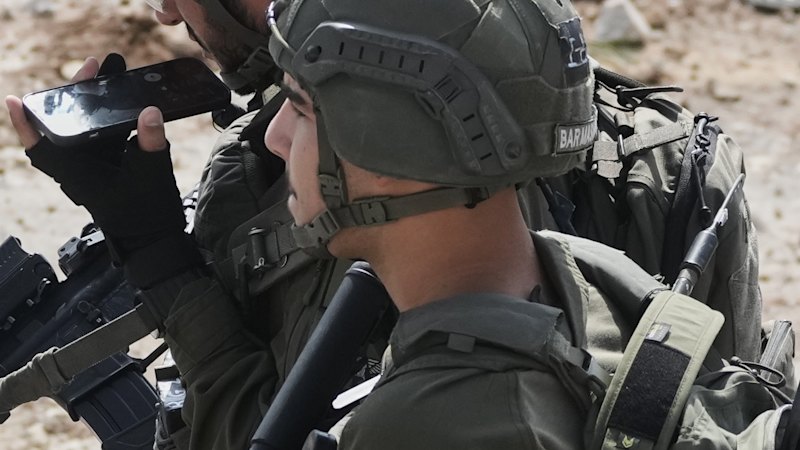
I will admit something that analysts rarely say out loud: watching this cycle repeat year after year leaves a heavy, disorienting fatigue. There is no neat policy fix hiding at the bottom of a briefing paper, no diplomatic phrase clever enough to dissolve decades of mutual trauma overnight. When you stand at a checkpoint watching an exhausted teenager in an olive-green uniform—barely nineteen years old, his rifle slung tight across his chest, his eyes scanning every passing face for danger—and an exhausted father in a dusty sedan trying to bring bread home to his kids, you realize that both of them are trapped inside a script written long before they were born.
What Remains When the Jeeps Leave
Eventually, the immediate alert level drops. The concrete blocks are pushed to the shoulder of the road by a yellow bulldozer. The flying checkpoints pack up and vanish into the afternoon haze. Traffic begins to trickle back along the winding asphalt between Nablus, Ramallah, and Hebron, horns honking as drivers weave past craters left by heavy armored vehicles.
In his village, Tariq finally turns the key in his ignition. The battered clutch catches, groaning slightly as he pulls onto the main road toward his workshop. Three days of lost wages cannot be recovered, and the wood delivery he missed has already gone to another carpenter closer to the city center. He drives with one eye on the asphalt and the other on the hilltop above, scanning for the glint of sunlight off a parked jeep.
By afternoon, the news cycle has moved on to another continent, another crisis, another breaking alert. The West Bank fades back into silence—not the silence of peace, but the tense, shallow breathing of a place holding its breath until the next siren sounds.