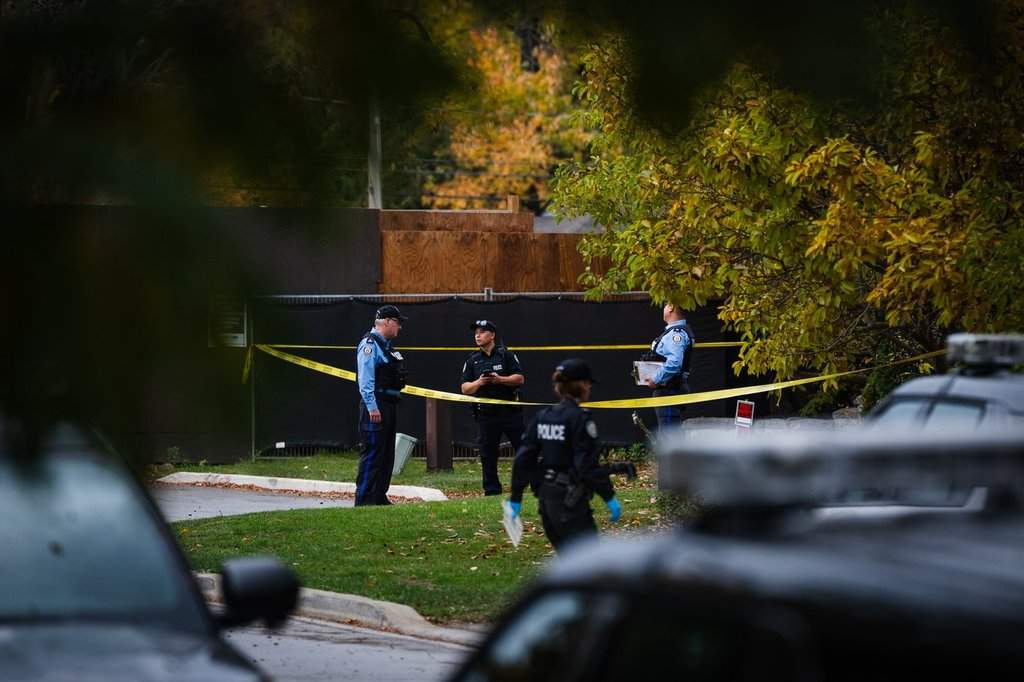
Seventeen people dead in two separate attacks. The global press runs the same tired script every single time. They count the bodies, quote a shocked police spokesperson, mention the sheer volume of illegal firearms floating around the country, and move on to the next tragedy.
That coverage is lazy. Worse, it actively obscures what is actually happening on the ground in South Africa. You might also find this connected article useful: Chris Van Hollen Versus Chuck Schumer and the Fight Over Senate Democratic Leadership.
When international outlets frame incidents like the Lusikisiki massacre or tavern shootings in Soweto purely through the lens of "gun violence" or "random terror," they import a Western framework onto a deeply localized, structural reality. The readers are left thinking South Africa suffers from the same erratic, lone-wolf shooter pathology seen in American shopping malls and schools.
It does not. Treating these events as isolated spikes in gun crime is like blaming a fever for pneumonia. You are staring at the symptom while the infection rots the lungs. As extensively documented in recent articles by Al Jazeera, the results are notable.
The Western Media Blind Spot
The standard wire report follows a predictable formula. Number of victims. Location. Type of weapon—usually high-powered rifles or unlicensed handguns. A vague gesture toward South Africa's high murder rate.
This approach satisfies a basic journalistic checklist, yet it fails to answer the only question that matters: why do heavily armed men walk into a rural homestead or a township tavern and execute over a dozen people in minutes?
In the United States, mass shootings are overwhelmingly driven by personal grievance, ideological extremism, or acute psychological collapse. The perpetrators rarely expect to survive. They want infamy.
In South Africa, mass shootings are almost always functional. They are business transactions, territorial disputes, or retaliatory strikes executed by organized syndicates. The shooters wear masks. They arrive in stolen vehicles with cloned plates. They leave no manifestos, and they fully intend to spend the money they were paid for the hit.
When journalists lump these two phenomena together under the banner of "mass shootings," they erase the economic and criminal architecture driving the bloodshed. You cannot solve a contract-killing economy with mental health awareness campaigns, and you cannot stop syndicate warfare by simply passing stricter gun ownership laws for law-abiding citizens.
The Illusion of the Gun Control Fix
Every time the body count climbs past ten, the predictable chorus demands tighter firearm legislation. South Africa already has the Firearms Control Act of 2000, one of the strictest gun-control frameworks on the continent. Applicants undergo background checks, competency training, safe inspections, and lengthy waiting periods.
Yet the killings escalate. Why? Because the weapons used in mass casualties are rarely coming from licensed civilian gun safes anymore.
I have spent years tracking illicit arms flows across Southern Africa, and the pipeline is staring everyone in the face. The guns tearing apart communities in the Eastern Cape and Gauteng are leaking out of state armories, crossing porous borders from conflict zones, and circulating through corrupt police evidence lockers.
In 2016, Colonel Chris Prinsloo, a former South African Police Service officer, was sentenced after admitting to stealing over 2,000 firearms destined for destruction and selling them directly to Cape Flats gangsters. Those single-batch leaks armed criminal networks for a decade. Ballistic testing later linked those exact police-issued weapons to over a thousand murders, including dozens of children.
When the state itself acts as the primary quartermaster for organized crime, passing another law restricting civilian rifle permits is pure political theater. It gives politicians a talking point while leaving the illicit supply chain completely untouched.
What People Get Wrong About South African Violence
If you look at search trends whenever a major shooting hits the wire, people ask the same surface-level questions. They want to know if the country is safe to visit, which cities are the worst, and why the police do not stop it. Those questions assume a functioning baseline that simply does not exist in the areas where these massacres occur.
Is South Africa experiencing an epidemic of random mass shooters?
No. Randomness implies a lack of targeted intent. In almost every multi-victim shooting across KwaZulu-Natal, the Eastern Cape, and Gauteng, the attackers know exactly who they are looking for—or they are sending a deliberate message to a specific community.
In rural areas like Lusikisiki, mass killings are frequently tied to extortion rackets, stock theft syndicates, or bloody disputes over traditional leadership and land rights. In urban townships, tavern shootings often stem from turf wars between rival illegal mining gangs (known locally as zama zamas), minibus taxi associations fighting over lucrative routes, or extortion mafias demanding protection fees from local business owners.
Bystanders die not because the gunmen are shooting blindly into a crowd for thrills, but because organized syndicates operate with zero regard for collateral damage. If their target is inside a crowded room, they spray the entire room to guarantee the job is done.
Why don't the police arrest the perpetrators immediately?
Because crime intelligence in South Africa was systematically hollowed out over more than a decade of state capture and political interference.
Policing relies on informants, forensic turnaround, and undercover infiltration. When internal political factions weaponized the Crime Intelligence division to fight succession battles within the ruling party, actual street-level intelligence networks collapsed. Detectives were left blind.
Combine that intelligence vacuum with massive forensic backlogs at the National Forensic Science Laboratories—where DNA and ballistic results can sit unprocessed for years—and you get an environment of near-total impunity. Criminals know the odds of conviction are negligible. When the risk of getting caught drops below ten percent, violence becomes the cheapest, fastest way to settle any commercial dispute.
Would deploying the military stop the massacres?
Governments love deploying the South African National Defence Force (SANDF) into gang-ridden areas because armored vehicles look decisive on the evening news. It is a costly failure every time.
Soldiers are trained to take and hold ground against an identifiable enemy combatant. They are not trained to gather admissible evidence, interview terrified witnesses, or dismantle money-laundering networks. When the military rolls into a township, the shooters simply hide their rifles, wait three weeks for the deployment budget to run out, and resume operations the exact day the troop carriers pull out.
The Rise of the Construction and Extortion Mafias
To understand why mass shootings have become more brazen, you have to follow the money. Over the last seven years, South Africa has witnessed the industrialization of extortion.
What began as local thugs demanding cash from foreign-owned spaza shops has mutated into sophisticated criminal enterprises. Today, armed syndicates routinely shut down multi-million-rand municipal infrastructure projects, demanding a 30 percent "business forum" stake before a single brick is laid.
This extortion economy has bled into rural villages and informal settlements. Families receiving government social grants, small-scale farmers, and local tavern owners are all taxed by armed men. When a community refuses to pay, or when a local leader reports the extortionists to the authorities, the syndicate stages a mass execution.
The goal is psychological domination. Killing one person sends a warning to a family. Killing seventeen people in two coordinated strikes paralyzes an entire district. Witnesses vanish. Complainants withdraw their statements. The syndicate secures its territory without ever having to fire another shot.
The Structural Fix Nobody Wants to Fund
If we stop treating these atrocities as freak gun-violence anomalies and recognize them as the visible edge of an entrenched extortion and syndicate economy, the solution shifts entirely. It becomes less about dramatic street patrols and more about boring, relentless institutional surgery.
First, audit and secure state armories with independent oversight. Every weapon lost by the police or military must trigger an automatic, independent criminal investigation—not an internal disciplinary hearing. Until the leak from state stockpiles is welded shut, street-level gun confiscations are like mopping the floor while the tap is wide open.
Second, rebuild crime intelligence from the ground up. You cannot dismantle a taxi-war syndicate or a rural extortion ring with uniformed beat cops. It requires protected, well-funded informant networks, wiretaps, and specialized prosecutorial units that work alongside investigators from day one. The model exists: South Africa's former Scorpions unit proved that prosecution-led investigations could bring down entrenched syndicates before political interference dismantled the agency.
Third, follow the illicit cash. Syndicate bosses do not keep millions of rand under their mattresses forever. They buy luxury vehicles, real estate, and legitimate front businesses. Aggressive asset forfeiture—seizing the houses, trucks, and bank accounts of syndicate financiers before a protracted criminal trial even concludes—hurts criminal networks far more than arresting low-level trigger-pullers who can be replaced within twenty-four hours.
The Uncomfortable Truth About This Approach
Attacking the financial and intelligence roots of these massacres has a massive political downside: it takes years, and it produces terrible optics in the short term.
Politicians hate intelligence-led policing because you cannot hold a press conference to show off a three-year financial audit. Voters terrified by weekend slaughter want immediate, visible force. They want roadblocks, mass raids, and tough rhetoric.
Furthermore, going after the money trail inevitably leads investigators straight into the offices of connected local officials, corrupt procurement officers, and politically sheltered business figures. That is why every serious attempt to rebuild independent investigative capacity in South Africa meets fierce resistance from within the very institutions meant to uphold the law.
Consider a scenario where authorities arrest ten young men for a tavern massacre next week, parading them in shackles before the cameras, while the financier who paid them fifty thousand rand and supplied the rifles remains untouched. Within six months, another crew is hired, another tavern is hit, and the wire services copy-paste the exact same headline with a new death toll.
Stop counting the shell casings and start tracking the bank accounts, because until the people signing the checks for these hits end up in prison cells, the body count is only going to climb.