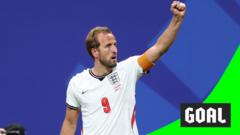
The media is celebrating a bailout.
When Harry Kane nodded in that late equalising goal against the Democratic Republic of Congo, the press box collectively exhaled. The headlines tomorrow will talk about grit, resilience, and the indomitable spirit of English football. They will tell you that a draw rescued from the jaws of a historic upset is a sign of character.
They are lying to you.
That goal was a catastrophe disguised as a triumph. It did not save England; it merely extended the life support of a broken tactical system that deserves to be buried. By rescuing a point against a team ranked decades behind them in footballing infrastructure, Kane did not show leadership. He provided a golden shield for a coaching staff completely out of ideas.
The lazy consensus says a point is always better than a loss. The reality of elite international tournament football says otherwise. Sometimes, a clean, sharp, humiliating defeat is exactly what a bloated giant needs to wake up. Instead, England gets more of the same.
The Paper Tiger of International Football
Let us stop pretending that scraping a draw against DR Congo is an acceptable baseline. The gap in resources, wages, and elite European experience between these two squads is an ocean. Yet, for eighty-five minutes, England looked entirely lost.
The tactical setup was rigid. The passing was slow, horizontal, and predictable. When teams sit in a low block, the antidote is rapid ball circulation, vertical runs from midfield, and dynamic overloads on the flanks. England offered none of this. They played like a team trapped in wet cement, praying for an individual moment of magic to bail them out.
And that is the fundamental flaw of the current setup.
When you possess world-class talent, individual brilliance will occasionally spark. A perfect cross, a momentary lapse in the opposition's marking, and boom—Kane scores a header. The stadium erupts. The pundits clap.
But it masks the structural rot. If England had lost that match 1-0, the autopsy would have been brutal, necessary, and immediate. The systemic flaws would be impossible to ignore. The rigid adherence to a double-pivot midfield that refuses to progress the ball would have been dismantled on the back pages. Instead, the equaliser papers over the cracks. It allows the management to point to the scoreboard and talk about "mentality" rather than addressing why the tactical engine is misfiring.
The Myth of the Talismanic Savior
Every major football nation falls into the trap of the talisman. Argentina spent a decade forcing every possession through Lionel Messi, often to the detriment of their collective shape, until they finally built a functional system around him in 2022. England is currently making the exact same mistake with Harry Kane.
Kane is an extraordinary striker. His goal-scoring record is undeniable. But watching him drop into the center-circle to pick up the ball because the midfield cannot progress it is painful. It is a symptom of tactical failure.
When your primary number nine is forced to act as the chief playmaker from deep, you lose your focal point in the box. The opposition center-backs can push higher, compressing the space for England’s wingers. The entire attacking structure collapses inward.
Look at the data from the match. Before the goal, Kane had fewer touches in the penalty area than DR Congo’s central defenders. He was isolated, starved of service, and disconnected from his creative outlets. The equalising goal was an anomaly—a single sequence where the delivery finally matched the run.
To build an entire tournament strategy around the hope that your striker can convert one half-chance out of nothing is tactical bankruptcy. It is unsustainable at the highest level. When England faces a tier-one nation in the knockout rounds, these structural deficiencies will be punished ruthlessly. A top-tier defense will not give Kane that free header in the 89th minute.
The Opportunity Cost of Safety
By constantly relying on the established guard, England is actively stifling its most dynamic assets. The bench is loaded with young, fearless attackers who thrive on direct play, high-intensity pressing, and verticality. Players who do not carry the psychological baggage of previous tournament failures.
But they sit on the pine. Why? Because the tactical philosophy prioritizes risk mitigation over risk management.
- Risk Mitigation: Playing a safety-first lineup that controls possession in non-threatening areas, hoping to win 1-0 or draw.
- Risk Management: Deploying an aggressive, high-pressing system that accepts defensive vulnerability in exchange for overwhelming offensive output.
The current staff chooses mitigation every single time. A loss to DR Congo would have forced a radical rethink. It would have forced the introduction of the dynamic, high-tempo players who can actually break a low block with speed rather than possession percentage. The equaliser ensures the safety-first line-up remains untouchable for the next match.
Dismantling the Punditry
Go flip on any post-match analysis show right now. You will hear the same tired questions.
"How does England find the balance in midfield?"
"Should the manager change the formation for the next game?"
These questions are fundamentally flawed because they assume the current framework is worth saving. You cannot balance a midfield that is instructed to play with a handbrake on. You cannot fix a formation when the underlying philosophy is rooted in fear.
The real question nobody wants to ask is this: Has the national team outgrown its leadership?
When you look at the tactical innovations happening in club football—the inverted full-backs, the fluid box midfields, the aggressive counter-pressing structures—international football often looks like a relic from fifteen years ago. England has the players to execute modern, high-intensity football. Instead, they are being asked to play a sluggish, conservative style that belongs in a bygone era.
The Danger of the Morale Boost
We love a comeback story. Sports psychology tells us that rescuing a game late creates a powerful bond within a squad. It builds a narrative of invincibility.
But there is a dark side to that psychological boost. It breeds complacency. It fosters a false sense of security that everything is fine because "we find a way to win."
No, you didn't find a way to win. You found a way to tie against a team you should be dominating from the opening whistle.
True elite teams do not rely on late-game salvation. They suffocate their opponents. They score early, dictate the tempo, and rotate their squad to save energy for the deeper rounds. England spent ninety minutes exerting maximum emotional and physical energy just to achieve parity. That is not a victory. That is an exhausting, inefficient expenditure of resources that will bite them later in the tournament.
What Real Accountability Looks Like
If this team wants to actually win something rather than just coming close and winning UEFA fair play awards, the internal review of this match needs to be brutal.
The coaching staff needs to look at the tape and treat that equalising goal as if it never happened. They need to analyze the eighty-eight minutes of toothless, uninspired possession that preceded it. They need to ask why the ball moves so slowly from the backline to the final third. They need to ask why their world-class wingers are receiving the ball with three defenders already shifted over to cover them.
If the takeaway from this match is that England showed "great character" to fight back, then the tournament is already over. The ceiling for this group will be another respectable exit in the quarter-finals or semi-finals, followed by the usual national mourning and navel-gazing.
Stop celebrating the band-aid. Demand a cure for the disease.
Fix the midfield progression. Unleash the young attackers who actually want to run forward rather than sideways. Tell Harry Kane to stay in the box and do what he does best, rather than trying to be the entire team's engine room.
The equaliser was a narcotic. It numbed the pain of a dreadful performance and put the critics to sleep. Wake up.