Thirty-five years is a long time to hold a ceasefire together without actually solving the conflict underneath it. That's the reality facing the United Nations Mission for the Referendum in Western Sahara, better known as MINURSO, as its mandate expires and the operation moves into a formal liquidation phase.
If you've followed North African geopolitics over the past decade, you know this moment didn't come out of nowhere. Still, watching a peacekeeping operation established in 1991 pack up its vehicles, close its team sites, and wind down administrative operations marks a massive shift in how the international community handles frozen conflicts. When a mandate expires without renewal by the UN Security Council, the UN doesn't just turn off the lights and walk away overnight. Liquidation is a strict, heavily audited legal and logistical shutdown.
Let's break down what liquidation actually means on the ground, why MINURSO reached this point, and what happens to the buffer zone once the blue helmets leave.
What UN Peacekeeping Liquidation Actually Looks Like
Most people hear "liquidation" and think of a going-out-of-business sale. In UN peacekeeping operations, it's a rigid administrative phase governed by the Department of Operational Support and the Office of Programme Planning, Finance and Budget.
Once a Security Council mandate lapses and isn't extended, the mission legally loses its authority to conduct operational patrols, monitor troop movements, or run political mediation on the ground. Every single resource immediately shifts toward closing down the mission safely and accounting for every dollar of member-state money.
Here is how that process plays out in practice.
- Repatriation of personnel. Military observers, formed police units, and international civilian staff have to be rotated out of the mission area on a strict timeline. Local national staff face contract terminations, severance calculations, and transition briefings.
- Asset disposal and environmental cleanup. Peacekeeping missions sit on millions of dollars of equipment—armored vehicles, communications arrays, generators, water purification plants, and prefabricated housing. UN liquidators have to inventory every item, decide what gets shipped to the UN Global Service Centre in Brindisi, Italy, what gets transferred to other active missions, and what gets sold or scrapped locally. They also have to remediate fuel spills and waste sites before handing land back to local authorities.
- Archiving and financial closure. Every operational log, ceasefire violation report, and financial ledger from the mission's lifespan gets boxed, digitized, and sent to UN headquarters in New York. Final audits can take years after the last peacekeeper boards a flight home.
Honestly, closing a mission is almost as complicated as launching one. In the desert terrain of Western Sahara, where logistics depend on long supply lines stretching from Laayoune out to remote team sites east and west of the Moroccan sand wall—known as the Berm—extracting equipment safely requires precision and cooperation from the parties on the ground.
Why MINURSO Hit a Wall After Three Decades
To understand why the UN peacekeeping mission in Western Sahara reached the end of the road, you have to look at the gap between what MINURSO was built to do and what the political reality became.
The Security Council created MINURSO through Resolution 690 in April 1991. Its primary job was right there in the name—organizing a free and fair referendum in which the people of Western Sahara would choose between independence and integration with Morocco. Alongside that political goal, peacekeepers were tasked with monitoring the ceasefire between the Royal Moroccan Army and the Polisario Front, an independence movement backed diplomatically and geographically by neighboring Algeria.
The referendum never happened.
For years, the two sides deadlocked over who should be eligible to vote. Morocco wanted to include settlers who had moved into the territory after Spain withdrew in 1975, while the Polisario Front insisted voter rolls be restricted to the indigenous Sahrawi population counted in the 1974 Spanish census. By the early 2000s, the UN quietly stopped trying to organize the vote.
Instead, MINURSO settled into a holding pattern. It became a monitoring mission without a political endgame.
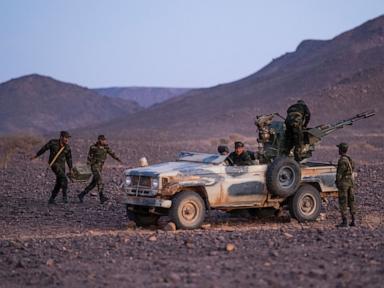
Then came November 2020. Clashes near the Guerguerat border crossing in the southern buffer strip shattered the 29-year ceasefire. The Polisario Front declared the 1991 truce dead and resumed low-intensity armed hostilities along the 2,700-kilometer Berm. Suddenly, UN military observers were stuck trying to verify incidents in an active conflict zone where restrictions on their movement made independent verification nearly impossible.
At the same time, the diplomatic ground shifted underneath the Security Council. Several major powers—including the United States, Spain, and France—moved toward backing Morocco's 2007 Autonomy Plan as the most realistic framework for resolving the dispute. Meanwhile, Algeria and the Polisario Front held firm on the right to self-determination through a referendum.
When the Security Council members holding veto power cannot agree on what a mission is supposed to achieve, renewal resolutions turn into annual diplomatic trench warfare. Once that consensus breaks completely, the mandate expires. And when the mandate expires, liquidation begins.
The Immediate Risks in the Buffer Zone
The biggest misconception about UN peacekeeping is that blue helmets physically stop armies from fighting. MINURSO was never an enforcement mission. Its military observers were unarmed. Their real power came from transparency—being an impartial set of eyes in the desert so neither side could launch a major offensive without the entire world knowing within hours.
Without those observers patrolling the buffer strip, the information vacuum widens immediately.
Think about what happens when rumors replace verified UN reporting. A routine troop rotation looks like an offensive buildup. An unverified drone strike or artillery exchange triggers retaliatory fire before diplomats in New York, Washington, or Algiers even know what happened. Misreading intentions is how low-level skirmishes escalate into full-scale regional crises.
There is also the humanitarian footprint to consider. While agencies like the UN High Commissioner for Refugees (UNHCR) and the World Food Programme (WFP) operate independently of MINURSO—particularly in the Sahrawi refugee camps around Tindouf, Algeria—MINURSO provided critical logistical backbone, medical evacuation support, and demining coordination across the territory.
Western Sahara remains heavily contaminated with landmines and unexploded ordnance left over from the 1975–1991 war and the post-2020 clashes. MINURSO's Mine Action Service worked alongside local teams to mark hazard zones and clear routes. As the mission winds down, handing over those mapping databases and safety responsibilities without losing momentum becomes a life-or-death priority for nomadic herders and civilians living near the Berm.
What Happens to Morocco, the Polisario Front, and Regional Diplomacy
The end of a UN peacekeeping mission doesn't resolve a territorial dispute. It just changes the arena.
For Morocco, which administers roughly 80 percent of Western Sahara and views the territory as its sovereign southern provinces, the departure of MINURSO removes an international monitoring presence it increasingly viewed as an outdated relic of the 1990s. Rabat has poured billions of dollars into infrastructure, ports, and renewable energy projects in cities like Laayoune and Dakhla, betting that economic integration and bilateral diplomatic recognition will settle the question permanently.
For the Polisario Front, losing MINURSO means losing the most visible international symbol that Western Sahara remains a non-self-governing territory awaiting decolonization. With UN observers gone, the movement faces intense pressure to rethink both its military strategy along the Berm and its diplomatic outreach in capitals across Africa, Europe, and Latin America.
And for Algeria, which hosts the Tindouf camps and views Western Sahara as a core national security issue, the collapse of the UN monitoring mechanism deepens distrust with Rabat at a moment when diplomatic relations between the two North African neighbors are already severed.
If you're tracking this region for policy work, journalism, or risk analysis, stop looking at Security Council renewal dates as your primary barometer. Shift your focus to three concrete indicators over the coming months:
- UN Secretariat reporting mechanisms. Watch whether the UN Secretary-General's Personal Envoy maintains an active mediation office outside the mission structure, or if diplomatic engagement stalls entirely.
- Bilateral border security arrangements. Pay close attention to commercial traffic through the Guerguerat corridor linking Morocco to Mauritania, as any disruption there immediately impacts West African trade routes.
- Humanitarian funding shortfalls. Monitor donor pledges to UNHCR and WFP operations in Tindouf, since political fatigue at the Security Council often spills over into reduced humanitarian budgets.
Peacekeeping mandates are meant to buy time for politicians to make hard choices. When thirty-five years of borrowed time runs out, the mechanics of liquidation take over—leaving the region to navigate whatever comes next without a referee on the field.