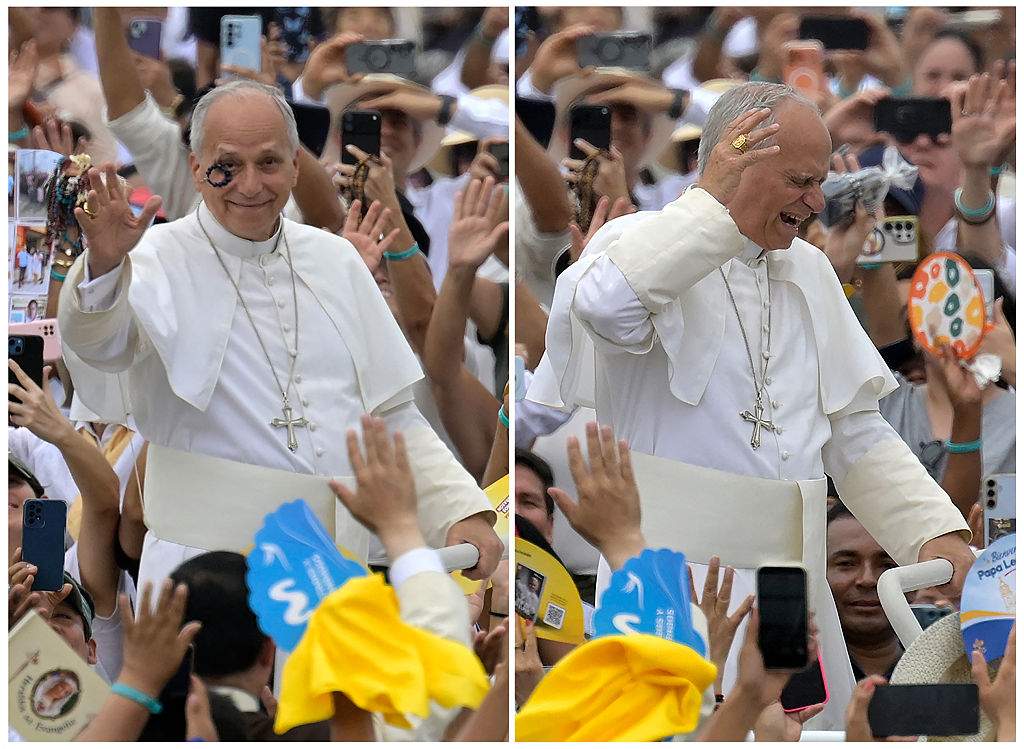
You don't expect a piece of devotional jewelry to turn into a projectile at a public gathering. Yet when a story breaks about Pope Leo forgiving someone who hit him in the eye with a flying rosary, people click immediately. Part of it is sheer surprise. Part of it is curiosity about how a high-profile religious figure reacts when an ordinary moment of devotion goes sideways.
Let's be honest. When a public leader gets struck in the face by something tossed from a crowd, the internet usually treats it like slapstick until someone checks if anyone actually got hurt. Eye injuries aren't funny. Even a small, fast-moving object can scratch a cornea, rattle someone's composure, or trigger immediate security concerns around a public figure. Forgiveness in that kind of moment isn't just a nice talking point—it changes the whole temperature of the room.
I've spent years covering public events, crowd dynamics, and how leaders handle unexpected disruptions when cameras are rolling. What strikes me most about stories like this isn't the novelty of the object. It's the gap between how crowds think they're showing affection and how a split-second throw actually lands.
Why Pope Leo Forgiving a Flying Rosary Hit Matters Beyond the Headline
People love a clean moral takeaway. Someone throws a rosary, it hits Pope Leo near or in the eye, and he responds with forgiveness instead of anger or stiff-lipped coldness. Easy enough to sum up in a single sentence.
Still, reducing the moment to a neat little fable misses what makes public encounters tricky in the first place. Crowds get excited. People lean over barriers, hold up items for a blessing, or try to pass something forward toward a leader they admire. When distance, movement, and emotion mix, good intentions can easily turn into a bad aim.
When a leader responds with grace in that spot, two things happen at once. First, it lowers the stakes for the person in the crowd who probably feels mortified the second the item leaves their hand. Second, it sets a tone for everyone watching that an accident doesn't have to become a scandal or a security crackdown.
That doesn't mean leaders should ignore physical safety. Not at all. Any unexpected object flying toward a person's face is a genuine hazard, especially near the eyes where vision is on the line. Forgiveness can coexist with common sense, and pretending there's zero risk just because the item is a rosary is wishful thinking.
What Crowd Moments Like This Reveal About Intent and Impact
If you've ever stood near the front of a public event, you know how electric—and chaotic—it feels. Everyone wants a connection. Phones are up, voices are loud, and people often act on impulse before thinking through the physics of what they're doing.
- Intent doesn't cancel out physics: A tossing motion meant as a gesture of devotion or offering still carries weight and speed once it's in the air.
- Eyes are uniquely vulnerable: Even minor impact near or on the eye can cause watering, pain, swelling, or a corneal abrasion that needs real medical attention.
- Public scrutiny magnifies small mistakes: An embarrassing slip in a quiet room stays private, while a mistake in front of thousands of people and cameras becomes instant news.
- Forgiveness changes the narrative fast: A calm, forgiving response defuses tension before rumors, blame, or outrage can snowball.
I've seen plenty of awkward crowd moments over the years, and the biggest mistake observers make is assuming malice where there's only clumsiness. Most of the time, nobody wakes up planning to bean a public figure in the eye with a rosary. They get caught up in the moment, misjudge the distance, or let go a second too late.
At the same time, impact still matters. If someone gets hit in the eye, checking vision, watching for redness or blurriness, and making sure they're actually okay comes first. Mercy doesn't mean skipping basic care.
How Forgiveness Works in High-Stakes Public Life
There's a big difference between private forgiveness and public forgiveness. In private, you can take your time, process the shock, and speak only when you feel ready. In public, your reaction happens in real time, often while your eye is watering or your security team is already tense.
Psychologists who study forgiveness—such as researchers affiliated with institutions like Stanford University and the Greater Good Science Center at UC Berkeley—often point out that forgiveness isn't about pretending harm didn't happen. It's a conscious shift away from resentment and retaliation, even when someone causes real discomfort or distress.
In a religious or pastoral context, that kind of response carries extra weight because it matches the values the leader preaches. If a leader talks about mercy and patience all week and then snaps over an accidental hit in a crowd, people notice the contradiction right away. Responding with forgiveness makes the message feel lived-in rather than scripted.
Even so, I think it's fair to stay grounded. Public forgiveness can look effortless on video, yet behind the scenes there are still practical questions. Was anyone injured? Did crowd rules need tightening? How do you keep events open and welcoming without putting people in harm's way?
Common Misconceptions Around Crowd Incidents and Forgiveness
Whenever a story like this circulates online, a few predictable myths tend to pop up. Clearing them up helps keep the conversation honest.
One common misconception is that forgiving someone means there are no boundaries. Wrong. You can forgive an accidental hit completely while still telling crowds not to throw objects toward speakers, performers, or religious leaders. Boundaries protect everyone, including clumsy fans who mean well.
Another myth is that a quick, calm reaction proves an impact wasn't painful. Anyone who has ever had an eyelash, dust speck, or stray object hit their eye knows how sharp and distracting that sting can be. People can absorb discomfort gracefully without it being painless.
People also sometimes assume that forgiveness solves the underlying tension instantly. In reality, forgiveness is often a starting point rather than a magic eraser. It lowers defensiveness so real understanding—and better habits next time—can actually happen.
Why Context Shapes Every Reaction
Two nearly identical actions can land very differently depending on context. A tossed item at a casual outdoor rally feels one way; a flying object near a seated leader or inside a tight space feels another. Lighting, distance, crowd density, and the person's health all shape how serious a hit is.
That's why rushing to judgment in either direction rarely helps. Calling the person in the crowd a villain without evidence is lazy, and brushing off a potential eye injury as nothing is careless.
Practical Takeaways for Public Events and Everyday Conflict
You don't need to be a pope—or get hit with a flying rosary—to learn something practical from this kind of story. Both event organizers and everyday people run into moments where good intentions collide with bad execution.
If you're attending a public event, keep your gestures close and respectful. Hold items up, wave, or pass things through designated channels instead of tossing them through the air toward someone's face or head. It's safer for you, safer for the person on stage, and way less embarrassing than accidentally hitting someone.
If you're organizing or managing a crowd, design clear physical space and simple, friendly reminders before things get rolling. People respond much better to clear guidance up front than to scolding after something goes wrong.
And when someone accidentally bumps you, interrupts you, or makes a clumsy mistake in daily life, pause before assuming the worst. Ask yourself whether you're dealing with bad intent or simple human error, check if anything actually needs fixing, and choose a response that fits the real situation rather than your worst mood.