Winning back Congress was the easy part. Actually governing with a razor-thin coalition while Donald Trump holds the veto pen is where things get messy.
On November 3, 2026, Democrats pulled off a sweeping electoral rebound that few Washington insiders saw coming just six months earlier. They flipped both chambers of Congress, capturing roughly 258 seats in the House of Representatives—their strongest showing in the lower chamber since 1992—and surging to a 56-seat majority in the Senate after picking up Republican strongholds in Texas, Ohio, North Carolina, Iowa, and Kansas. Voters punished the White House over 3.7% inflation, sluggish job growth, and an unpopular military conflict with Iran. Learn more on a connected topic: this related article.
Now the victory laps are over. Before the new 120th Congress even takes the oath of office on January 3, 2027, the Democratic Party is locked in an intense internal debate over who should lead them, how aggressively they should investigate the administration, and whether their future belongs to centrist pragmatists or economic populists.
The Leadership Showdown Behind Closed Doors
If you think a massive midterm wave automatically creates party unity, you haven't watched Washington politics very closely. The first major test of Democratic direction isn't a bill on the House floor—it's the internal leadership elections happening right now. Additional analysis by Reuters delves into comparable perspectives on the subject.
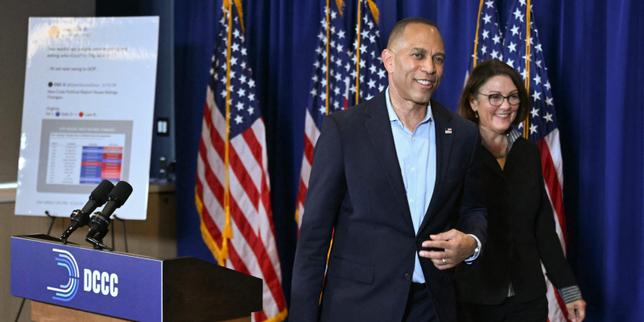
In the House, Minority Leader Hakeem Jeffries is widely positioned to become the first Black Speaker of the House in American history. Jeffries spent the last two years keeping a fractured caucus unified in the minority, and his path to the gavel looks solid. Still, he inherits a massive, unwieldy majority where progressive firebrands and frontline moderates from red-leaning districts want completely different things.
The Senate is where the real drama is unfolding. Longtime Democratic leader Chuck Schumer faces a direct challenge for the Senate Majority Leader post from Maryland Senator Chris Van Hollen ahead of their December 1 caucus vote. On paper, Schumer and Van Hollen share similar policy goals. In practice, this fight is a proxy war over tactics and generational energy.
Many rank-and-file Democrats worry that Schumer's traditional, deal-making style won't match the confrontational posture needed against a second-term Trump White House. Van Hollen's supporters argue the party needs sharper messaging and a willingness to play institutional hardball. Even if Schumer survives the vote, the challenge itself sends a clear signal: Senate Democrats aren't satisfied with business as usual.
Why the 2026 Coalition Is So Hard to Manage
To understand why Democrats are arguing over their 2027 strategy, look at who actually won the elections. This wasn't a uniform ideological sweep. It was a "big tent" coalition held together by voter frustration over the cost of living.
Consider the contrast between the party's biggest winners:
- Centrist overperformers: Moderate Democrats carried the party across purple and red states. Roy Cooper won in North Carolina, and candidates like James Talarico flipped a Senate seat in Texas that Democrats hadn't held since 1988. Meanwhile, the New Democrat Coalition—the primary caucus for House moderates—has swelled to 143 members, making it the single largest ideological bloc in Congress.
- Populist and progressive breakthroughs: At the same time, economic populists scored major victories by hammering corporate price gouging, housing costs, and billionaire influence. Sherrod Brown reclaimed an Ohio Senate seat on a blue-collar labor platform, Peggy Flanagan made history in Minnesota as the first Native American woman elected to the U.S. Senate, and Abdul El-Sayed won his Senate race in Michigan running on healthcare access and anti-corporate populism.
Here's the catch. Moderate members from swing districts need bipartisan legislative wins on manufacturing, supply-chain security, and targeted tax relief to survive in 2028. Progressive members want aggressive confrontation over labor rights, climate rules, AI regulation, and wealth inequality. Keeping all 258 House Democrats and 56 Senate Democrats rowing in the same direction will require constant triage.
Divided Government Means Gridlock and Subpoenas
Let's be realistic about what a Democratic Congress can actually pass into law. Not much.
Donald Trump remains in the Oval Office until January 2029, and he has already promised to veto progressive legislation sent to his desk. Democrats don't have the two-thirds supermajorities required to override presidential vetoes. Political scientists like Sarah Binder at the Brookings Institution have long documented that postwar legislative productivity drops sharply during periods of divided government.
Instead of sweeping domestic bills, Democratic power in 2027 and 2028 will rely on three institutional levers:
1. The Power of the Purse
Congress controls federal spending. With the federal debt ceiling set to become a flashpoint again in mid-2027 and short-term government funding expiring soon, Democrats hold real leverage over budget negotiations. They can attach policy riders to must-pass spending bills, block funding for unilateral executive initiatives, and force the White House to negotiate on healthcare subsidies and domestic programs.
2. Blocking Executive and Judicial Appointments
With 56 seats in the Senate, Democrats take immediate control of the confirmation calendar. Any federal judge, cabinet secretary, or Federal Reserve Board nominee must now clear a Democratic Senate Judiciary or Banking Committee. Controversial judicial picks are dead on arrival. If a Supreme Court vacancy opens up over the next two years, the White House will either have to nominate a consensus moderate or leave the seat empty until after the 2028 election.
3. Wall-to-Wall Congressional Oversight
Committee chairs hold subpoena power, and Democrats have a massive backlog of investigations waiting. House and Senate panels are preparing probes into the operations of Elon Musk's Department of Government Efficiency (DOGE), the origins and conduct of the U.S. military campaign in Iran, Caribbean maritime strikes, Department of Justice independence, and potential conflicts of interest inside the administration.
There's a strategic trap here, though. If Democrats spend two years exclusively chasing cable-news hearings and impeachment resolutions—like the push by some lawmakers to impeach Defense Secretary Pete Hegseth—they risk alienating the independent voters who backed them to lower grocery and utility bills. Voters hired Democrats to fix affordability, not to run a permanent investigative tribunal.
Foreign Policy and Trade Will Test Party Unity
Domestic economics united Democrats during the campaign. Foreign policy could split them right down the middle once they govern.
During the 2026 campaign, nearly every Democratic candidate criticized the administration's handling of the Iran war, which drove up fuel prices and rattled global markets. Now that Democrats hold the gavel, they have to decide what comes next. Progressive lawmakers want Congress to reassert its War Powers authority and cut off funding for offensive operations in the Middle East. National security hawks within the party favor keeping military deterrence strong while focusing on diplomatic containment.
Trade policy presents a similar balancing act. Trump relied heavily on executive orders to impose sweeping tariffs during his first two years back in office. House Ways and Means Democrats are already signaling plans to reassert congressional authority over tariffs, pushing to replace broad import taxes with targeted enforcement against China and stronger labor provisions under the USMCA. Rust Belt Democrats love targeted protectionism, while lawmakers from agricultural and port states want tariff relief for farmers and exporters.
The Shadow of the 2028 Presidential Race
Every strategic decision Democrats make in Congress over the next 24 months will be filtered through one obsession: the 2028 presidential election.
With no incumbent Democratic president in the White House, the 2028 primary is wide open. Potential contenders—from governors who won re-election in 2026 to former cabinet officials like Pete Buttigieg and newly empowered senators—are already positioning themselves. That creates friction between congressional leaders trying to pass pragmatic compromises and ambitious politicians looking for viral moments to build national name recognition.
Meanwhile, grassroots organizing groups like Swing Left are pressuring the Democratic National Committee and congressional campaign arms to avoid repeating past mistakes. Instead of shutting down field offices until 2028, strategists are pushing for year-round voter engagement in rural counties and non-traditional battlegrounds where Democrats made surprising inroads this November.
How to Track What Democrats Actually Deliver in 2027
If you want to cut through the partisan noise and see whether the new Democratic majority is executing a coherent strategy—or getting bogged down in infighting—watch four concrete benchmarks between now and spring 2027:
- The December 1 Senate leadership vote: Watch the margin in the Schumer versus Van Hollen contest. Even if Schumer wins, a close vote means progressive and younger senators will demand major committee concessions and a tougher stance against White House nominees.
- The winter government funding showdown: Congress faces an immediate December 11 funding deadline. If lawmakers pass a short-term extension into February 2027, that becomes the first real test of whether Hakeem Jeffries and Senate Democrats can extract policy concessions from the White House without triggering a government shutdown.
- Committee gavel assignments: Pay attention to who takes over the House Oversight, Judiciary, and Ways and Means committees. Placing pragmatic legislators in charge signals a focus on kitchen-table economics and disciplined oversight; elevating ideological firebrands signals two years of political warfare.
- The "first 100 days" messaging bills: Democrats will pass symbolic bills on prescription drug costs, housing affordability, and tariff limits knowing full well Trump will veto them. Watch whether those bills pass with unanimous Democratic support—especially from the 143-member New Democrat Coalition—or stall out over internal ideological amendments.