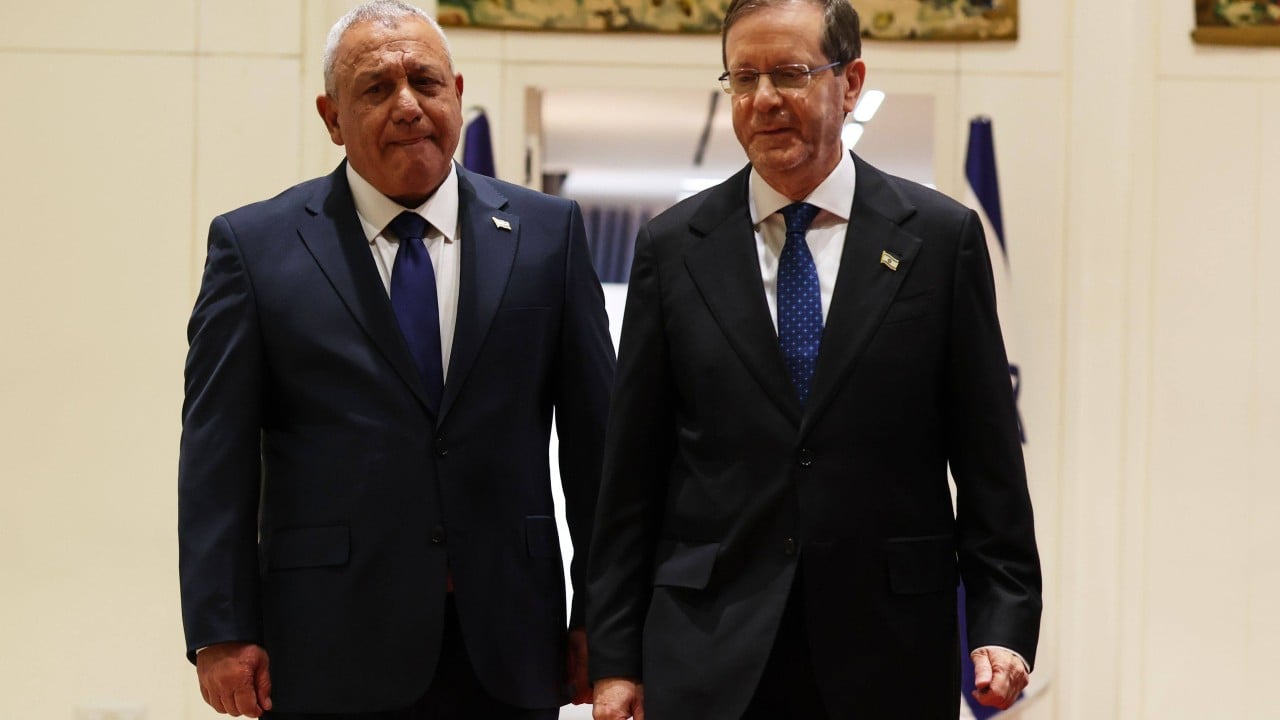
The mandate is a trap. Not a triumph.
When a president hands the first shot at forming a coalition to a seasoned general-turned-lawmaker, conventional political reporters reach for the same dusty playbook. Momentum. Frontrunner. Path to power. They treat the presidential consultation process in Jerusalem like a starting gun in a sprint. If you liked this post, you might want to read: this related article.
It isn't a sprint. It's an endurance test designed to expose every crack in a political bloc before the ink on a coalition agreement even dries.
Handing Gadi Eisenkot the first chance to build a government doesn't settle the succession question. It drags the hardest arithmetic into the open. Every faction that spent weeks agreeing on what they oppose now has to negotiate what they actually want—ministries, judicial appointments, legislative vetoes, and wartime accountability—while the clock ticks down on a fixed statutory window. For another angle on this story, check out the latest coverage from NPR.
If you read the standard coverage and assume the first mandate means the job is half-done, you're reading the wrong rulebook.
The Lazy Consensus Around "First Shot" Mandates
Lazy political analysis loves a neat narrative arc. Candidate wins backing, president bestows the mandate, coalition takes shape, cable chyrons roll. In parliamentary systems built on proportional representation and multi-party bargaining, that arc fails more often than it holds.
The mandate itself is an assignment, not a coronation. Receiving the first opportunity to form a government simply means a leader has gathered enough initial recommendations—or stands as the clearest focal point among fragmented parties—to try first. It does not guarantee a majority vote of confidence in the Knesset. History is crowded with politicians who held the initial mandate and watched their arithmetic collapse under the weight of rival egos and competing policy demands.
Why does the "frontrunner" myth persist? Because journalists write for speed, and speed rewards simple labels. Calling an assignment a breakthrough requires zero structural explanation. Explaining coalition bargaining mechanics—seat math, veto players, cabinet portfolios, and non-negotiable red lines—takes work.
I've watched political teams blow months of strategic capital celebrating a procedural milestone while ignoring the horse-trading that actually decides survival. A celebration in the first week of talks often signals relief rather than readiness. The real test starts the moment celebratory speeches end and smaller factions realize they hold leverage that won't last forever.
You're Asking the Wrong Question About Gadi Eisenkot
Most coverage circles around a single question: Can Gadi Eisenkot pull enough seats together to cross the finish line?
That question misses the sharper strategic reality. The better question is: Who benefits if Eisenkot tries—and struggles—to stitch together a governing majority?
In fragmented multiparty politics, holding the first mandate carries hidden costs. Every demand leaks. Every compromise looks like weakness to a party's base. Rivals inside the same camp can posture from the sidelines, demanding ideological purity while letting the mandate-holder absorb the blame for delays.
A former Chief of Staff brings obvious institutional gravitas. Voters and lawmakers alike know his background in command structures, chain-of-command discipline, and national security management. Yet parliamentary coalition-building is not a military briefing. Orders don't move Knesset votes; incentives, guarantees, and mutual survival do.
Consider how negotiation dynamics shift when a centrist or security-focused figure leads an assembled bloc. Parties on the ideological flanks face a classic dilemma: join early and risk looking accommodating, or hold out and risk being blamed if talks stall. Meanwhile, mid-sized parties try to extract maximum policy concessions before their leverage erodes.
Imagine a scenario where two mid-sized partners both demand key security or justice portfolios on day one. Conceding to one alienates the other; stalling burns precious days on the statutory clock. Having the first mandate doesn't magically invent extra seats. It forces choices that can fracture a fragile alliance before it ever faces a floor vote.
How Coalition Math Actually Works Beneath the Headlines
To understand why a first mandate can be a pressure cooker rather than a prize, look at the basic structural rules of multi-party government formation.
1. The Majority Threshold Is unforgiving
A governing coalition needs majority support in parliament—typically at least 61 seats in a 120-seat legislature. Getting close is indistinguishable from falling short on a confidence vote. A single defection, an abstention, or a walkout by a small faction can topple a deal or block it before launch.
2. Every Veto Player Raises the Price
The more parties required to reach 61 seats, the harder and slower the bargaining becomes. Each additional party brings its own red lines on legislation, appointments, budget priorities, and diplomatic posture. A five-party coalition isn't just wider than a three-party coalition; it is exponentially harder to keep aligned when crises hit.
3. The Clock Is a Weapon for Holdouts
Statutory timelines for forming a government are finite, with built-in extensions that carry political stigma if needed. Holdout factions know this. Waiting until the final stretch often gives smaller players perceived leverage—though waiting too long also risks blowing up the entire effort and shifting momentum elsewhere.
4. Governing Demands What Campaigning Avoided
Campaign slogans thrive on broad unity against a common rival. Governing requires concrete trade-offs: whose bill gets priority, which committees get chaired by whom, and how policy disputes get settled without public blowups.
| Bargaining Factor | What Headlines Assume | What Happens in Practice |
|---|---|---|
| Initial Mandate | The candidate is virtually certain to form the next government | The candidate gets a time-bound chance to test if 61+ seats can actually hold together |
| Small Factions | Minor parties will fall in line behind a credible leader | Minor parties often press hardest early or late to maximize portfolios and policy concessions |
| Ideological Gaps | Shared opposition to a rival is enough to govern smoothly | Policy friction surfaces immediately over ministries, appointments, and legislative priorities |
| Negotiation Clock | Momentum speeds up talks toward a quick deal | Deadlines create brinkmanship, leaks, and last-minute demands |
What People Also Ask—And Why the Premise Often Trips Them Up
Does getting the first mandate mean the next prime minister is settled?
No. It means the president judged that candidate to have a viable shot—or the clearest path—to try first. Until a majority of lawmakers votes confidence in a proposed government and cabinet lineup, nothing is final. Treating the first mandate as the finish line confuses an opening move with the endgame.
Why would a seasoned military figure struggle—or succeed—in coalition talks?
Command experience builds credibility on defense, crisis handling, and institutional stability, which matters deeply when security challenges loom. What it doesn't automatically confer is appetite for messy, transactional party politics where rival politicians openly jockey for status and leverage. Success depends on pairing calm authority with sharp political brokerage—or delegating that street-level bargaining to seasoned negotiators.
Why do coalition talks drag on even when everyone says they want change?
Wanting an outcome and agreeing on the price of admission are two different things. Every party answers to its own voters, donors, and activists. Giving up a coveted ministry or softening a signature demand carries a real political cost for a party leader. Delays usually happen because leaders are trying to protect their own standing while still locking down a deal.
Actionable Ways to Read Coalition Coverage Without Getting Played
If you want to cut through spin and track whether a coalition is actually coming together, watch mechanics instead of press releases:
- Track seat math, not speeches. Count committed seats against the 61-seat threshold. Ignore vague talk of "good atmosphere" until specific parties commit in writing or publicly endorse the path forward.
- Watch the hard portfolios first. Pay close attention to fights over defense, finance, justice, and key legislative committees. Those posts reveal real power distribution far better than polite joint statements.
- Spot the leak patterns. When leaks paint rival factions as greedy or stubborn, someone is trying to shape public blame before talks hit a wall. When leaks go quiet, serious horse-trading is often underway.
- Separate opposition unity from governing glue. Parties can unite easily to block a rival or demand accountability. Keeping them aligned through budgets, judicial battles, and security decisions takes much stronger glue.
Where This Contrarian Take Can Go Wrong
Being skeptical of conventional hype has its own blind spot: over-correction. Sometimes a mandate does click quickly because the political arithmetic is cleaner than critics admit, because the alternatives look worse to hesitant partners, or because urgent national pressures force faster compromise than usual.
Cynicism is easy; accurate calibration is harder. A contrarian read shouldn't assume every coalition is doomed to fail. It should simply refuse to mistake an opening assignment for a done deal—and keep testing that skepticism against actual votes and signed agreements.
Watch the seat count, not the applause.