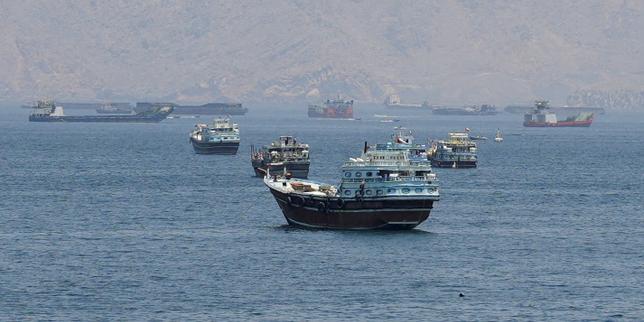
The headlines are reading like a Tom Clancy novel again. Mainstream media outlets are breathlessly reporting on the US military "neutralizing" a vessel attempting to run a blockade in the Gulf of Oman. The narrative is comforting, familiar, and entirely wrong. It paints a picture of a decisive maritime chokehold where Western naval supremacy dictates the flow of global trade and rogue actors are systematically erased from the ledger.
This is a fundamental misunderstanding of modern asymmetric naval warfare.
The conventional consensus views these interceptions as tactical victories. The reality is far more sobering. We are watching a trillion-dollar military apparatus play an expensive, unsustainable game of whack-a-mole against low-cost, decentralized disruption strategies. The "neutralization" of a single vessel is not a demonstration of control; it is evidence of a failing containment strategy that ignores the economic realities of modern maritime logistics.
The Mirage of the Chokehold
Naval blockades worked beautifully when the world depended on centralized, easily identifiable merchant fleets owned by state actors. Today, global shipping is a labyrinth of flags of convenience, ghost fleets, and shell companies masking ownership through dozens of jurisdictions.
When a Western naval coalition claims to enforce a blockade in the Gulf of Oman or the Bab al-Mandab, they are applying a 20th-century solution to a 21st-century network problem.
- The Cost Asymmetry: A standard naval interception utilizes multi-million dollar air-defense missiles or high-endurance surface combatants costing tens of thousands of dollars per hour to operate. The target? A retrofitted dhow or a low-cost unmanned surface vessel (USV) worth less than a luxury SUV.
- The Intelligence Friction: True interdiction requires absolute certainty of cargo and intent. In reality, the vast majority of blockade-runners blend seamlessly into legitimate commercial traffic, turning every boarding action into a high-stakes legal and diplomatic gamble.
- The Hydra Effect: Sinking or seizing one vessel does nothing to dismantle the supply chain that launched it. Within days, the same network replaces the lost hull with another expendable asset.
I have spent years analyzing maritime trade routes and the security architectures built to protect them. The consensus view always overestimates the permanence of kinetic force. You cannot bomb a supply network out of existence when the network's primary asset is its fluidity.
Dismantling the Safe Seas Myth
Ask any mainstream defense analyst what happens when a blockade is enforced, and they will tell you it restores market confidence. The data says otherwise.
Interdiction operations do not stabilize shipping lanes; they institutionalize volatility. When the US military engages a target in the Gulf of Oman, marine insurance underwriters do not breathe a sigh of relief. They immediately hike War Risk Class premiums.
| Metric | Conventional Assumption | The Reality on the Water |
|---|---|---|
| Shipping Routes | Force ensures vessels stay on the shortest path. | Traffic reroutes around the entire continent, adding weeks to transit. |
| Insurance Cost | Military presence lowers risk profiles. | Premiums skyrocket due to the increased probability of kinetic crossfire. |
| Supply Chain Impact | Containment keeps inflation low. | Shortages spike as secondary ports face massive logjams. |
The premise of the current strategy is flawed because it assumes the adversary's goal is to successfully deliver the cargo. Often, it is not. The goal is to force an engagement, drive up the cost of Western naval operations, trigger market panic, and demonstrate that the world's primary superpower must sweat to keep a narrow strip of water open. By engaging every single provocateur, the military plays directly into the adversary's playbook.
The Question We Are Asking Wrong
The public constantly asks: Can the military successfully stop these ships?
The brutal, honest answer is yes, they can stop an individual ship. But that is the wrong metric for success. The question we should be asking is: At what point does the cost of enforcement break the economic viability of the trade route itself?
If a shipping company has to pay a 400% premium on insurance and face indefinite delays despite a naval escort, the blockade is functionally working—not because the blockade-runner succeeded, but because the defense mechanism is too expensive for the market to bear.
Weaponized Logistics and the Ghost Fleet
To understand why traditional naval power is failing here, look at how modern illicit networks operate. They do not use standard container ships registered in Rotterdam. They use the "shadow fleet"—an estimated 10% of the global tanker tonnage that operates entirely outside Western financial and regulatory systems.
These vessels change names, flags, and transponder signals mid-voyage. They perform ship-to-ship transfers in international waters outside the effective jurisdiction of any single navy. When the Pentagon announces it "neutralized" a vessel, they are usually catching the clumsy amateur or the deliberate bait. The sophisticated operators—the ones moving the vast majority of contraband and sanctioned energy products—are navigating the blind spots created by our obsession with kinetic theater.
I have watched maritime security firms blow millions of dollars designing tracking software that relies entirely on AIS (Automatic Identification System) data. It is useless. The moment a vessel enters a contested zone, the transponder goes dark, or worse, it spoofs a location hundreds of miles away. Relying on traditional maritime law and gray-hull warships to police this environment is like trying to stop cybercriminals by deploying more traffic cops on the highway.
The Playbook for Real Security
If the current approach is an expensive failure of imagination, how do you actually secure a maritime chokepoint? You stop chasing the hulls and start squeezing the capital.
- Attack the Maritime Infrastructure, Not the Ships: A ship cannot sail without fuel, provisions, and access to bunkering ports. Instead of intercepting vessels in international waters, pressure the regional port authorities that provide logistics support to the shadow fleet. If a port allows a blacklisted vessel to dock, that entire port loses access to the international dollar clearing system.
- Accept Friction and Reroute: Stop treating historical shipping lanes as sacred. If a zone becomes a kinetic playground, the most effective strategy is to starve it of targets. Rerouting trade around the Cape of Good Hope is expensive in the short term, but it completely defuses the geopolitical leverage of actors operating in the Gulf of Oman.
- Weaponize the Insurance Market: The soft underbelly of all maritime trade is reinsurance. Even the most daring blockade-runner needs backing. Western sanctions should target the domestic insurance syndicates in non-aligned nations that underwrite these rogue voyages. Cut off the financial indemnity, and the crews refuse to sail.
This approach has a massive downside: it lacks the cinematic appeal of a destroyer firing missiles on the nightly news. It requires patience, diplomatic brutality, and a willingness to accept short-term economic pain in exchange for long-term structural dominance. It forces us to admit that our multi-billion dollar carrier strike groups are magnificent tools for state-on-state warfare, but fundamentally ill-equipped for global maritime policing.
The theater in the Gulf of Oman will continue. The press releases will keep claiming victories every time a dhow is stopped. But until the strategy shifts from destroying physical targets to dismantling the economic architecture that funds them, the blockade is not being broken. It is being subsidized by the very nations trying to stop it.