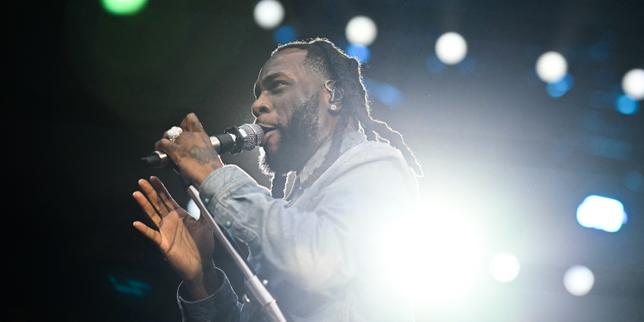
Every few years, music journalists and gaming writers rediscover a neat little fable. Fela Kuti is in Grand Theft Auto IV. Afrobeats and South African sounds are all over Grand Theft Auto V. Therefore, Rockstar Games handed Nigerian and South African artists the keys to global culture.
Cute story. Completely backwards.
You cannot trace a straight, triumphant line from Fela Kuti to Burna Boy through a virtual car stereo and call it an origin story. That framing treats the Grand Theft Auto radio stations like a benevolent talent incubator rather than what they actually are: a high-visibility licensing mirror reflecting scenes that already had teeth, heat, and momentum on the ground.
I have watched cultural commentators treat video game soundtracks like magic wands for twenty years. I have seen marketing budgets torch cash chasing "gamer discovery" while ignoring the actual supply chains, diasporic clubs, and local record ecosystems that built the music long before a game designer cleared a master. When you confuse exposure inside a sandbox with foundational power, you get the history wrong every single time.
The Lazy Consensus Around GTA Soundtracks
The lazy consensus goes like this: Rockstar curates cool, global tracks for its fictional stations. Players drive around Liberty City or Los Santos. Suddenly, international audiences wake up to Lagos and Johannesburg. A neat arc forms from Zombie or Water No Get Enemy on one end to stadium-filling Afrobeats and South African club music on the other.
It sounds poetic. It also flattens decades of real friction into a single UI feature.
First, Grand Theft Auto is built on pastiche and irony. Its stations—whether talk radio, classic rock, reggae, or global hip-hop and dance—operate inside a satirical world exaggerated to the point of caricature. Putting Fela Kuti alongside other artists on a station like IF99 in GTA IV was a smart curation move. It gave players outside Nigeria a taste of Afrobeat's raw, militant groove while driving through a fictionalized New York.
Calling that a bridge from Fela Kuti to Burna Boy, however, skips almost everything that actually connects the two. Fela Kuti built a political, polyrhythmic powerhouse in Lagos in the 1970s and 1980s through live spectacle, Kalakuta Republic defiance, and brutal confrontation with military rule. Burna Boy sits at the intersection of modern Lagos popcraft, dancehall cadences, global streaming algorithms, and diaspora festivals—while still deliberately sampling and honoring Fela's lineage on his own terms. A game soundtrack did not stitch those eras together. Time, migration, record labels, producers, and relentless touring did.
Second, the "GTA made it global" claim overestimates how passively listeners treat background audio. Millions of people play GTA with music lowered, custom playlists running, or their attention locked on mission chatter and gunfire. A track on an in-game station can spark curiosity. It can introduce a hook to a curious ear. It does not single-handedly build sustainable touring circuits, radio formatting in London or New York, or streaming playlists in Lagos, Accra, or Johannesburg.
Licensing Is a Mirror, Not a Factory
Let us get precise about how game soundtracks work. Music licensing in major games is a downstream transaction, not an upstream manufacturing plant.
A music supervisor or licensing team looks at what sounds sharp, authentic, and culturally current—or historically resonant—for a game's setting and mood. When a track lands in a Grand Theft Auto game, it usually means the song or catalog already exists in a clearable form and fits the creative direction of the title. That is curation and rights clearance. It is not building a scene from scratch.
In South Africa, movements like kwaito, house, and later gqom and amapiano grew out of township dance floors, local radio, independent labels, and brutal economic realities long before Western gaming press noticed them. In Nigeria, Afrobeats emerged through a messy, energetic collision of highlife, Fuji, juju, hip-hop, R&B, and street-level club culture in Lagos and London. Those scenes had gravity because young artists and producers were making records people actually danced to at 3:00 a.m., not because a game studio put them on a rotation.
Imagine a scenario where Grand Theft Auto had never included a single Nigerian or South African track. Would Afrobeats still have broken into global charts through streaming playlists, YouTube views, diaspora clubs, and international festival bookings? Almost certainly yes. Would South African electronic and vocal subgenres still have spread outward through DJ sets, viral dance challenges, and international collaborations? Again, yes.
Now flip the scenario. Imagine a game with massive player numbers puts an obscure regional sound on a virtual radio station, while the underlying scene has no live infrastructure, no distribution push, and no cultural momentum outside the game. What happens? Usually, very little. A few curious players look up the track ID, maybe add it to a playlist, and move on. The game amplifies existing signal; it rarely manufactures signal out of thin air.
You Are Asking the Wrong Question
People love asking whether video games "put African music on the map." That question is a trap. It assumes the map was blank until a Western entertainment giant drew a pin on it.
African music was already on the map for the billions of people living on the continent and across the diaspora. What changed over the last decade or two wasn't the existence of the music. What changed was the distribution plumbing—streaming platforms, social video, global touring routes, and cross-border collaborations—that let tracks travel faster without waiting for traditional gatekeepers to grant permission.
Here is how to cut through the usual "People Also Ask" clichés when talking about games and global music:
- "Did GTA launch Nigerian and South African artists globally?" No. It gave select tracks high-profile placement in front of millions of players, which can boost discovery and catalog visibility, but real global careers are built on releases, live shows, radio/playlist support, and cultural staying power.
- "Why does Rockstar pick these artists?" Because good music supervisors chase authenticity and energy. When a sound is electric and culturally alive, putting it in a world-famous game makes the game feel sharper and more grounded.
- "Are video game soundtracks underrated for music discovery?" Sometimes they are underrated for niche discovery—helping listeners stumble onto a sound they never searched for—but they are routinely overrated as career-makers compared to touring, social virality, and sustained releases.
If you run a label, manage artists, or build cultural strategy, stop treating game syncs like a golden ticket that replaces real groundwork. Treat them like a high-impact spotlight. If the artist isn't ready when the spotlight hits—no cohesive catalog, no live show, no clear identity beyond a single hook—the attention evaporates fast.
The Heavy Hitters and the Real Mechanics
Respect the people who actually move this space. Artists like Fela Kuti, Hugh Masekela, Miriam Makeba, Wizkid, Burna Boy, Tiwa Savage, Tems, Black Coffee, and Uncle Waffles didn't ride a video game wave into existence. Behind them stand independent producers, sound engineers, club DJs, managers, and regional tastemakers who kept the lights on when global media paid zero attention.
On the gaming side, music supervisors and audio directors at major studios deserve real credit for taking swings beyond predictable mainstream charts. Good syncs matter. A killer track during a drive can lock a song into memory for years. I have seen catalog tracks get real, measurable bumps after smart placement in high-profile media.
The mechanic is simple: context plus repetition equals recall. When a song pairs with high-adrenaline gameplay or memorable virtual spaces, the brain links the beat to the experience. Add streaming algorithms and short-form video, and a player can turn a five-second riff into a full-blown obsession.
Still, recall is not loyalty. Loyalty comes from what happens after the controller goes down.
Where My Contrarian Take Can Burn You
I'll own the downside of pushing back hard against the "GTA built it" narrative. If you overcorrect, you risk sounding dismissive of genuine cultural touchpoints that did matter to real fans.
For some kid in a suburb thousands of miles from Lagos or Soweto, hearing a track on a game radio station really was their first spark. Denying that personal entry point just to score analytical points is cheap. Cultural discovery rarely follows a single textbook path; sometimes a random car chase in a video game opens a door a person didn't know existed.
There is also a commercial risk in downplaying sync opportunities. Sync licensing can bring real revenue, clean rights tracking, and broad exposure to audiences that never read music blogs. Telling artists or rights holders to sneer at major game placements would be foolish. Take the sync when the terms are fair and the fit is right—just don't confuse a placement check with cultural ownership.
What to Do Instead
If you want to understand—or actually participate in—how Nigerian, South African, and other global scenes win worldwide, stop chasing origin myths and focus on leverage:
- Build local proof first. Global traction sticks best when a sound already commands rooms, streets, and charts at home.
- Own your catalog and metadata. When a track spikes from a game placement, a playlist, or a viral clip, messy splits and missing credits bleed money and momentum.
- Treat syncs as accelerants, not engines. Use a game placement to pour fuel on an already burning fire, not to rub two sticks together in the dark.
- Follow the live circuit. Screens create awareness; stages build die-hard fans who buy tickets, merch, and records for years.
Grand Theft Auto didn't invent Nigerian or South African musical power. It showed up to a party that was already roaring.