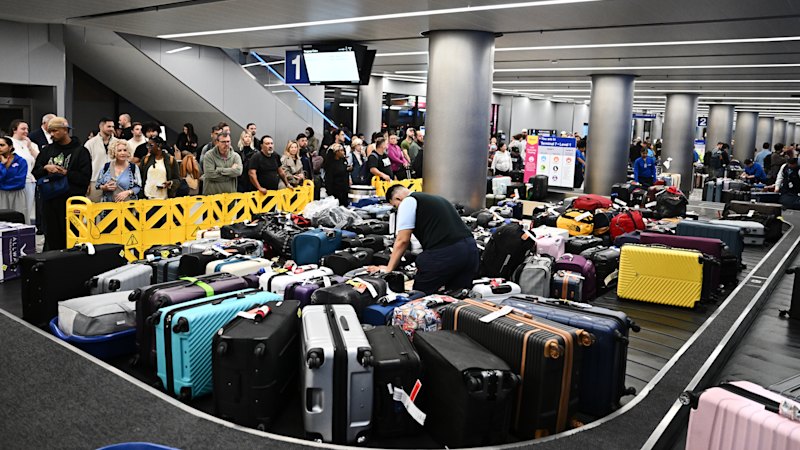
Grounding every departing flight across the United States isn't something controllers do lightly. When the Federal Aviation Administration
Planes sit on taxiways. Gates stay locked. Departure boards turn amber and red.
The immediate trigger was instability across air traffic control communications. Departures stopped around mid-afternoon Eastern time and didn't resume until roughly 8:15 p.m. ET, freezing departures for nearly five hours and triggering thousands of cancellations and multi-day ripples across airline schedules. Yet the deeper story isn't just a bad Friday afternoon. It's what happens when modern router changes collide with copper-age infrastructure that has waited decades for a clean overhaul.
What Actually Happened When Departures Stopped
On November 13, 2026, technical instability hit telecommunications linking air traffic facilities, prompting the FAA to order a nationwide ground stop out of caution. Flights already airborne weren't ordered out of the sky. Critical operations—including life-saving flights, military traffic, and law enforcement—continued, and key radio and radar feeds stayed usable so controllers could guide planes safely down.
Stopping departures is the classic safety valve in aviation. When communications get twitchy between centers or command hubs, you don't push hundreds of new aircraft into congested airspace before you know your pipes are steady. You hold jets on the ground, clear existing traffic cleanly, and buy breathing room.
Still, holding planes on the ground doesn't mean nothing moves. Arriving flights land, pull toward gates already occupied by delayed departures, and end up waiting on taxiways. Even after the ground stop lifts at 8:15 p.m. ET, planes and crews are out of position across the country—which is why a nearly five-hour pause can mess up travel for days.
Why Modernization Efforts Triggered Network Overload
Here's the twist that surprises people who only read wire headlines. This wasn't a movie-style cyber takeover. Homeland Security and FAA officials stated there was no indication of a cyberattack or nefarious outside actor.
Instead, the trouble was tied to equipment work during a push to replace aging copper wiring with fiber-optic networks. Router replacements—including work linked to an FAA facility in El Dorado, Arkansas, and contractor L3Harris—ended up overloading critical network paths with excess traffic. After stabilizing the system, the FAA disabled broadcasting functionality on originating Juniper routers and paused installations on roughly sixty similar routers while investigating.
Anyone who has ever managed enterprise networks knows this pain point. Upgrading core routing gear while legacy circuits remain in the mix is tricky business. One chatty router or misbehaving broadcast setting inside a shared dependency can flood links faster than systems expect.
Upgrading aging air traffic pipes while keeping thousands of flights moving is like swapping tires on a car at sixty miles an hour.
The Copper Wire Hangover Nobody Wants to Fund
If you've flown out of a major U.S. hub during peak hours, you already know how tight the margins are. One weather cell or equipment glitch can cascade from Chicago or Atlanta to half the map.
Part of the frustration stems from decades of slow-motion infrastructure catch-up. Critics and aviation observers have long pointed out that parts of the FAA's legacy telecommunications rely on copper circuits dating back to the 1960s, with spare parts sometimes hunted down on secondary markets. Replacing copper with fiber across a massive national airspace takes years of coordination, testing, and money.
Following the November 13 grounding, debate flared fast in Washington. Aviation groups pressed Congress for at least $30 billion to overhaul air traffic control systems, while the administration pushed a $50.1 billion modernization request—drawing scrutiny from lawmakers asking why previously approved funds hadn't all been spent yet and whether upgrade timing was properly managed.
Honestly, both sides have a point. You can't fix decades of under-investment with pocket change, and you also can't hand over blank checks without strict accountability over schedules, testing, and risk controls.
Why Daylight Maintenance Sparks Fiercer Pushback
Passengers naturally ask why network changes happen during busy travel windows instead of dead-of-night lulls. On paper, night shifts sound smarter. In reality, aviation runs on a 24-hour clock—cargo runs overnight, red-eyes cross time zones, and technicians sometimes work in daylight or scheduled cutover windows when support teams are staffed.
Still, when a daytime change triggers a nationwide ground stop, public patience evaporates immediately. Trust takes years to build and one afternoon to dent.
What Frequent Flyers Get Wrong About Ground Stops
Let's clear up a few myths that circulate every time a major airspace halt hits the news.
- Myth one: A ground stop means planes in the air are losing control. Not how it works. Controllers keep working active traffic, and backup frequencies and radar feeds remain available for safe landings.
- Myth two: Every region shuts down identically. Some flights—such as certain intra-state or regional operations in Alaska or Hawaii—may experience different impacts depending on routing and center involvement.
- Myth three: You're automatically owed big cash payouts for ATC delays. U.S. rules don't hand out automatic fixed cash compensation for every delay caused by air traffic control or equipment issues, though refunds apply if your flight is canceled and you choose not to travel.
If you've ever watched a gate agent try to rebook three hundred people on a Friday evening during a nationwide hold, you know how messy the human side gets. Gate agents aren't sitting on secret seats they're hiding from you. Computers are scrambling to match legal crew duty limits and available planes across dozens of cities.
Smart Moves Before You Head to the Airport
You can't stop a router from misbehaving in Arkansas or a radar unit from acting up in Chicago. You can stop yourself from getting stranded without options.
- Check official status before leaving for the airport. Look directly at FAA National Airspace System Status and your airline app before you sit in traffic or pay for long-term parking.
- Book nonstop or early-morning flights when timing matters. Early flights face fewer cascading delays from earlier in the day, and nonstops eliminate a second connection point where things can unravel.
- Grab a backup seat fast, then decide. When a ground stop hits, rebooking lines form instantly. Use the airline app to grab a later flight or alternate routing right away—you can usually adjust later if your original flight recovers.
- Know your refund vs. rebooking rights. If the airline cancels your flight and you don't take an alternative, you're entitled to a refund for the unused ticket, even when the root cause wasn't the airline's fault.
Air travel in the United States moves millions of people safely every single day, even when ground stops remind everyone how much invisible plumbing holds the sky together. Keep your alerts on, pack patience, and never leave your rebooking plan to chance.
FAA grounds all departing flights video
This video matches the search results for the FAA nationwide ground stop discussion and helps connect the technical outage topic to real-world aviation coverage.